



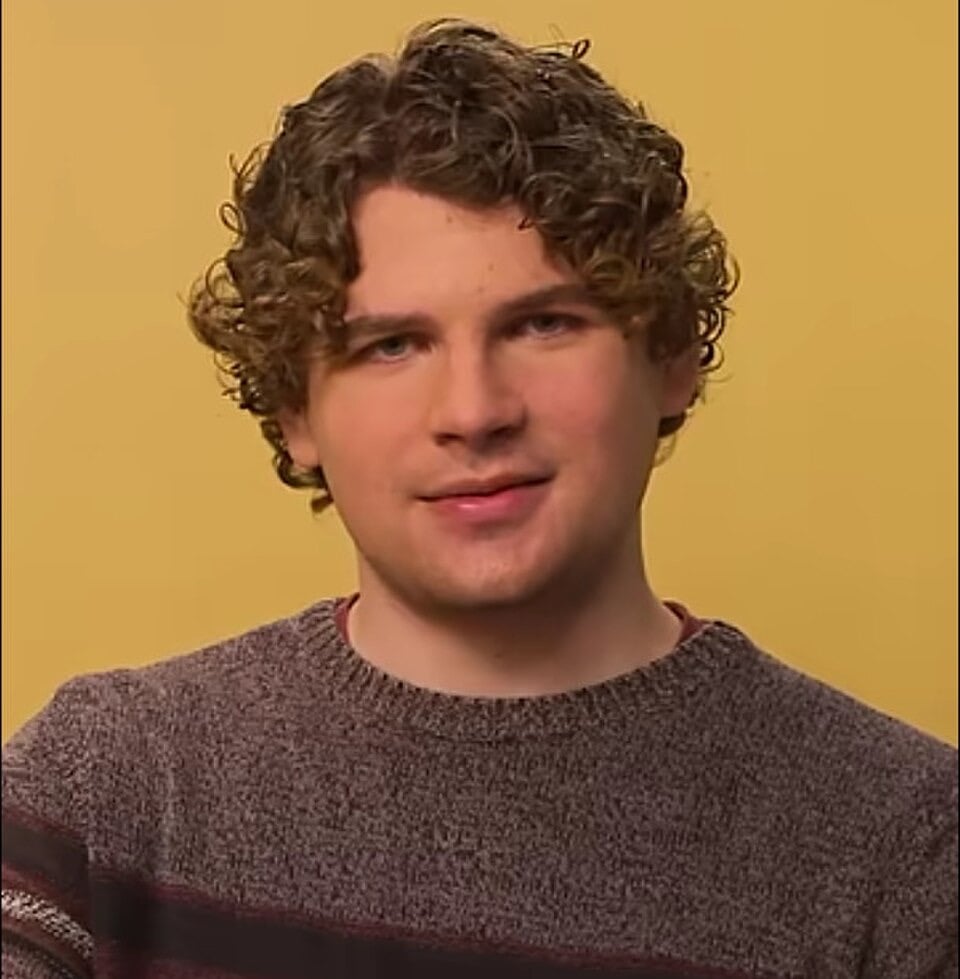
A 20-year-old YouTuber who made his first horror film from his bedroom at the age of 16 has become the youngest director in history to top the box office in both the United States and the United Kingdom — part of a seismic shift that one Hollywood executive is comparing to the arrival of the talkies.
Kane Parsons, who grew up in Petaluma, California, created a nine-minute film called Backrooms four years ago after being diagnosed with severe childhood arthritis at 13 that left him bedridden. His father, a video game developer, encouraged him to use free software such as Blender to build escapist worlds on his computer. The resulting film — a deeply unsettling portrait of a man trapped in an endless labyrinth of abandoned mustard-yellow rooms bathed in buzzing fluorescent light — was posted on YouTube and racked up 10 million views in two weeks. Within days of his 17th birthday, Parsons had a Hollywood agent. Shortly afterwards came a deal with A24, the prestige studio behind Moonlight and Everything Everywhere All At Once, which handed the teenager an $8 million budget to turn his bedroom movie into a full-scale production.
The result has now taken $130 million at the global box office since opening last weekend, crushing traditional studio releases including the latest Star Wars offering, The Mandalorian and Grogu. British Oscar winner Chiwetel Ejiofor, who starred in 12 Years a Slave, was so eager to work with Parsons that he accepted a fraction of his usual fee to appear in the film, in which he plays a man who discovers a portal into a sinister alternate realm through his furniture store and wanders with mounting dread through a maze of rooms that never ends.
Critics have been effusive. “The film taps directly into the helplessness and loss of control people felt during Covid,” wrote one. “Parsons has captured the psychological unease of an entire generation.” Parsons told the New York Times that the physical toll of making the film had been significant, forcing him to take two weeks of bedrest during post-production. He still has weekly autoimmune injections for the condition that derailed his childhood. “I definitely abused my nervous system to the fullest degree I possibly could,” he said.
Parsons is not alone. The number two film at the global box office is Obsession, a horror film made for $750,000 by 26-year-old YouTuber Curry Barker that has now grossed $155 million worldwide since its 15 May release. Barker, a self-described “straight C and D grade student” from Mobile, Alabama, started making comedy skits on YouTube before graduating to horror films “just for fun.” A bedroom film he made for $800 called Milk and Serial racked up 2.4 million views and convinced him to think bigger. Earlier this year, fellow YouTuber Markiplier — real name Mark Fischbach — self-financed sci-fi horror Iron Lung, which has crossed $50 million at the box office. Barker has since been offered $10 million for his next film and signed to direct a remake of the 1974 classic The Texas Chain Saw Massacre.
Industry insiders have given this phenomenon a name: creator-driven cinema. One senior executive at a major Hollywood studio told the Mail on Sunday the movement represented the most significant shift in the industry since silent films gave way to talkies. “You used to have to go through the system and work your way up before any studio would trust you to make a film,” the executive said. “These kids are coming out of their bedrooms and making movies which are getting young audiences — particularly young men — back into movie theatres in numbers we’ve not seen in decades.”
The executive suggested the appeal of these films ran deeper than novelty. “The thing about YouTubers is they are tapping into the insecurities of the post-MeToo generation because they grew up during Covid, suffered through isolation and have the same insecurities and hang-ups as the kids who are going to watch their films.” Technology, he added, had levelled the playing field in ways that were impossible even a decade ago. “AI tools are so good that now any talented kid with a good idea can hit the jackpot.”
Not everyone is convinced the revolution will last. A leading industry figure with an Oscar to her name told the Mail on Sunday that creator-driven cinema would thrive in horror and comedy but drew a sharp line at the suggestion it could produce enduring classics. “Can these kids make a masterpiece like Lawrence of Arabia? I don’t think so. For every film that makes it there are hundreds that don’t.”
What is beyond dispute is that Hollywood has accepted the new reality. From 2029, the Academy Awards will be streamed worldwide on YouTube rather than traditional television — a fitting tribute to the platform that is reshaping the industry from the outside in.
