



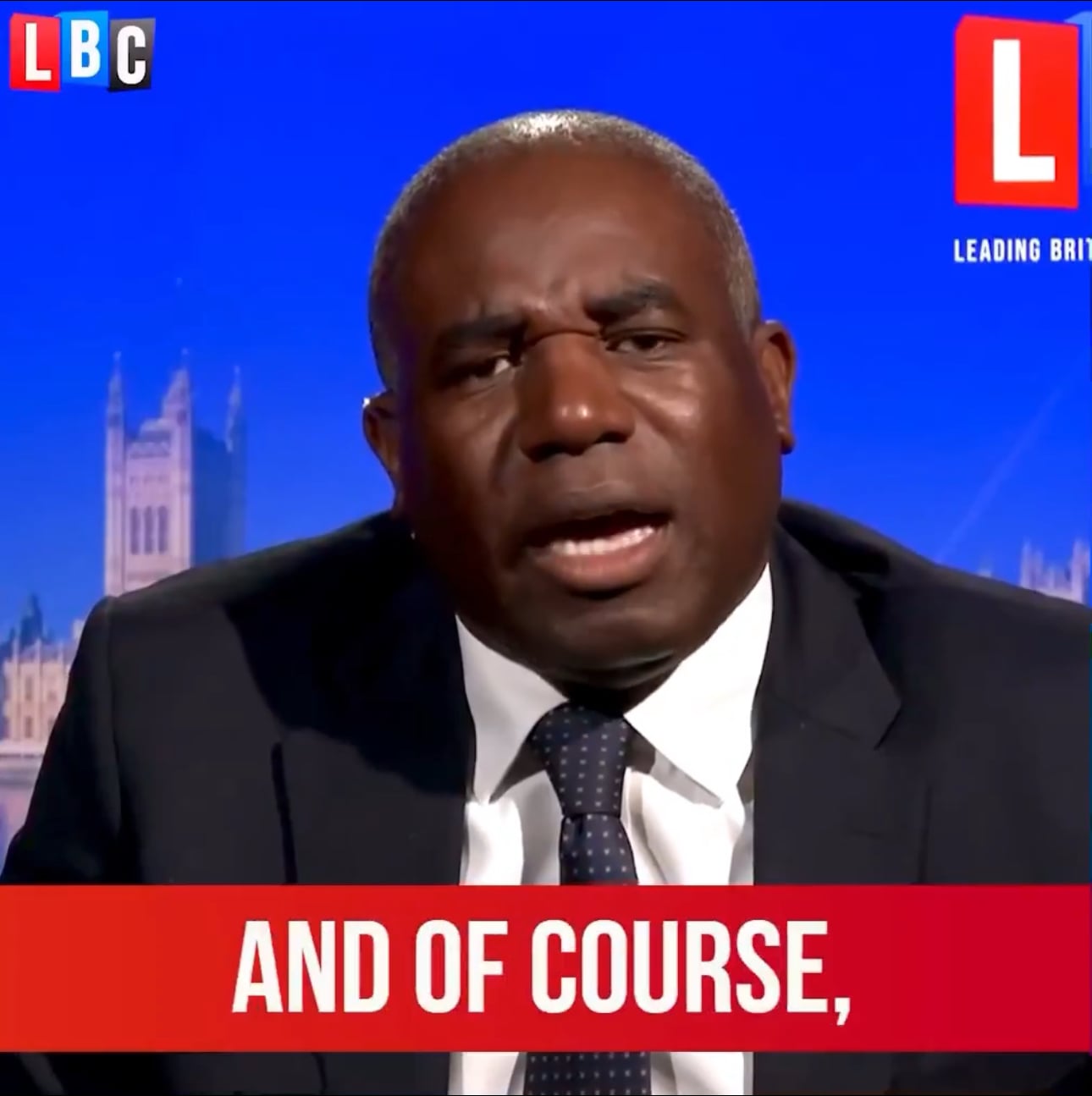
David Lammy has refused to take the knee for Henry Nowak, the teenager stabbed to death in Southampton after his killer falsely accused him of racism — in comments that have exposed a striking contradiction with his own passionate defence of the same gesture when it was adopted in support of the Black Lives Matter movement in 2020.
Asked directly on LBC’s Nick Ferrari programme on Thursday whether he would take the knee for Henry Nowak, the Deputy Prime Minister and Justice Secretary declined, saying the 18-year-old’s family wanted “genuine common sense policing and a reduction in knife crime” rather than symbolic gestures. He drew a distinction with 2020, saying “that was a moment back then when we were still in the pandemic,” and described kneeling as “symbolism.” When Ferrari pressed him on whether that meant the George Floyd-era kneeling had itself been performative, Lammy’s response was, according to LBC, notably flustered and evasive.
The contrast with his 2020 position is difficult to ignore. At the height of the BLM protests, Lammy was among the most vocal defenders of the gesture, publicly attacking then-Cabinet minister Dominic Raab for describing taking the knee as “a symbol of subjugation.” Lammy called Raab’s comments “insulting to the Black Lives Matter movement” and “deeply embarrassing.” He is now, in effect, deploying the same argument about symbolism he once condemned Raab for making — with the difference being that the victim this time is a young white British man of Polish descent.
Henry Nowak was stabbed six times by Vickrum Digwa on 3 December 2025 while walking home from a night out near his student accommodation in Southampton. Digwa, who was carrying a 21cm dagger he described as a ceremonial Sikh blade, falsely told arriving officers that Nowak had racially abused him and knocked his turban off. Bodycam footage showed officers handcuffing the mortally wounded teenager as he repeatedly told them he had been stabbed and “I can’t breathe.” Digwa was convicted of murder and sentenced to life with a minimum of 21 years in June 2026. The trial judge rejected the racism claim and noted that Digwa had deliberately “stirred up racial tension.” Hampshire Police have issued a public apology, one officer has resigned and the Independent Office for Police Conduct is investigating.
Lammy, as Justice Secretary, has already rejected a formal intervention from the US State Department that criticised “two-tiered policing” in Britain, dismissing it as a “caricature.” He has also told Elon Musk to “step back” from the case following the tech billionaire’s more than 100 posts about it on X. In doing so, Lammy has positioned himself as defending British institutions — while simultaneously declining a gesture he once championed loudly when the political context was different.
Henry Nowak’s family have themselves made clear they do not want gestures or division. Their public statements have consistently called for practical action on knife crime and for their son’s death to be used to unite rather than divide. By that measure, Lammy’s current position is consistent with what the family has asked. But his own political history makes it impossible to separate his refusal to kneel now from his enthusiastic endorsement of kneeling then — and it is that inconsistency, rather than the decision itself, that has drawn the sharpest criticism.
