



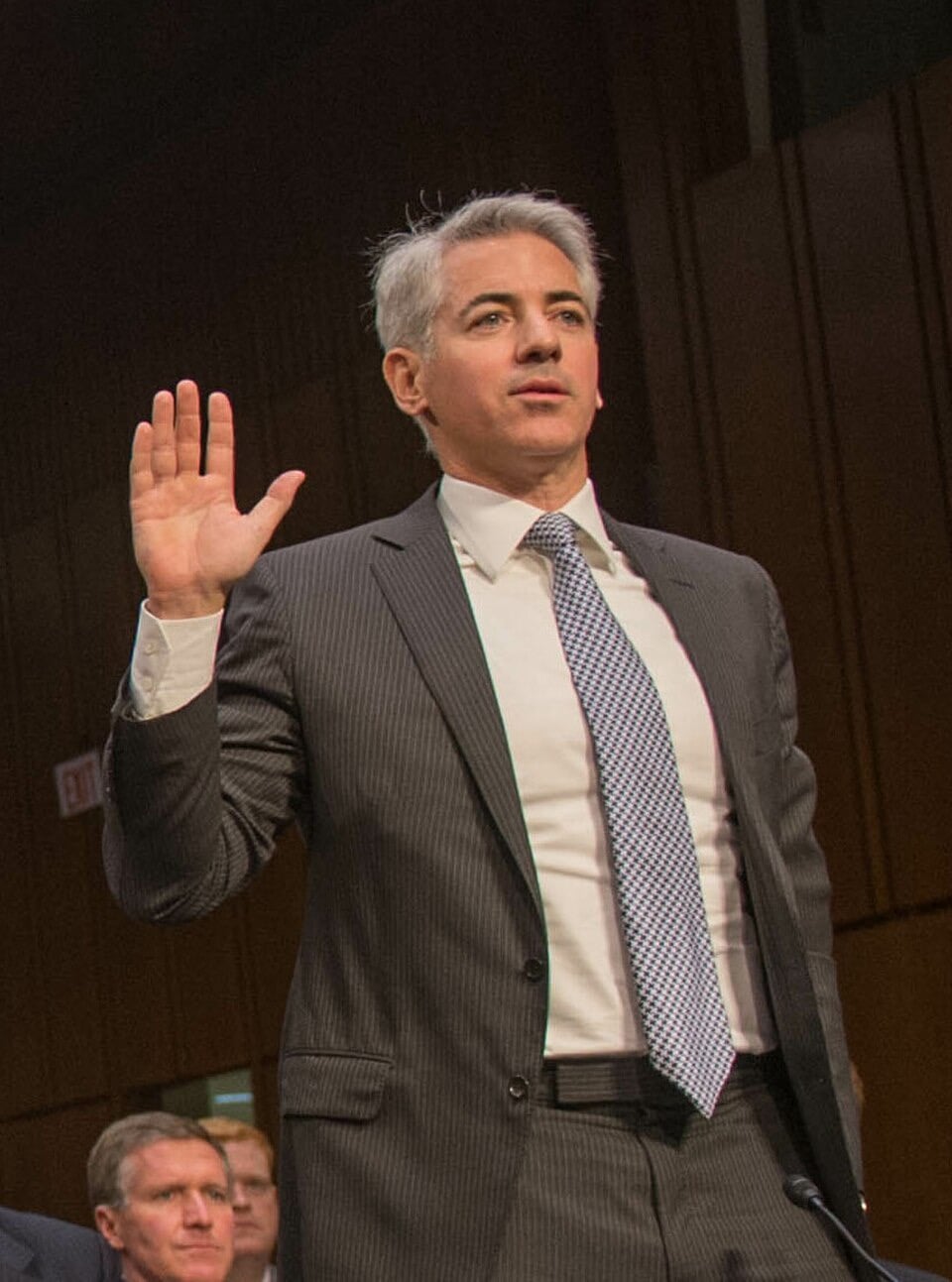
The hedge fund founder says directors “panicked due to headlines in the media”. Nvidia’s chairman has said the company does not intend to bring its co-founder back as chief executive.
US billionaire investor Bill Ackman has accused Nvidia’s board of “major governance failures” after chief executive Jensen Huang left the company last week. In a post on X on Wednesday, the founder of Pershing Square Capital Management said directors had “rushed to judgment based on articles in the media”. Mr Huang resigned as chief executive, president and board member after media reports that he had at least three extramarital affairs, one of them with an alleged Chinese spy. Mr Huang has made no admission in the material supplied, and the allegations have not been proven.
Ackman’s criticism
Mr Ackman, who has joined others in defending Mr Huang, argued that the board was not acting in the interests of the company, its customers or its shareholders. He said directors “likely felt compelled to do something because they were afraid of looking bad in the media, not because it was the right thing for [their] company”. “They couldn’t stand the heat,” he wrote. “The board’s conduct here is shocking for a company of this scale and importance to our country and the world at large, particularly at this moment in history.”
Nvidia has said it is investigating the alleged affairs. Mr Ackman questioned whether the board was getting sound legal advice, arguing that a broad inquiry into a company of this size can have “extremely damaging” consequences. He also said the board could not have properly deliberated while the facts were still emerging from media reports. These are his views, and no court or regulator has found a breach of duty.
On Tuesday, during Nvidia’s first earnings call since the scandal, chairman Harvey Jones said the company “does not intend to reinstate Jensen as CEO”. Mr Ackman said that “compounds” the failures. “Why is it in the best interest of the company to foreclose the possibility of Jensen’s return and to do so before all of the facts are known?” he wrote. “This is yet another breach of their duty of care.” Earlier on Tuesday, in his first public statement since the reports, Mr Huang said: “If the board of directors decides that my return is in the best interest of our shareholders, our employees, the company, and America, I would be honored to answer these calls and return as CEO.”
Nvidia’s SEC filing says the board accepted Mr Huang’s resignation on 11 November, with the leadership change announced on 12 November. It records that Mr Jones, 73, was appointed chairman on 11 November, and that chief financial officer Colette Kress became interim chief executive. The filing does not address whether directors met their fiduciary duties.
Record results
Nvidia reported revenue of $115.8bn for the third quarter of its 2027 financial year, up 103 per cent on a year earlier and above its own $108bn forecast, TechCrunch reported. It forecast $130bn for the fourth quarter, plus or minus 3 per cent. Ms Kress raised the company’s fiscal 2028 revenue-growth outlook from about 70 per cent to 75 per cent. Nvidia bought back $28.1bn of shares in the quarter and has $227.3bn remaining under its repurchase authorisation. Ms Kress said customers, suppliers and partners had continued to back the company.
Federal scrutiny
On 17 November Nvidia created a board-level National Security and Export Control Oversight Committee, led by Suzanne Nora Johnson, a former Goldman Sachs vice-chair. ABC News reported that the committee is separate from the inquiry into Mr Huang’s conduct. The US departments of Justice and Commerce are investigating Singapore-based Megaspeed over possible export-control violations involving advanced Nvidia chips. ABC News reports that the Commerce Department asked Nvidia for sales records in May 2025, and that Megaspeed was put on Nvidia’s internal no-sell list in June 2025. A former head of Megaspeed was interviewed by federal investigators in June 2025, according to ABC News. Chinese officials have rejected allegations that she was an intelligence asset.
Mr Huang is scheduled to give a closed-door transcribed interview to three House committees on 1 December, and Nvidia general counsel Tim Teter on 2 December. Republican chairmen Brian Mast, John Moolenaar and Rick Crawford announced the interviews and raised questions about Nvidia’s controls over sensitive chip technology. An investigation does not establish wrongdoing. The Wall Street Journal has also reported that the Securities and Exchange Commission is investigating Nvidia, and its scope has not been publicly established.
ABC News reports that Treasury Secretary Scott Bessent criticised the Commerce Department over alleged delays in acting against Megaspeed, and said he would prefer an external candidate as Nvidia’s next chief executive. President Donald Trump acknowledged a disagreement between Mr Bessent and Commerce Secretary Howard Lutnick.
24/7 Wall St. reported on 18 November that Mr Huang, who it estimates holds 3.58 per cent of Nvidia, could use the company’s proxy-access rules to nominate up to two directors. He would still have to meet holding-period and other requirements. No nomination has been confirmed. Two seats would not give board control.
