



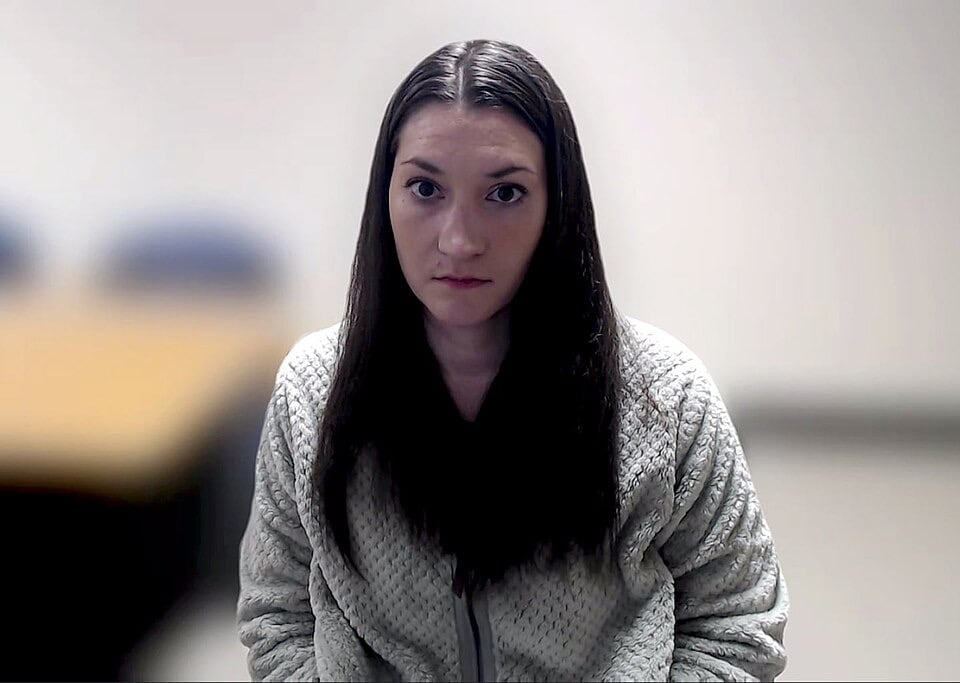
A Massachusetts judge has ruled that a second trial would not breach the ban on double jeopardy. A hearing on 16 November will discuss when it should be held.
Lindsay Clancy has failed to get the murder charges against her dismissed, and she will face a retrial over the deaths of her three young children in 2023. Judge William Sullivan, sitting in Plymouth, Massachusetts, ruled on Monday that trying her again would not unconstitutionally expose her to prosecution twice for the same crime. He declared a mistrial on 4 September after the jury reported that a holdout juror was preventing a unanimous verdict. A hearing on 16 November will discuss the timing of a second trial, which the judge has suggested could take place in March.
The ruling and the defence argument
Clancy’s lawyers argued that a retrial would breach her constitutional protection against double jeopardy. They said Judge Sullivan acted prematurely in declaring a mistrial and should have pursued a viable alternative. Citing jury notes stating that the holdout juror was not following the law on reasonable doubt despite his instructions, they said the judge should have questioned that juror and potentially removed him.
Prosecutors, under Plymouth County District Attorney Timothy Cruz, countered that the judge handled the impasse appropriately. They said questioning the holdout could have risked inappropriate interference in the jury’s deliberations.
On 21 October, the judge denied a defence request for an evidentiary hearing into the holdout juror, according to ABC News. Defence lawyers had wanted further scrutiny of claims that the juror was dishonest during selection, used a phone during deliberations or failed to follow legal instructions. The judge ruled that examining a juror’s private reasoning would intrude on protected jury deliberations. He also considered information found after the mistrial irrelevant to whether the mistrial was necessary when declared. The holdout juror’s lawyer disputed the allegations, saying the juror’s position was that prosecutors had proved criminal responsibility, WBUR reported.
Judge Sullivan had earlier rejected a separate defence motion seeking a not-guilty finding, on 1 October. He ruled that the prosecution’s evidence was legally sufficient for a reasonable jury to find Clancy criminally responsible, which does not decide her guilt. According to the Boston Globe, he noted that three prosecution experts had testified that she could appreciate the wrongfulness of her actions. Defence experts disagreed, but he said conflicts between expert opinions were for jurors to resolve.
The case
No one at the first trial disputed that Clancy, then of Duxbury, a Boston suburb, killed her daughter Cora, five, and sons Dawson, three, and Callan, eight months, in the basement of the family home on 24 January 2023. She then cut herself with a knife and jumped from a second-storey window in an attempt to end her own life, which left her paralysed.
Her lawyers argued that she was suffering from postpartum psychosis and should be found not guilty by reason of insanity, known in Massachusetts as lack of criminal responsibility. In televised interviews after the mistrial, some jurors said that, but for one holdout, they had been prepared to return that verdict. It would have led to her commitment to a state psychiatric hospital, subject to regular court review. A conviction for first-degree murder carries a mandatory sentence of life in prison without parole.
Disagreement between the experts
The first trial exposed sharp differences between psychiatric experts. ABC News reported that the evidence showed Clancy had been issued more than 30 psychiatric prescriptions over about five months. Her lawyers argued that medication changes and inadequate treatment contributed to her deterioration. The number of prescriptions does not mean she took all the medicines at the same time.
Forensic psychiatrist Phillip Resnick testified for the defence that she experienced postpartum psychosis and a commanding hallucination, which impaired her ability to control her actions, WBUR reported. Prosecution experts disputed this. According to the Associated Press, forensic psychiatrist Gregory Saathoff questioned the reported hallucination, and psychologist Kirk Heilbrun suggested a different explanation involving depression and suicidal thinking. These were competing assessments, not settled medical findings. WBUR also reported disagreement over how long postpartum psychiatric illness can remain relevant after childbirth. Some witnesses focused on the first four weeks, while defence experts argued that serious symptoms can arise later.
WBUR reported that more than 70 witnesses testified over 21 days. Reuters reported that the full proceedings involved more than 80 witnesses and about 300 exhibits. A second trial would not necessarily repeat the first. Both sides may revisit which experts to call and which exhibits to stress.
What happens next
A March 2027 retrial is under discussion, but no start date has been set. The next scheduled hearing is on 16 November. Judge Sullivan turns 70 in June 2027 and must retire under Massachusetts judicial rules, according to WBUR, which creates pressure to hold the trial before he leaves. Defence lawyer Kevin Reddington has asked that he preside, arguing that he already knows the complicated evidence.
Prosecutors have not said publicly whether they will pursue three first-degree murder charges again or reduce them to second-degree murder, according to Reuters. ABC News reported that a reduction could open the way to a trial before a judge instead of a jury, if the procedural requirements are met and Clancy waives her right to a jury. A negotiated plea remains another possible outcome, though neither side has announced an agreement.
Prosecutors have also asked the court to restrict potentially prejudicial public statements by lawyers and law-enforcement officials, arguing that media remarks about the holdout juror could affect the fairness of a second trial, the Boston Globe reported. The defence opposed this on First Amendment grounds, saying Clancy’s representatives need to be able to respond publicly. The judge took the request under consideration at a hearing on 2 November, according to The Guardian. No ruling on that motion was found in the latest reports.
