



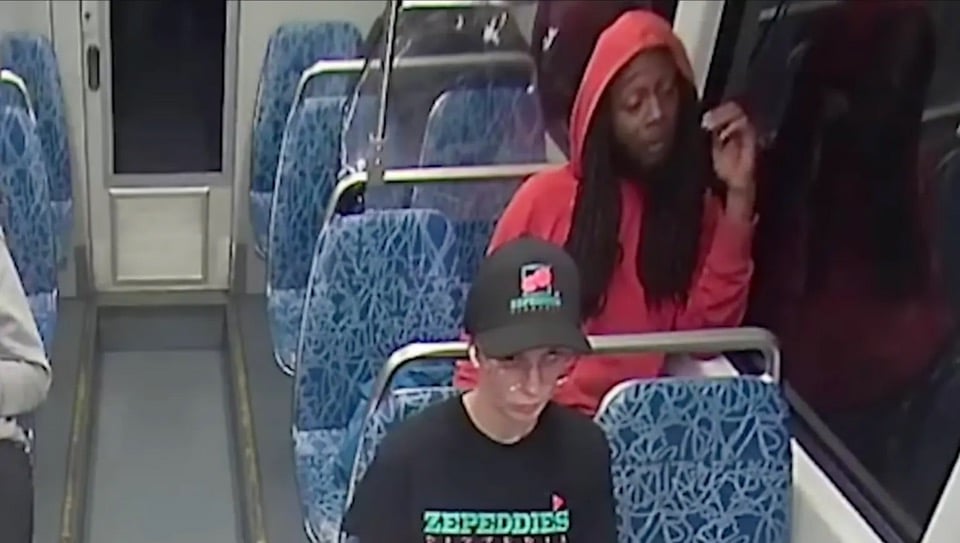
The family of Iryna Zarutska, the 23-year-old Ukrainian refugee stabbed to death on Charlotte’s Lynx Blue Line last year, has filed a wrongful death lawsuit against the city and its security contractor, alleging chronic understaffing and missed fare checks contributed to her killing, as a new state audit reveals nearly half of transit passengers ride without paying.
The family of Iryna Zarutska, a 23-year-old Ukrainian refugee killed on Charlotte’s light rail system last year, has filed a wrongful death lawsuit against the City of Charlotte and its private security contractor, Professional Security Services. Zarutska was killed on 22 August 2025 by Decarlos Dejuan Brown Jr, a repeat offender with dozens of prior arrests, who boarded the Lynx Blue Line without a ticket and stabbed her without anyone intervening. The lawsuit, filed on 21 August 2026, alleges missing security guards, an absence of fare checks and a pattern of known prior violence on the line, and seeks both damages and changes to the transit system’s security practices.
What the lawsuit alleges
According to the lawsuit, Professional Security Services was operating significantly below its contracted staffing levels at the time of Zarutska’s death. The contract permitted up to 219 security personnel and 39 armed guards, but the lawsuit alleges only 183 security personnel and 11 armed guards were actually employed when the attack took place.
The family’s attorney, Lauren Newton, said the case centres on what she described as “systemic failures” within Charlotte’s transit system, which she said the city had allegedly been aware of for years. The lawsuit also raises questions about how the security contract itself was awarded, alleging that an unarmed security contract was restricted to businesses certified through Charlotte’s Business Inclusion programme.
The estate is seeking both monetary and punitive damages against Professional Security Services, with the complaint seeking damages exceeding $25,000, though the eventual amount could be determined later in the legal process. Charlotte officials have declined to comment on the allegations, citing the active litigation.
A transit system with widespread fare evasion
The lawsuit comes just days after a North Carolina State Auditor report found that an estimated 45% of Charlotte Area Transit System (CATS) bus and light-rail passengers do not pay their fares, a figure that breaks down to roughly 35% of bus passengers and 60% of light-rail riders. CATS itself has estimated that fare evasion could be costing the system between $5 million and $6.5 million annually.
The same audit found that fare-evasion citations dropped sharply, from 4,763 in 2023 to just 2,018 in 2025. Despite the scale of the problem, only $750 in light-rail fare fines was collected during the 2024 state fiscal year, followed by just $550 in 2025.
Auditors also identified $1.7 million in safety and security funding that had gone unspent by CATS, though the transit system said some of the delay stemmed from project timing and related expenses. The audit further found that Charlotte’s light-rail system lacks turnstiles or gates capable of physically preventing ticketless passengers from entering, and recommended the city consider installing such barriers as part of a broader effort to reduce fare evasion.
Warning signs before the killing
Concerns about security staffing on the network predate the audit released this month. An earlier preliminary state audit found that the number of armed security personnel contracted for CATS had fallen by at least 40% since 2018. That same review cited a Federal Transit Administration finding that the rate of crimes against CATS riders was three times the national average.
According to the earlier audit, CATS was still not fully staffed with contracted security personnel even weeks after Zarutska’s death. A transit official said around 186 personnel were being provided in early September 2025, still short of the 219 positions allowed for under the contract.
Changes now being introduced
In response to the audit’s findings, Charlotte has announced plans for a new fare-enforcement ambassador team, due to begin operating in October. The city has also said that CATS and the Charlotte-Mecklenburg Police Department have been working to improve coordination in identifying individuals who have been banned from the transit system but attempt to return.
Where the criminal case stands
Brown’s federal case remains delayed after a judge ruled in June that he was not currently competent to stand trial due to mental illness. He was ordered to undergo treatment at a prison medical facility for up to four months in an effort to restore his competency to stand trial. According to the federal judge’s order, a sealed forensic evaluation concluded that Brown’s condition had a favourable prognosis for restoration with appropriate medication. Once the treatment period concludes, the court must decide whether he is fit to proceed, requires further treatment, or cannot be restored to competency at all.
Brown faces a federal charge of violence against a railroad carrier and mass transportation system resulting in death, in addition to a separate state charge of first-degree murder. The federal indictment includes special findings that could allow prosecutors to pursue the death penalty, though the Justice Department had not announced a final decision on seeking that penalty at the time the indictment was made public.
