



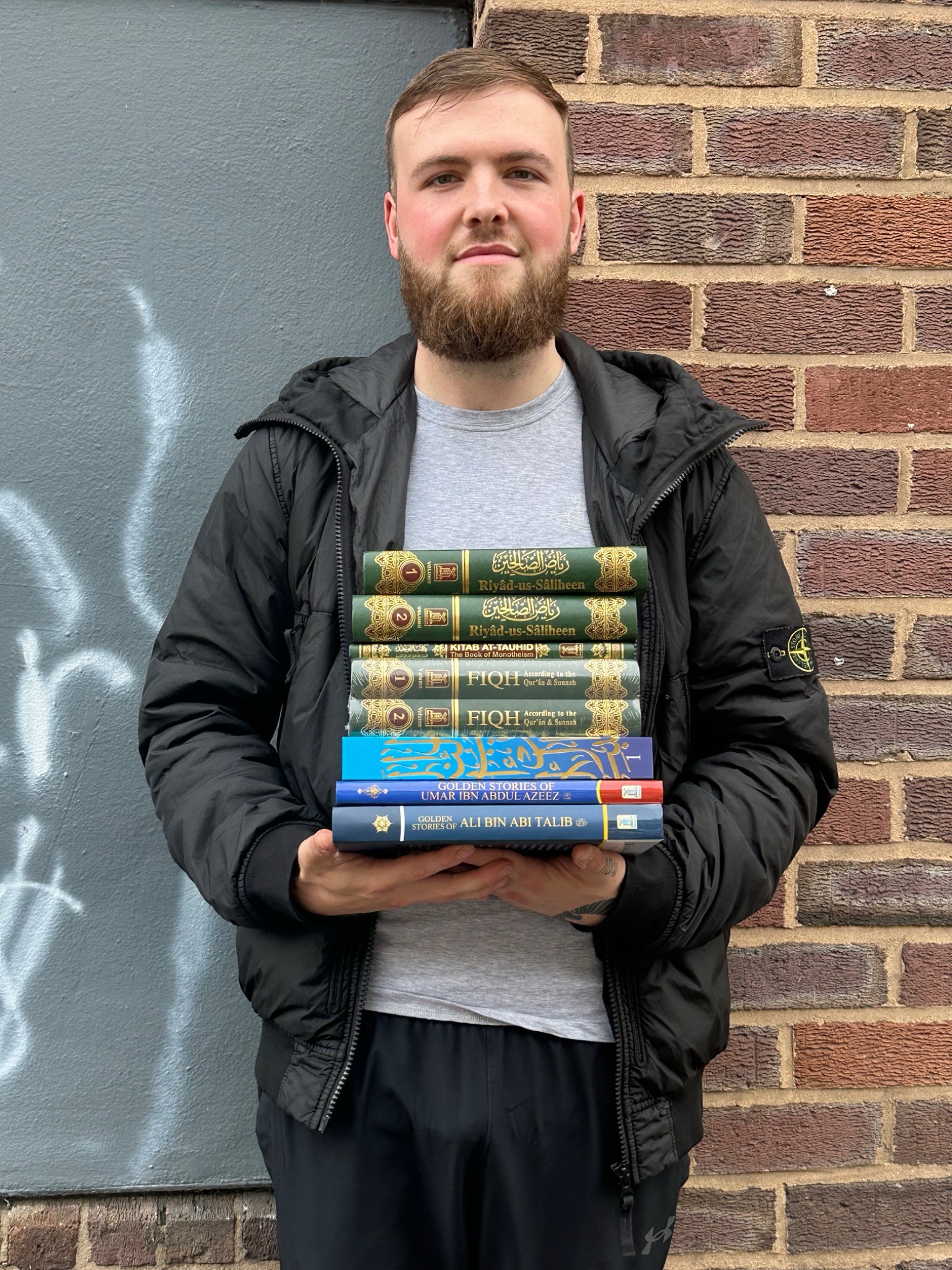
A Birmingham TikTok creator who spent years defending Islam to more than 100,000 followers has spoken exclusively to Britannia Daily about his decision to embrace Christianity — describing the theological doubts, death threats from former supporters and a series of vivid dreams involving Jesus that he says ultimately changed the course of his spiritual life.Before publicly embracing Christianity, Kieos had spent years creating Islamic content and defending the faith to an audience of more than 100,000 followers on TikTok.
Growing Up Without Religion
Unlike many people who move between faith traditions, Kieos says religion played almost no role in his upbringing. “I am from Birmingham, UK. Faith was not a part of my childhood at all — my family are all atheist,” he told Britannia Daily.
Despite having no religious framework growing up, he says he always sensed there was something beyond the material world. “I considered myself agnostic when it came to organised religion, but always believed in God, more so as in everything or as they say, ‘spirit’.” His search for meaning led him to explore spirituality through unconventional routes. “I even dabbled in psychedelics and philosophy for spiritual reasons. So I have always been curious, but not settled on religion.”
Discovering Islam
Kieos says he encountered Islam for the first time at the age of 25, and his journey into the faith began entirely on his own terms — without the influence of a Muslim social circle. “I came to Islam on my own accord. I didn’t have Muslim friends,” he told Britannia Daily. This detail matters: there was no community pulling him toward the religion, no friends introducing him to it. His path to Islam was self-directed from the very beginning. “It was mostly social media videos, which led me to buy and read books, and unfolded from there.”
The concept that resonated most strongly was Islamic monotheism. “It was through the logical reasoning of one God, as I always believed in oneness when I was seeking.” He says the simplicity of the message was immediately compelling. “It clicked intellectually when it appeared to be simple, straightforward and common sense. One God, worship that alone.” The arguments made by those involved in Islamic outreach also played a role. “The arguments given by people in the field of dawah seemed to make sense.”
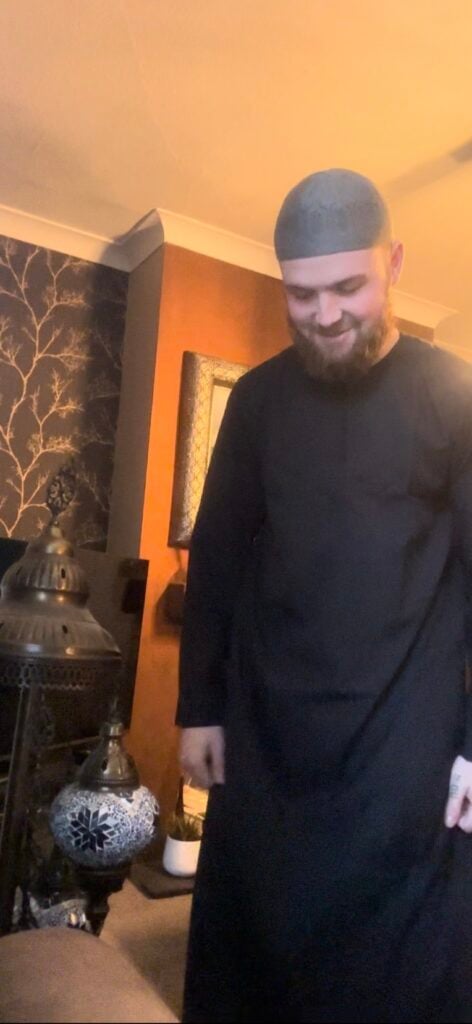
Kieos wearing traditional Islamic clothing during his years as a committed Muslim convert, before later leaving the faith.
Becoming a Public Muslim Voice
As his engagement with Islam deepened, Kieos began creating faith-related content online and built a following of more than 100,000 people on TikTok. He became known for defending Islamic beliefs and engaging in theological discussions with his audience. Looking back, he believes the public nature of his role made his subsequent doubts far harder to process — and he is candid about the personal cost of that tension.
“There are many things I couldn’t logically defend, and I found myself doing that on lives even though deep down I was questioning them too — which of course I feel bad about,” he told Britannia Daily. The admission is striking in its honesty. It reveals not just an intellectual conflict but a genuine moral discomfort — a man publicly championing arguments he privately doubted, aware of the weight that carried.
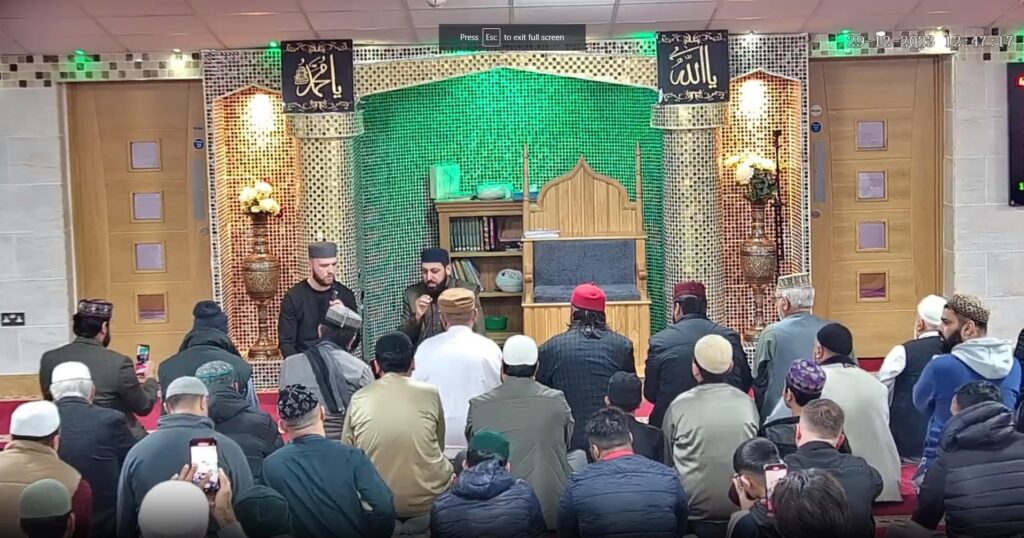
Kieos addresses a congregation at a mosque during his time as a practising Muslim, where he was actively involved in Islamic teaching and community events.
His Family’s Reaction to Converting to Islam
When Kieos first converted to Islam, his family struggled to understand the decision. “My family did not understand it at all.” While he says there was no major confrontation, tensions surfaced in quieter ways. “I didn’t get any major backlash, only little bits of gossip.” However, some relationships did not survive the change. “I did lose some family members — they did not talk to me after finding out.”
A Serious Commitment to Islam
Kieos is emphatic that he was not a casual or nominal Muslim. “I was far from perfect, but the obligatory practice of praying I did every day, missing the odd ones, but I tried.” Fasting was something he consistently observed. Beyond the basic obligations, he invested heavily in learning the faith. “I wanted to learn, so I spent a lot of money on books, took courses, and spoke to people of knowledge. I was fully committed, I believe.”
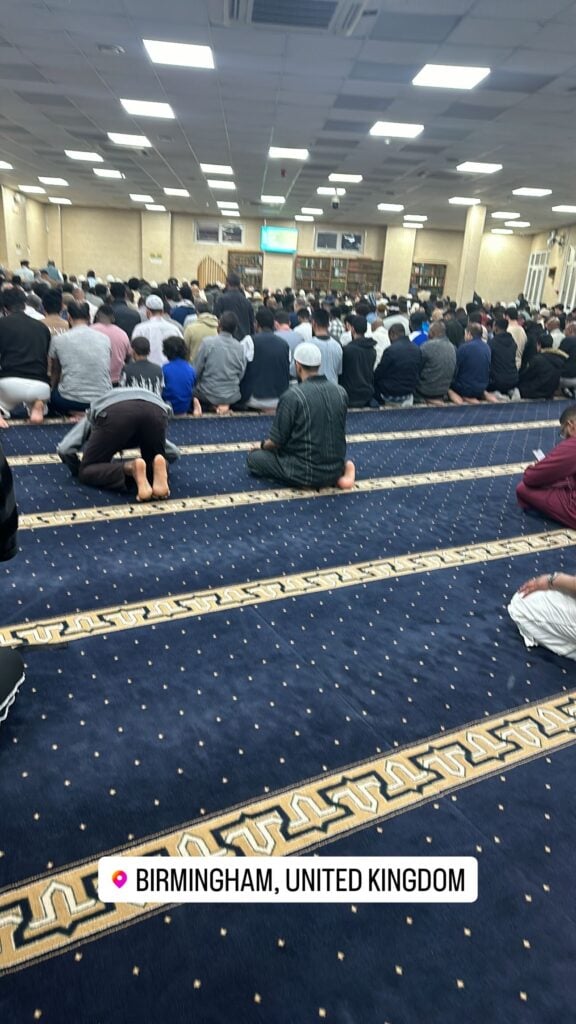
A crowded mosque in Birmingham where Kieos regularly attended prayers and immersed himself in the local Muslim community.
The Questions He Could Not Ignore
Despite that commitment, doubts eventually began to emerge that Kieos found impossible to set aside. His concerns centred on both hadith literature and specific Quranic passages he came to believe conflicted with modern scientific understanding — specifically Surah Al-Mulk (67:5), Surah Al-Mu’minun (23:14) and Surah At-Tariq (86:6-7).
Determined to find answers, he reached out to Muslims he considered knowledgeable. “I spoke on the phone with two people, three others via messages, all knowledgeable.” Some responses opened new avenues of thought. “One of them gave interesting answers regarding the hadith, which I then researched after the phone call.” Others left him more frustrated than before. “Another one told me ‘leave that which gives you doubts’ — a hadith reference — that of course didn’t clear up my questions.” He also noted that the Quranic concerns he identified emerged after those conversations, and that he would still welcome a response. “I would love to hear someone explain it, but I haven’t asked anyone yet.”
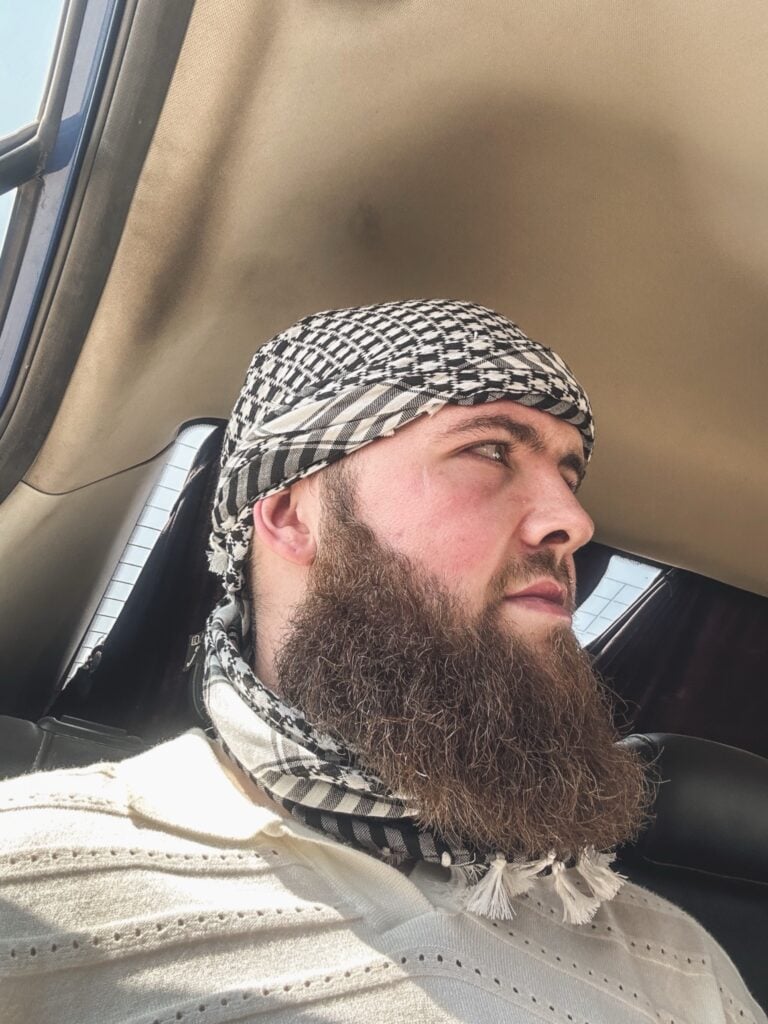
Kieos photographed during his travels in the Muslim world, where he spent time learning about Islamic culture and religious traditions.
Criticism, Slander and Death Threats
When Kieos began expressing his doubts publicly, the reaction from parts of the Muslim online community was severe. “Most of the others have slandered me, made videos about me, sent me death threats and insulted me — not tried to answer a single one of my doubts. Which of course pushed me further away.”
He was careful to distinguish between those who reacted badly and those who did not. “I have three Muslim friends out of the old friend group that have stuck with me, as they see I’m just a person trying to figure the truth out from a sincere place.” That framing matters — it is not simply that those friends tolerated his departure, but that they understood it as genuine seeking rather than betrayal or weakness. He also noted that some online figures used the situation for personal gain. “I have experienced Muslim creators trying to get attention by lying about me and slandering my name.”
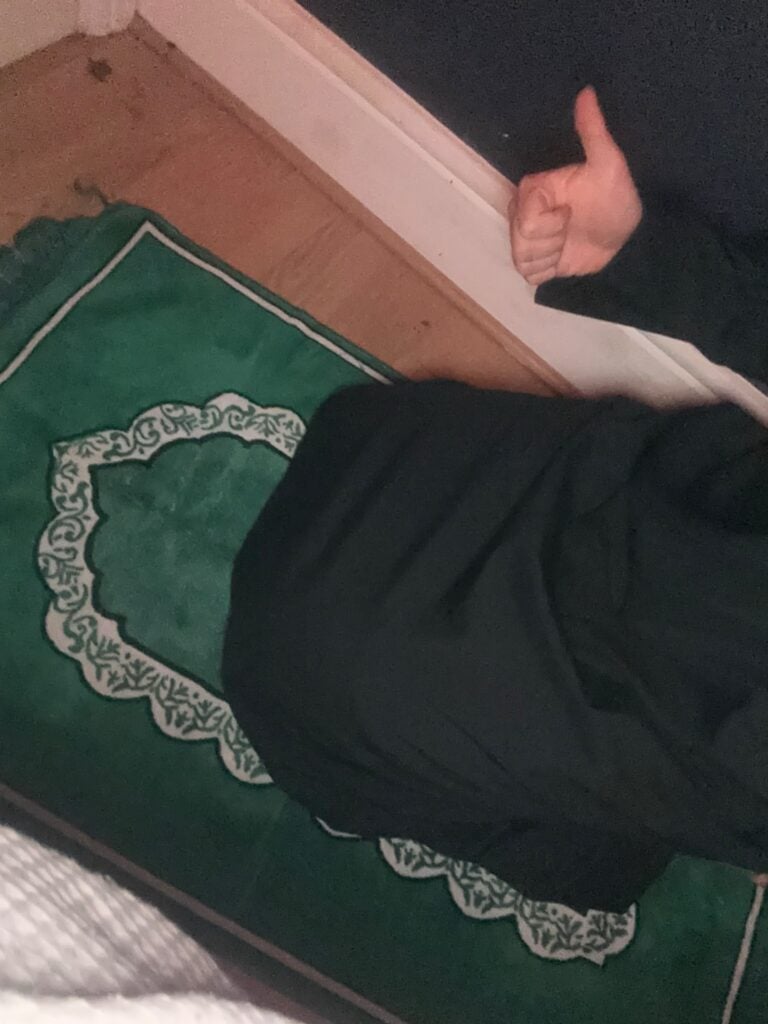
Kieos pictured praying on a prayer mat, reflecting the daily religious practices he observed while following Islam.
A Slow and Private Process
Kieos is clear that leaving Islam was not a sudden or dramatic departure. “It was definitely a slow, gradual process.” For months, he kept his doubts entirely private — and he is explicit about why. “The only reason I didn’t publicise it was out of respect, to not give other people doubts.” He adds: “I try to live my life by ‘live and let live’.” That principle, he says, guided both his silence during the period of questioning and his restraint in how he eventually went public.
Even after going public, the attacks continued. “Now I have been slandered completely all over the internet and still am being to this day by the same people that used to call me ‘brother’.” Despite this, he says he has made a conscious choice to remain respectful. “I will always remain respectful as I’m focused on making myself better more than anything else.”
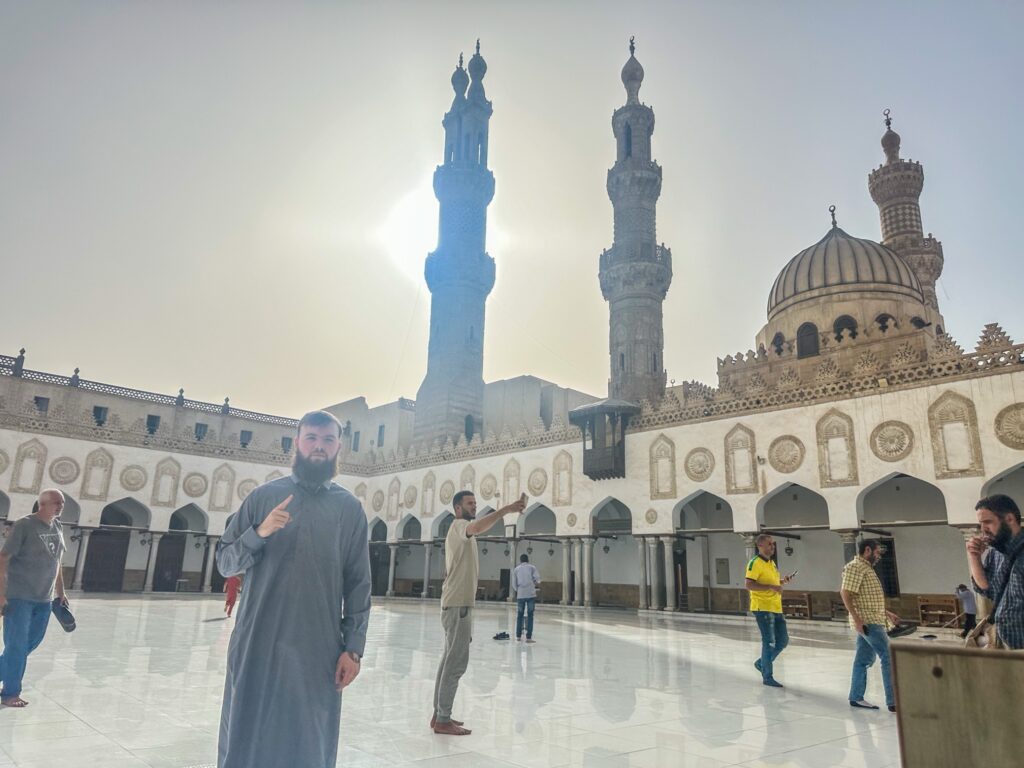
Kieos visiting the historic Al-Azhar Mosque complex in Cairo, Egypt, during his journey of Islamic study and exploration.
‘I Saw Jesus in My Dreams Three Nights in a Row’
One of the most striking moments in Kieos’ journey came after he had begun seriously questioning his beliefs. On three consecutive nights, he says he dreamed of Jesus — an experience he still finds difficult to fully explain.
“Honestly, I still haven’t made real sense out of it. I never have dreams,” he told Britannia Daily. He acknowledges the psychological interpretation but says it does not account for his specific circumstances. “People could argue that if I were looking at images of Jesus, they could be brought forward in my subconscious whilst sleeping. But I never did, which makes it strange.”
For Kieos, the timing and the repetition made the dreams impossible to dismiss. “I have taken it as a sign from God to look into Christ, whom I have denied the divinity of my whole life.” Rather than converting overnight, the experience motivated him to begin asking questions and exploring ideas about Christianity that he had previously rejected entirely.
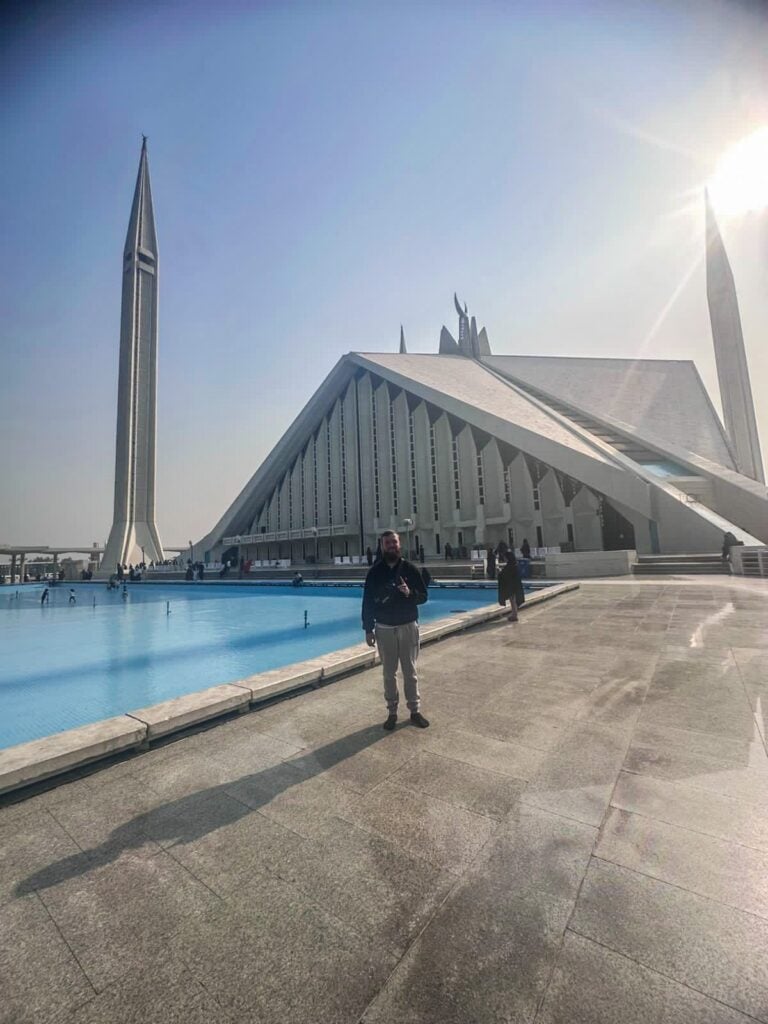
Kieos standing outside Islamabad’s iconic Faisal Mosque in Pakistan, one of the world’s largest mosques.
‘I Realised I Was Looking at God the Wrong Way’
Beyond theology and dreams, Kieos told Britannia Daily that one of the most significant turning points in his journey was a fundamental change in how he understood his relationship with God.
For years, he had approached faith primarily as a system of obligations — following rules, performing rituals and avoiding mistakes. “For a long time I felt like getting closer to God was following the rules as closely as I can. I thought if I did enough, said the right things, carried out the rituals, that would mean I got closer to Him.” While he still values discipline, he says he eventually felt something essential was missing. “My relationship with God started just feeling like a checklist, kind of like a point system instead of that relationship. I was so focused on trying to get perfect with what I’m doing instead of getting to know God.”
The shift came gradually. “One day something kind of clicked — God doesn’t look at us the same way other humans look at us. Only God can see what’s in the heart. He sees our struggle, love and sincerity.” This new understanding transformed the way he prayed. “Prayer for me, especially recently, has changed completely since I’ve been praying in my own language and just feeling that connection instead of just repeating the same thing every day because I have to. Now it’s more like a conversation. It’s more just from the heart.”
The change brought him a peace he says he had not previously experienced. “The closer I got to that understanding, the more peace I felt internally. For a long time I felt like I was trying to earn God’s love. But now it’s like I’m open to receive it. That shift changed everything for me. That is really the main moment that I realised I was looking at it all wrong.”
Giving His Life to Christ
Today, Kieos says he considers himself fully committed to Christ. “I am 100% open, but in my heart, I have given my life to Christ.” He says he has spent roughly five to six weeks exploring Christianity privately and speaking at length to knowledgeable Christians. “I have asked knowledgeable Christians a million questions.”
One of the most significant practical changes, he says, has been in the way he prays. “I started praying in English, genuinely from my heart, and it has changed everything for me.” He added simply: “I truly feel happy.”
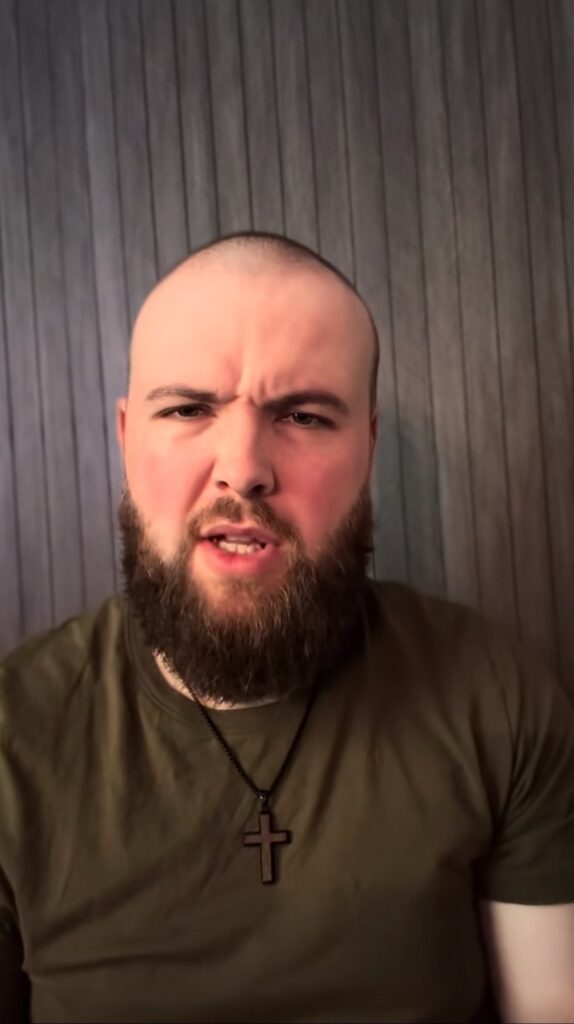
©Britannia Daily Copyright
Kieos speaking publicly after embracing Christianity, sharing his testimony and explaining why he left Islam.
Understanding God Through Christianity
Discussing theology, Kieos explained how his longstanding belief that God is fundamentally spirit aligns with what he has come to understand about Christianity. “God the Father — it says in the Bible about being spirit.” He was also clear about the role of the Holy Spirit within Christian doctrine. “Of course, in the Trinity, there is the Holy Spirit also.” While acknowledging the complexity of trinitarian theology, he says he understands God’s essence as ultimately beyond physical form. “Even with Jesus being one with the Father, that is ‘in essence’. In essence, in my view, is formless, of course, and it aligns with spirit.”
Going Public to More Than 100,000 Followers
With more than 100,000 followers watching, Kieos knew that announcing his decision publicly would generate strong reactions — and he was right to be cautious. “I expected the worst.” The video announcing his decision sat in his drafts for more than a week before he finally posted it. “I expected to be slandered by Muslims and slandered by non-Muslims for being an idiot or a ‘traitor’.”
The response, while mixed, was not entirely as hostile as he had feared. “I received a lot of love from beautiful people, fortunately, which has made this whole journey easier.” He says many followers saw him as somebody genuinely searching for truth rather than performing a controversy. “Most people have seen me as a person trying to figure things out and find fulfilment in life.” The warmth of that reception carried real weight for him. “Which means a lot to me as I’m used to just being hated.”
A Divided Response
When asked to estimate how his audience had responded overall, Kieos was candid. “From my Muslim audience, I would say 80% bad, 20% understanding or good.” Among non-Muslim followers the picture was almost the reverse. “From the non-Muslims that followed me, I’d say 90% good, 10% bad, roughly.” Despite the criticism he received, he says he has no regrets about speaking honestly about where his journey has led him.
His Message to Others Questioning Their Faith
Asked what he would say to somebody going through a similar crisis of faith, Kieos offered straightforward advice rooted in his own experience.
“Being honest, truthful, and free to share your journey and doubts is more important than trying to keep others on the internet happy.” He encouraged people to seek out genuine conversations and to walk away from hostility rather than engaging with it. “Speak to people. If they slander or don’t answer, block them.”
His final words to Britannia Daily were unambiguous.
“People will always find a reason to hate on you, slander you and make fun of you. Ignore them, focus on yourself and speak the truth no matter what.”
“Pay no attention to negative people, as they will drain your energy. Be stingy with your time and energy.”
