



Best for Britain says Finland’s accession shows the process can be quick when countries are closely aligned and there is strong political will on both sides, though the plan is a proposal rather than an agreed timetable.
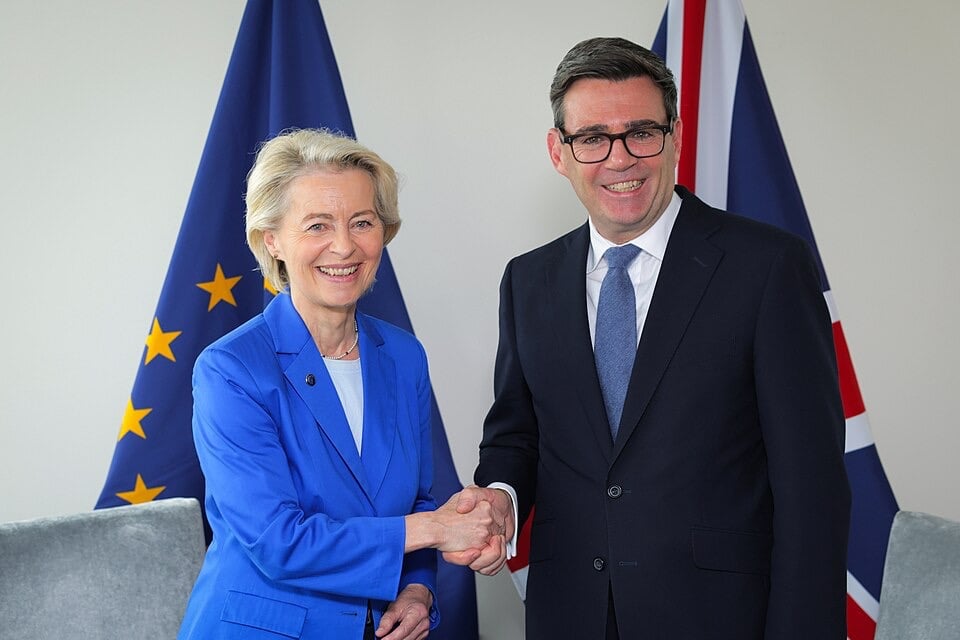
Britain could be fast-tracked back into the European Union within a single parliament, according to a new report by the pro-European campaign group Best for Britain. The report, “How the UK joins the EU, and how long it would take”, is backed by senior figures including a leading member of the European Parliament. It argues that negotiations could take less time than the UK’s trade deal with India. The findings come after Prime Minister Andy Burnham left the door open to rejoining the bloc.
The Finland precedent
The report’s main precedent is Finland, which joined the EU in less than three years in the mid-1990s. It applied in March 1992 and became a member in January 1995, with accession negotiations lasting about 13 months. The authors say this shows the process “can be far quicker when there is a high degree of existing alignment and strong political will”.
Best for Britain argues that the UK could move faster than a typical applicant because it was previously a member and has kept substantial regulatory alignment. The report also notes that the UK’s trade talks with India took 40 months, more than three years. It cautions that Finland’s experience does not guarantee the UK could match its timetable, and that political will would be needed on both sides.
Hurdles on the way
The report identifies several possible stumbling blocks, including whether the UK would have to join the euro and the Schengen passport-free travel zone. It argues these could be overcome, pointing to EU members such as Sweden and Denmark that do not use the single currency. The UK would not necessarily have to adopt the euro immediately or join Schengen as part of accession, according to the report, but the terms would have to be negotiated. Britain could not assume it would regain the special arrangements it held before Brexit.
The process would also be demanding. The UK would first have to negotiate accession terms. Under Article 49 of the Treaty on European Union, membership requires unanimous approval by existing member states and the European Parliament’s consent. The accession treaty must then be ratified by all member states and the applicant country. Any government opposed to the proposed terms could therefore delay or block the process. The fast-track timetable is a proposal from pro-European researchers, not an agreed EU plan.
Burnham and public opinion
Mr Burnham announced at Labour’s annual conference last month that he would look at options to bring Britain closer to the EU. He suggested that re-entry could feature in Labour’s next election manifesto. His announcement was welcomed by several EU leaders, including French president Emmanuel Macron and Spanish prime minister Pedro Sanchez.
Public support for rejoining appears to have risen. Polling expert Professor Sir John Curtice reported in September that 61% of Britons would vote to rejoin the EU, compared with 39% who would vote to stay out. The source says this is the highest level of support since the Brexit vote. A separate YouGov survey in October put support at 52%, which shows how figures can differ depending on the poll, its timing and question wording. Support in principle does not necessarily guarantee the same result in a referendum.
Closer ties short of membership
The UK and EU are already pursuing closer co-operation in areas including food standards, electricity, security and defence. Such arrangements can improve relations without requiring Britain to rejoin. Full membership would be a far larger undertaking, involving negotiations over the UK’s rights, obligations, financial contributions and participation in EU institutions.
