



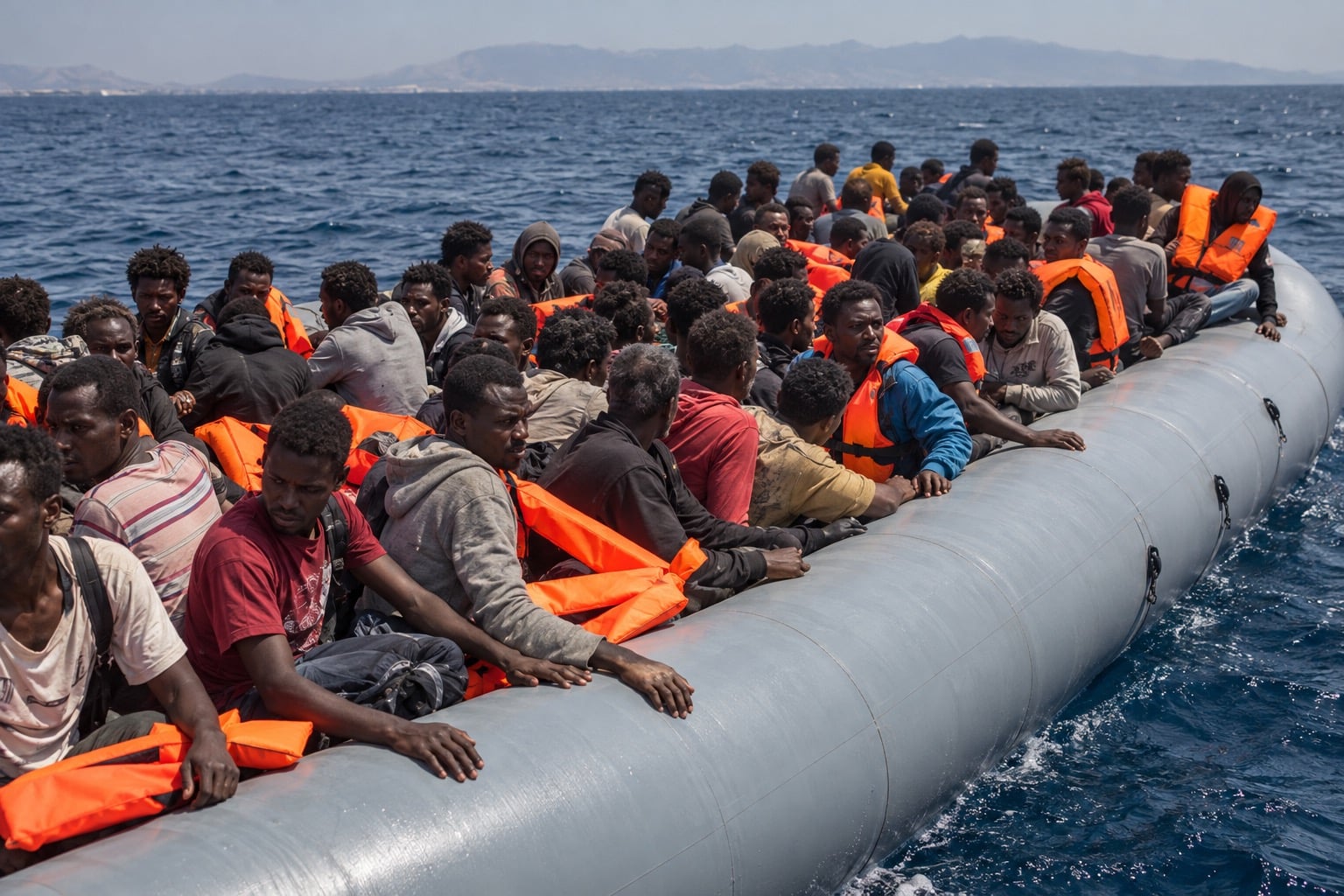
The UN migration agency says 84 people are still missing after the vessel, which was heading for Yemen, sank overnight with 305 people aboard.
At least 139 migrants, including 15 children, have died after a boat capsized off Djibouti, according to the International Organization for Migration (IOM). The vessel was carrying 305 people when it went down near Guhere, north of the port town of Obock, during the night of 8-9 October. It was travelling from Djibouti to Yemen, according to survivor accounts cited by the IOM. Eighty-two people survived, all of them Ethiopian nationals, and Djiboutian authorities are continuing to search for the 84 who remain missing.
Counting the dead
Alexandre Coissac, the IOM’s chief of mission in Djibouti, told the Associated Press (AP) the toll only includes people buried by the Djiboutian authorities. Some victims have been buried by other migrants, he said, and will be added to the official count only once officials can verify the bodies.
The IOM said 109 bodies had been recovered, among them 52 men, 42 women and 15 children. The children were nine girls and six boys. According to the AP, video taken by IOM staff shows shoes and other belongings scattered on a beach near the wreck.
“This is a devastating loss of life,” Mr Coissac said. He said the disaster underlined the dangers facing migrants on the corridor as they seek economic opportunities.
Support for survivors
The IOM said it was assisting 64 survivors at its Migrant Response Centre in Obock, offering healthcare, psychosocial support, temporary shelter, food and protection services. It is also helping them restore contact with their families. Local authorities are providing medical care and arranging burials.
Why people take the route
Tens of thousands of migrants from the Horn of Africa travel through Djibouti each year before crossing the Bab el-Mandeb Strait towards Yemen. The IOM said many hope to reach Gulf countries in search of safety, stability and work. It cited poverty, insecurity and the effects of climate change as factors driving them. The agency recorded more than 20,000 movements from Ethiopia into Djibouti between 10 September and the latest update.
The dangers do not end at sea. The IOM said migrants who reach Yemen can face violence, arbitrary arrest and detention, exploitation and trafficking. It has documented people being deceived, confined, extorted and forced into labour. Some are held in smuggling compounds and abused until relatives pay ransoms, with women and children particularly exposed to sexual violence.
A route that was already deadly
The IOM said more than 900 migrants died or went missing on the sea route to Yemen in 2025, while the number attempting it rose by 18%. In March 2026, a separate shipwreck off Obock left nine people dead and 45 missing. Between January and March this year, the agency recorded 94 deaths or disappearances along the Eastern Route, 61 of them in Djibouti. Drowning accounted for 62 of the cases across the route.
Movement along the route has grown sharply. The IOM recorded about 351,000 movements towards the Gulf between January and September 2025. Arrivals in Yemen more than tripled over that period, from roughly 16,000 in the first nine months of 2024 to 51,800 in the same months of 2025.
At the end of 2025, the IOM estimated that about 132,300 migrants were stranded in Yemen, with a further 6,600 in Somalia and 400 in Djibouti. Many had little access to shelter, healthcare or safe onward travel. Reaching the Gulf does not guarantee security either. About 95,100 Ethiopian migrants were forcibly returned from Saudi Arabia in 2025, up from 93,500 in 2024, and the number of children among them rose by 14% to around 4,700.
The IOM’s 2026 regional appeal identified about 1.35 million people in need of help and seeks more than $32m. It covers emergency healthcare, food, shelter, protection against trafficking and assistance for those seeking voluntary return.
Other sea routes
The IOM said sea crossings remain among the deadliest migration routes in the world. At least 2,185 people died or went missing in the Mediterranean in 2025, and another 1,214 on the West African Atlantic route towards Spain’s Canary Islands. The agency said the real toll was probably higher, as at least 1,500 further people were reported missing at sea whose cases could not be verified because of limited search-and-rescue information.
By mid-September this year, the IOM had recorded 2,292 deaths or disappearances among migrants trying to reach Europe by sea, even though arrivals by sea were down 39% on the same period of 2025.
