



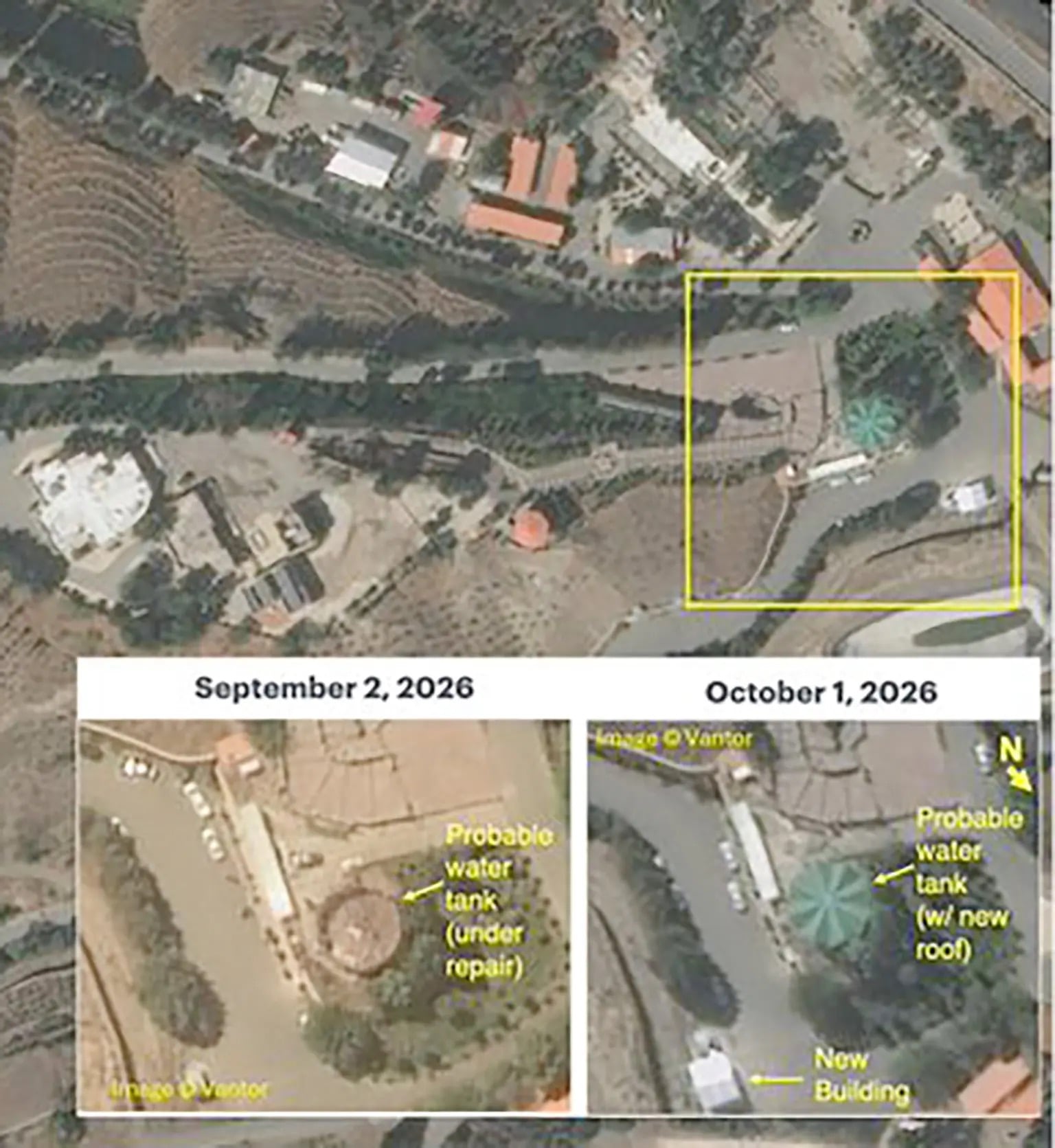
A Washington-based research group says vehicle traffic, excavation and new building work at the Minzadayi compound point to efforts to restore capabilities lost in the Israeli attack, though imagery alone cannot prove weapons work has restarted.
Iran appears to have resumed activity at a nuclear facility that Israel struck in March, according to new satellite imagery released by the Institute for Science and International Security. The high-resolution images show “unusually heavy” vehicle traffic and excavation at the Minzadayi compound, northeast of Tehran. The Washington-based organisation said on X on Saturday that the activity pointed to efforts “to not just clean up the site … but to resume regular activities”. Satellite imagery can show construction and movement, but it cannot by itself prove that Iran has restarted nuclear weapons development there.
What the images show
According to the institute, significant vehicle presence was spotted between early September and early October. Cars were parked outside the security perimeter, and several passenger vehicles and trucks were seen inside it. The institute’s assessment also identifies debris clearance, repairs to a damaged hillside and further earth-moving work. The images show repairs to what it believes is a probable water tank, and a small new building near the compound.
In a report released this week, the institute said: “Given what is known about this compound, this activity may be indicative of an effort by Iran to reestablish a nuclear weapons development capability and to reconstitute what was lost in the attack on the compound.”
The site is believed to be involved in research and development of nuclear warheads, based on public reporting and statements from the Israel Defense Forces.
The March strike
Israeli aircraft struck the heavily secured compound on 3 March, three days after the war in Iran began with joint US and Israeli strikes. Those strikes killed Ayatollah Ali Khamenei and dozens of his top leaders at his Tehran compound.
Other sites under scrutiny
A separate assessment by the same institute reported reconstruction at the Taleghan 2 facility within the Parchin military complex. It also identified continued construction at the underground Pickaxe Mountain site, which it judged was not yet operational.
Iran’s uranium stockpile remains a separate concern. Before the strikes, the International Atomic Energy Agency estimated that Iran held 440.9kg of uranium enriched to up to 60% purity. How much survived the attacks, and where it is now, remains uncertain, and inspectors have had difficulty accessing the bombed facilities.
Nuclear weapons research and uranium enrichment are different activities. Minzadayi is described as a weapons-development compound, while enrichment facilities produce enriched uranium. Renewed activity at Minzadayi does not on its own establish that enrichment has resumed there.
Iran’s missile capacity
The report follows Bloomberg’s reporting, published on 9 October and citing Western officials familiar with intelligence assessments, that Iran has spent recent months rebuilding its weapons arsenal. It said Iran remains “well-stocked” with ballistic missiles and anti-ship weapons despite months of US and Israeli strikes, and has kept the capacity to manufacture more rapidly. Bloomberg also reported that Russia has been supplying Iran with missiles.
An earlier Bloomberg report in June, citing Western intelligence assessments, estimated that Iran had retained about 75% of its pre-war missile stockpile, potentially including newly supplied Russian missiles. These claims rest on intelligence assessments attributed to unnamed officials rather than independently verified inventories.
