



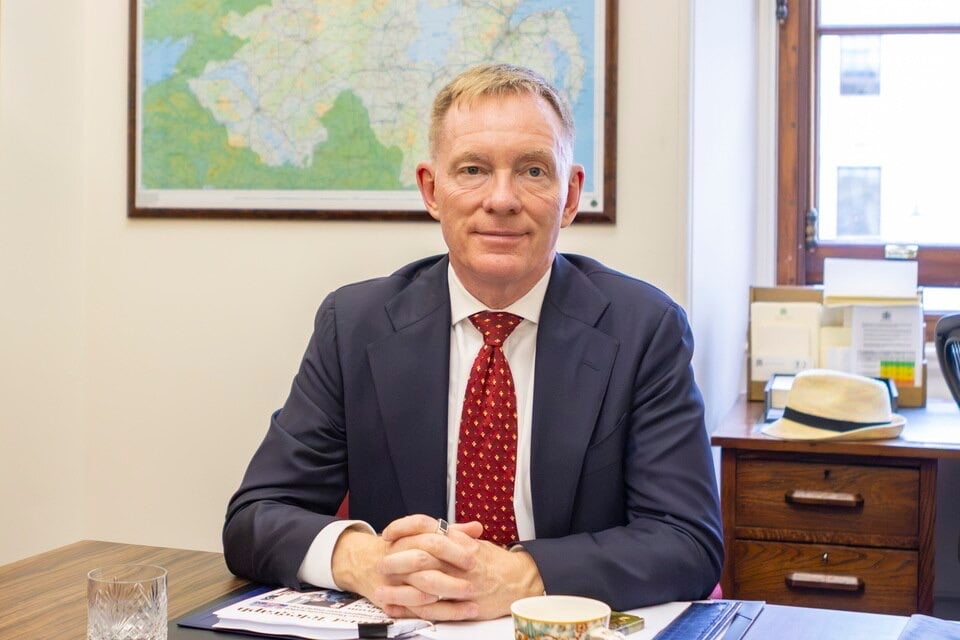
The Northern Ireland Secretary says talks between Orangemen and Garvaghy Road residents failed to produce a local agreement, and that changed circumstances mean the march cannot go ahead as approved.
Northern Ireland Secretary Sir Chris Bryant has said he will ban the Drumcree parade, bringing a stand-off between Orangemen and nationalist residents of the Garvaghy Road in Portadown towards a conclusion. The dispute has lasted almost two weeks. Sir Chris said he spent the past fortnight trying to broker a mutually acceptable deal, including hosting several rounds of negotiations at Hillsborough Castle last week. He said it had not been possible to reach a local resolution.
The Secretary of State’s statement
In a statement, Sir Chris said he had remained in frequent contact with both sides after the Hillsborough talks. “Unfortunately it has not been possible to achieve a local resolution,” he said. “I have therefore been intensively considering all options for bringing this dispute to an end.”
He went on: “Consequently, and in the interests of wider public interest and safety, I’ve come to the conclusion that the circumstances under which that decision was made have now changed considerably. As a result, the procession cannot go ahead as it was determined.”
How the dispute reignited
The latest confrontation followed a decision in September by Northern Ireland’s Parades Commission, which allowed a limited Orange Order march along the Garvaghy Road for the first time since 1998. Permission was restricted to a maximum of 35 marchers, with no band or accompanying supporters, and was subject to a specified morning time window.
Protesters blocked the route after the commission’s decision, preventing the procession from going ahead as planned. The stand-off has involved large crowds and a substantial police operation, along with investigations into alleged offences during the protests. The operation was reported to have cost more than £3m.
A series of court rulings
The path to the commission’s decision involved several legal steps:
- In August, the High Court overturned the commission’s earlier restrictions after a procedural error.
- On 26 September, the Court of Appeal cleared the way for the limited march.
- A separate legal challenge brought by residents was heard in October, with judgment reserved.
National attention
The dispute has drawn attention beyond Northern Ireland. Artists and public figures, including Noel Gallagher and Susan Sarandon, signed an open letter backing Garvaghy Road residents and urging government intervention. Politicians in Northern Ireland and the Republic of Ireland have also been involved in efforts to find a resolution.
Drumcree’s history
Drumcree has long been a flashpoint for sectarian tension. During the 1990s, confrontations between Orange Order marchers and nationalist residents led to serious disorder and extensive security operations. Restrictions on the annual parade route have been in place since 1998, the year the Good Friday Agreement was signed.
