



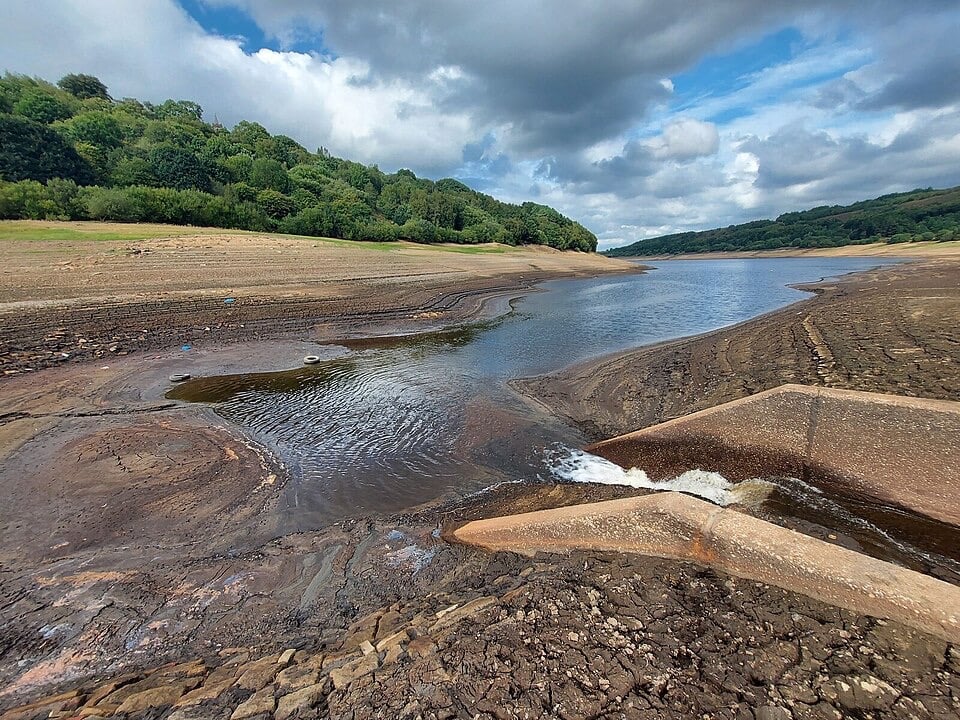
The Environment Agency says prolonged dry weather has depleted water sources across the region, and a very wet winter may be needed for conditions to recover.
The Environment Agency has declared a drought in Yorkshire, citing low water levels in reservoirs and rivers after long dry spells in the spring and summer. The announcement follows a summer in which much of Britain spent extended periods in drought conditions and many households faced hosepipe bans. Water companies said demand had outstripped supply, with reservoirs and other key infrastructure falling well below their ideal capacity. The agency has warned that the effects reach beyond water supply to wildlife, farming and waterways.
Reservoirs under pressure
In a September update, Yorkshire Water reported that its reservoirs were 58% full, below the 73.9% average for that point in the year. The figure was higher than the 42.1% recorded at the same time in 2025.
The problem extends well beyond the region. In August, the Environment Agency reported that 71.3% of England was in drought, putting pressure on public water supplies, farming, navigation and the natural environment. National reservoir storage was still reported at 55% at the end of September.
Risks to wildlife and the environment
Low river flows and falling water levels can damage habitats, worsen water quality and raise the risk of algal blooms. They can also contribute to fish deaths. Agriculture and waterways are affected too.
What recovery could require
Research highlighted by the Environment Agency in October indicated that rainfall would need to reach around 120% of typical levels over the following seven months for all areas to recover from drought conditions. A very wet winter may therefore be needed to reverse the situation.
Even so, rain does not guarantee an immediate recovery. Reservoirs need sustained replenishment, while groundwater and river levels can take longer to recover.
