



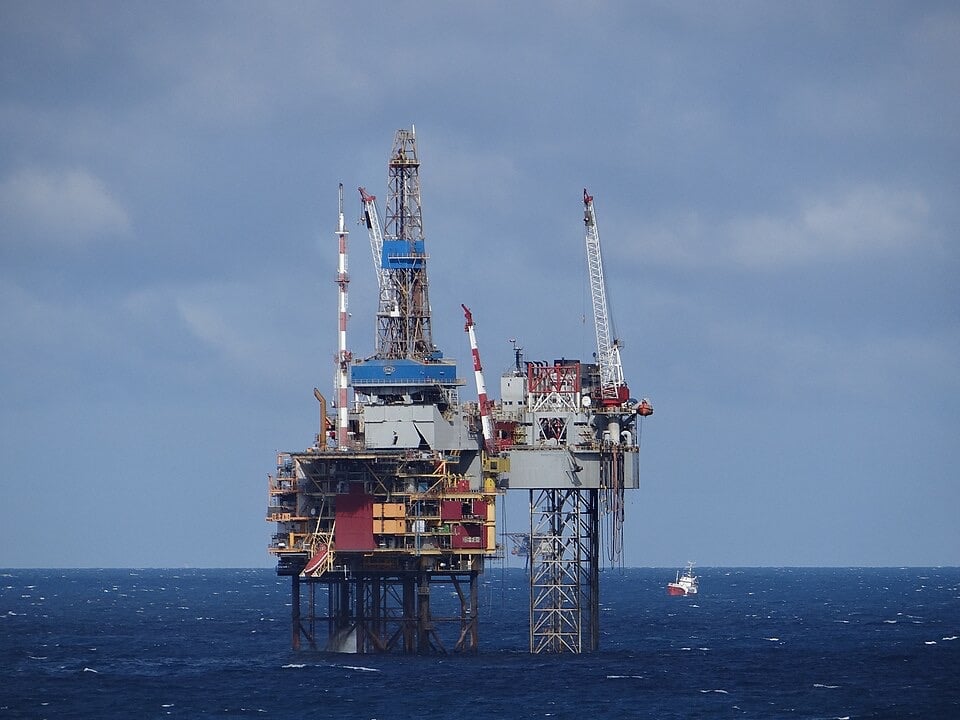
A cold snap could push UK storage towards empty by the end of winter, according to a new report, raising the prospect of higher bills as the country leans on imported liquefied natural gas.
Britain could exhaust its stored gas by the end of winter if severe cold weather arrives in the coming months, according to a report by the European Network of Transmission System Operators for Gas (ENTSOG). The report warns that UK reserves could fall to zero. The UK relies on backup storage in the EU when its own stocks run low, but those stocks are also depleted. The Government is under pressure to approve the Jackdaw North Sea gas field.
Why storage is under strain
According to ENTSOG, EU gas reserves are 72% full going into winter, well short of the 88% level seen as the minimum needed. They are also lower than a year ago, when storage was 83% full on 1 October 2025. The report says EU storage capacity is set to fall to 11%, far below the 30% regarded as safe.
If that happens, Britain could be forced to turn to US liquefied natural gas (LNG), which would push up costs for households. The report said: “Maintaining strong LNG deliveries throughout the winter remains important to support the European gas balance and preserve storage levels.”
It added: “If LNG availability remains limited, storage levels could fall well below 30 per cent by the end of the winter, increasing impact in the event of potential cold spells later in the season.”
The report explains that storage levels at the end of winter affect the following year because of limits on how much gas can be injected.
What the report does and does not say
Running out of stored gas would not mean the UK runs out of gas altogether. Britain also draws on North Sea production, pipeline imports from Norway and continental Europe, and LNG shipments, so storage is only one part of the supply system. The ENTSOG analysis looks at different scenarios, including normal and colder winters, restricted LNG supplies and possible infrastructure disruption. It highlights vulnerabilities if several pressures coincide, rather than predicting that households will lose their supply.
The UK has relatively limited storage. Its total capacity is about 1.7 billion cubic metres, equivalent to around seven days of average winter demand. At the start of October, UK storage was around 48% full, with about 8.6 terawatt-hours (TWh) held against a working capacity of 17.8 TWh.
The Middle East and global LNG
The report points to the continuing conflict in the Middle East as a major factor in global LNG markets. Shipping through the Strait of Hormuz, which accounts for around 20% of global LNG trade, remains significantly constrained. That limits exports from Qatar and the United Arab Emirates and tightens supply worldwide.
Europe and Asia are competing for the cargoes that are available, which has contributed to higher and more volatile gas prices. As a result, imports now come mostly from the US.
Pressure on household bills
Households are already feeling the strain. Energy bills rose by 4% this month, and the forecaster Cornwall Insight expects the annual price cap for a typical dual-fuel household to increase by £276, from £1,723 to £1,999, in January 2027. That remains a forecast, with Ofgem expected to announce the official cap in November. Bills could rise even without a physical shortage of gas.
Jackdaw and Rosebank
The warning comes as Prime Minister Andy Burnham faces pressure to approve the Jackdaw gas field in the North Sea, which could boost UK supplies. Last month, Mr Burnham said he would take a “pragmatic” approach to North Sea oil and gas ahead of pending decisions on Jackdaw and Rosebank “as we build a bridge to a clean energy future as we confront the climate crisis”.
