



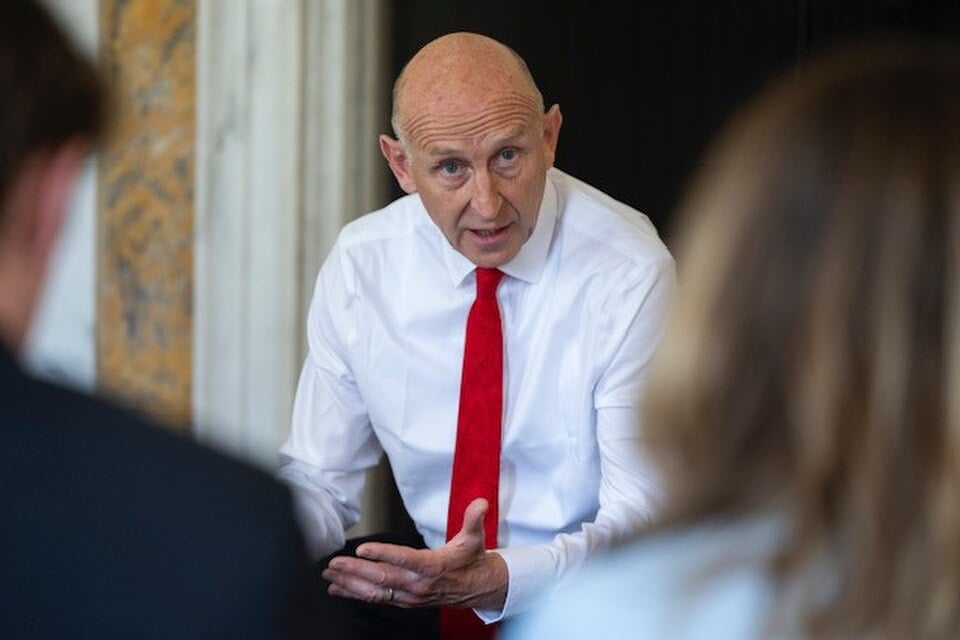
Chancellor John Healey is understood to be weighing changes to small business rates relief that could exempt thousands of firms from the tax entirely, as part of a package of measures aimed at reviving Britain’s struggling High Streets.
Thousands of small businesses could be exempted from paying business rates altogether under changes being considered by Chancellor John Healey ahead of his first Budget on 28 October. The proposals, which form part of a wider package of tax and incentive measures for High Street firms, come as the cost of doing business in Britain is expected to be a central theme of the statement. Mr Healey has reportedly held a series of workshops with business groups over the past fortnight to gather views on how to support struggling shops, in support of Prime Minister Andy Burnham’s pledge to turn High Streets from “markers of decline” into a “symbol of Britain’s renaissance.”
Threshold rise could exempt thousands of firms
One option under consideration is raising the threshold for small business rates relief (SBRR), which currently exempts firms operating from premises with a rateable value below £12,000. That figure has been frozen while a nationwide revaluation took place, but if increased in line with inflation, it would rise sharply to £17,096 – potentially removing thousands of companies from business rates entirely. A tapered form of relief could also be introduced for businesses occupying premises with a rateable value of up to £20,000, designed to prevent firms from facing a sudden jump in their tax bill simply because they sit just above the new threshold.
It is understood the proposed £17,096 figure is a calculation based on uprating the existing threshold for inflation, rather than one that has been formally adopted by the Treasury. A Treasury spokesman said: “As has always been the case, decisions on tax are a matter for the Chancellor to set out at fiscal events, rather than routinely commenting on rumour, speculation or proposals.”
Why the 2026 revaluation matters
The business rates system was revalued in April this year using updated rental values, resulting in significant increases for many firms – in some cases by as much as 80 per cent, with the higher amounts due to be phased in over time. Because rates are calculated according to a property’s rateable value rather than a business’s actual profitability, some shops have faced substantial increases in their tax bills even during periods of weak trading. Many industry figures have warned that the scale of these rises risks placing an unsustainable burden on smaller firms across the country.
Transitional relief could ease the impact
Alongside any change to the threshold, ministers are also considering extending the Treasury’s transitional relief scheme, which limits how quickly businesses must absorb increases following revaluation. Under current rules, smaller firms have their bills capped at rises of no more than 5 per cent this year, 10 per cent in 2027-28 and 25 per cent in 2028-29, plus inflation. A longer transition period would spread the impact of the 2026 revaluation over a greater number of years.
Pubs among the biggest potential beneficiaries
The hospitality sector, and pubs in particular, stands to benefit significantly from any threshold increase, given that many operate from relatively high-value properties while running on comparatively thin margins. The British Beer and Pub Association estimates that raising the SBRR threshold from £12,000 to £18,000 would remove around 5,000 pubs from business rates altogether, while also reducing bills for many coffee shops and smaller retailers.
This would come in addition to a previously announced 20 per cent business rates cut for pubs, clubs and live music venues, which the Prime Minister has said will save the average venue £1,100 a year from April. With more than four pubs closing every day, according to data from the Campaign for Real Ale, the organisation’s chief executive told the Telegraph: “We’ve long called for an increase in thresholds as this would help the local stay open, keep people in work, and remain the backbone of the community, and we’d strongly welcome this measure alongside a consideration of greater transitional relief.”
Business groups push for larger relief package
David Hale, government affairs director at the Federation of Small Businesses, which has lobbied the Treasury for expanded relief, said his organisation would push for a “proper, sizeable increase to small business rates relief.” He described “taking large numbers of small firms out of this dated tax altogether” as “an essential element of a pro-small business budget,” adding that it would help “to make a reality of the promise of breathing space to come.”
Kate Nicholls, chair of UKHospitality, said her organisation was “working with the government to make sure that restaurants, cafes and hotels receive comparable support on business rate changes at the Budget.”
Wider pressures facing High Streets
Business rates represent only one of several pressures facing High Street operators, who are also contending with rising commercial rents, wage costs, employer National Insurance contributions, energy bills, inflation, insurance costs, weak consumer spending and declining footfall in some town centres. Even a substantial reduction in business rates would therefore not, by itself, resolve the broader financial challenges facing independent retailers and hospitality businesses.
Mr Healey is also expected to announce further support for entrepreneurs and pledge to expand “buy British” commitments in public procurement, including within the defence sector. However, he faces a significant challenge in addressing a £5 billion defence budget shortfall inherited from former Prime Minister Sir Keir Starmer.
Mansion tax also under consideration
The potential business rates relief comes as Labour separately considers extending the so-called “mansion tax” to properties worth more than £1.5 million ahead of the Budget. The Mail on Sunday first reported on 5 July that Prime Minister Andy Burnham could bring thousands of additional homeowners into the tax by lowering its current threshold from £2 million to £1.5 million, a move that could affect up to 300,000 homes, particularly across London and the South East. Those newly captured by the lower threshold would face substantial four-figure tax bills.
The move marks a notable shift for the Prime Minister, who previously dismissed the policy – first championed by former Labour leader Ed Miliband in 2015 – as overly “symbolic” and reflective of “the politics of envy.” Government sources have now confirmed that Chancellor John Healey is examining plans to widen the mansion tax, officially known as the high-value council tax surcharge, ahead of his first Budget on 28 October.
