



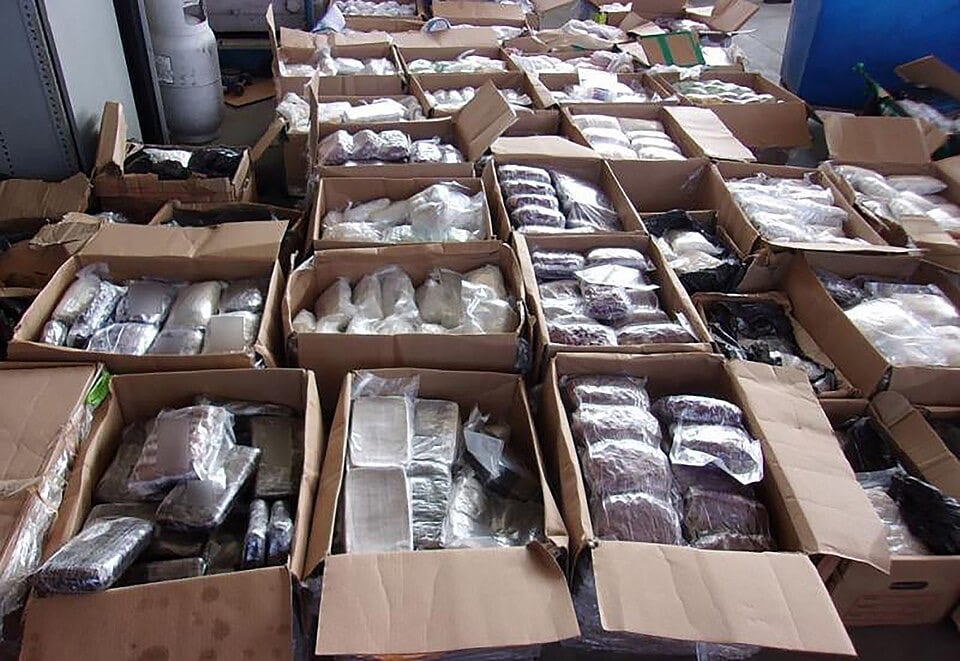
Five Mexican nationals have been charged by the National Crime Agency over an alleged methamphetamine production operation uncovered on remote farmland in Warwickshire, amid wider concerns that specialist overseas expertise is being drawn into Britain’s drug trade and fuelling the country’s growing chemsex scene.
Five Mexican men have been charged following an alleged methamphetamine production operation discovered on farmland near Furnace End in North Warwickshire. The National Crime Agency (NCA) said the suspects, all accused of conspiracy to produce a Class A drug, were arrested on 13 August 2026. The case has drawn attention to wider concerns among investigators that organised crime groups are increasingly bringing specialist chemical expertise into Britain to establish drug laboratories on domestic soil, rather than relying solely on imported product, at a time when methamphetamine use is rising and increasingly linked to the UK’s chemsex scene.
The Warwickshire case
According to the NCA, the men charged are Alejandro Ambriz Dimas, 45; Victora Ramirez, 47; Fausto Beltran, 33; Lioncio Moso Borja, 37; and Jose Nunez Angolo, 44. Four of the men are reported to be from Culiacán in the state of Sinaloa, while Dimas is understood to be from Michoacán. All five have been charged with conspiracy to produce a Class A drug in connection with the alleged laboratory found on remote farmland in North Warwickshire. It is important to note that the case concerns an alleged production operation based inside Britain, rather than the importation of finished methamphetamine from Mexico.
Concerns over specialist ‘cooks’ entering the UK
The NCA has warned that organised crime groups are increasingly recruiting individuals with specialist chemical and scientific knowledge to run drug-production operations within Britain. Investigators say criminal networks are able to source equipment and precursor chemicals online, allowing them to set up laboratories in relatively isolated locations. Remote rural sites, of the kind found near Furnace End, are said to be particularly attractive to producers, as they reduce the likelihood of neighbours noticing unusual smells, chemical waste, or other suspicious activity.
Rising methamphetamine use in England and Scotland
The case comes against a backdrop of rising methamphetamine consumption. Wastewater analysis covering the period 2021 to 2025 found that estimated methamphetamine use increased across England and Scotland. This form of monitoring is considered a useful indicator because it measures traces of drugs entering the wastewater system directly, rather than relying solely on police seizure figures or self-reported drug use. However, this rise in consumption does not by itself establish that Mexican criminal organisations are responsible for supplying the UK market.
Meth’s growing link to chemsex
Crystal methamphetamine has become increasingly associated with the UK’s chemsex scene, according to police guidance, which identifies the drug alongside GHB/GBL as one of the substances most commonly used in that context. The drug can increase sexual disinhibition and prolong sexual activity, while heavier use has been linked to serious psychological effects, including paranoia, psychosis, confusion and extreme agitation.
Police figures show a marked rise in chemsex-related offences recorded in London, climbing from 19 cases in 2018 to 363 in 2023. The NCA has also identified methamphetamine as one of a number of drugs increasingly available through illicit online marketplaces, giving producers multiple potential routes to market, from traditional organised crime networks to encrypted communications platforms.
Part of a wider international pattern
The Warwickshire case emerges amid a broader international trend in which investigators have identified Mexican nationals with alleged specialist meth-production expertise operating outside Mexico. Investigations in countries including South Africa and parts of Europe have previously uncovered suspected production operations involving Mexican nationals working alongside local criminal networks. This international context is relevant to understanding the broader pattern of activity, though it does not in itself establish that the five men charged in Warwickshire were members of a Mexican cartel.
European authorities have separately been working to disrupt organised groups moving methamphetamine across multiple countries, with recent investigations identifying trafficking routes running from Western Europe towards Central and Eastern Europe. This points to a drug production and distribution network becoming increasingly interconnected across the continent.
What remains unconfirmed
While the NCA has confirmed the arrests, charges, and the alleged laboratory site in Warwickshire, it has not been established publicly that the five men charged belonged to a specific Mexican cartel, or that any particular criminal organisation has taken control of methamphetamine production or distribution in Britain. The case remains before the courts.
