



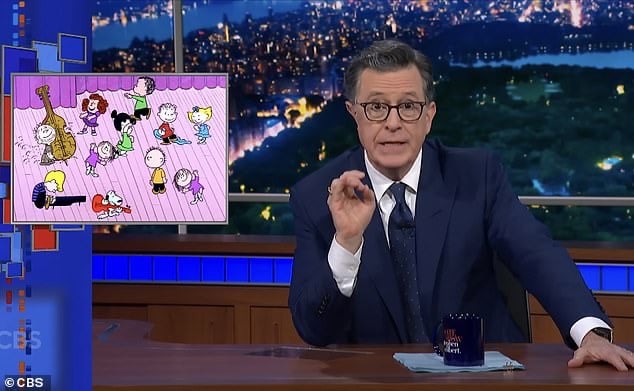
Stephen Colbert’s parting punchline at CBS has proven prophetic — the network has been forced to strike a licensing deal over a deliberate copyright stunt the comedian pulled during the final episode of The Late Show, with the resulting funds going to charity.
During the finale on 21 May, Colbert was discussing ongoing lawsuits brought by the rights holders of the Peanuts franchise over unauthorised use of composer Vince Guaraldi’s music, warning viewers of the consequences of using the iconic tunes without permission. “Peanuts is a powerful brand and corporation in and of itself,” he told the audience. “Anyone illegally using that music is going to have to pay through the nose.” At that precise moment, bandleader Louis Cato and the show’s house band, the Great Big Joy Machine, launched into a rendition of Linus and Lucy, the instantly recognisable Guaraldi composition synonymous with the Peanuts specials. Colbert turned to his band in mock alarm. “Louis, Louis! Is the band right now playing the same Peanuts music I just said people were being sued for, for using without permission? Is that what you’re doing? Oh no, I hope this doesn’t cost CBS any money!”
It did. Lee Mendelson Film Productions, which controls Guaraldi’s musical catalogue, has confirmed it entered into a formal licensing agreement with CBS following the broadcast. Financial terms were not disclosed, but in a twist befitting the spirit of the stunt, the company announced it would donate all proceeds from the deal to World Central Kitchen, the humanitarian food relief organisation founded by celebrity chef José Andrés.
The charitable element ties the episode to a significant gesture Colbert had already made in his final days on air. On the penultimate episode of The Late Show, Colbert and the show presented a $2.5 million donation to World Central Kitchen and Andrés.
Jason Mendelson, chairman of Lee Mendelson Film Productions, said in a statement: “LMFP found the music’s use on The Late Show funny and entertaining, and is proud to support World Central Kitchen’s mission.” He added that a principal goal of the company’s enforcement actions was “to educate individuals, businesses, and government entities about the need to obtain written license agreements to use music in a commercial setting.”
