



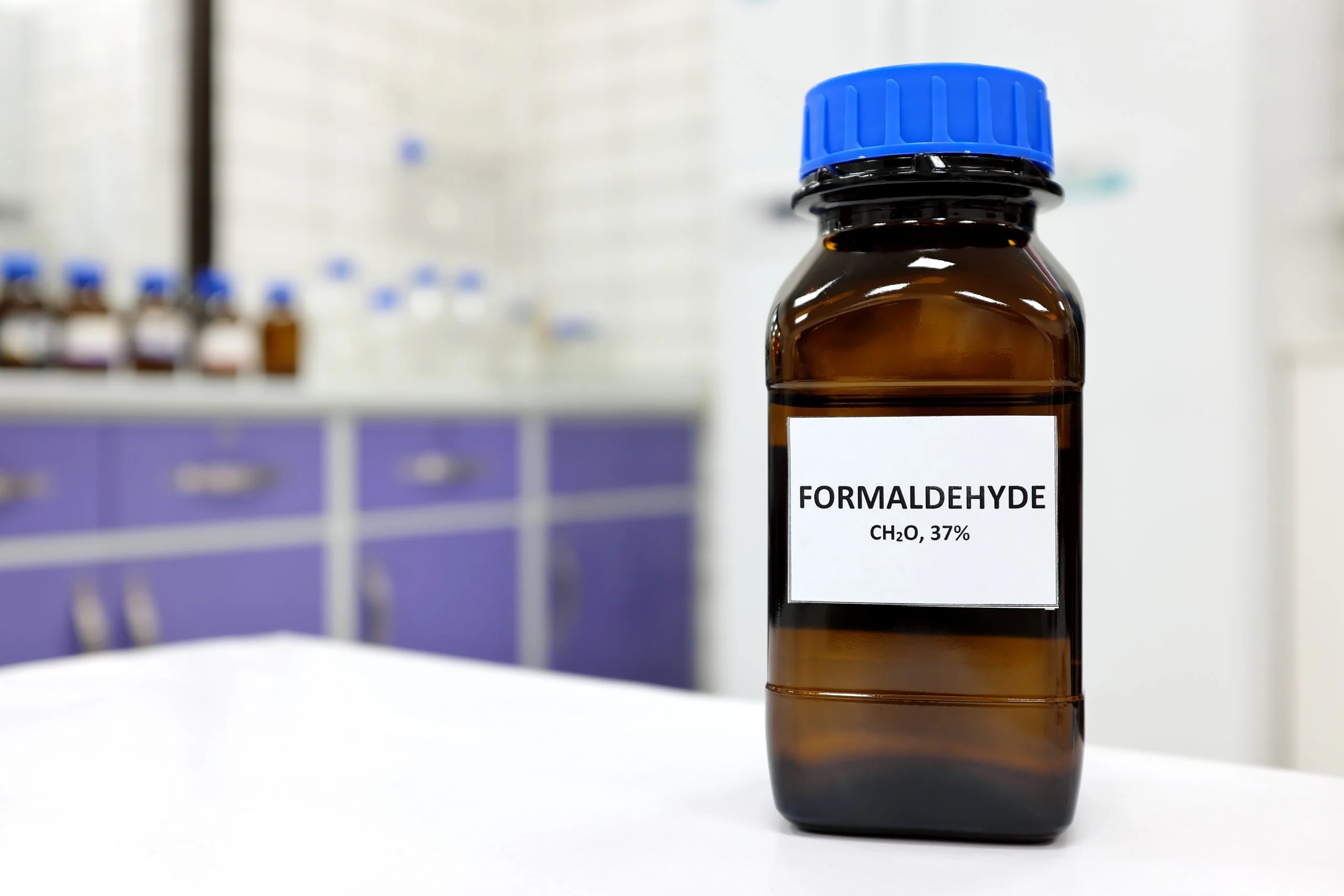
Thousands of NHS pathology workers are being routinely exposed to a cancer-causing chemical that experts have likened to the next asbestos — with new research revealing that seven in ten NHS lab sites regularly exceed safe exposure limits set by the European Union, while Britain maintains the world’s highest permitted workplace exposure threshold for the substance.
The chemical is formaldehyde, widely used in hospitals as a disinfectant and to preserve tissue samples in pathology laboratories. A study published in the journal Occupational and Environmental Medicine, based on Freedom of Information requests sent to 122 NHS Trusts by researchers from the University of Liverpool and Royal Free London, found that monitoring of airborne formaldehyde levels in pathology departments is dangerously infrequent and that exposure levels are regularly breaching international safety thresholds — despite remaining within the UK’s own, far more permissive limits.
Nearly three in four sites measured airborne formaldehyde levels once a week or less. Fifteen per cent monitored it only quarterly. Four per cent checked just once a year. Yet 70 per cent of sites regularly exceeded EU safe exposure limits, which cap exposure at 0.3 parts per million over an eight-hour period. Only sites conducting daily monitoring consistently stayed within those thresholds. Thirty per cent of labs had recorded a level above 2 parts per million at least once in the previous 12 months.
The UK’s own workplace exposure limit — set by the Health and Safety Executive — stands at 2 parts per million, both for long and short-term exposure. That figure is the highest formaldehyde workplace limit in the world, according to the researchers. When Britain left the EU in 2020 it was not required to adopt the bloc’s more stringent 2021 guidelines, and has not done so.
Researchers were emphatic that the UK’s own limits are insufficient to protect workers. “A substantial body of evidence demonstrates that formaldehyde is associated with myriad deleterious health effects at concentrations well below UK workplace exposure levels,” they wrote. Long-term exposure has been linked to lung damage, impaired fertility, nose and throat cancer, leukaemia, motor neuron disease and cognitive impairment. In 2024, the US Environmental Protection Agency declared formaldehyde presents an “unreasonable risk of injury to human health.”
The human cost has already been documented. A joint investigation by The Independent and Channel 4 News, published earlier this year, exposed NHS staff being “exposed to unacceptably high levels of formaldehyde” in dilapidated labs without adequate ventilation. Robert Mifflin, 57, a former head of mortuary services, told that investigation the chemical had “completely wrecked” his life, leaving him barely able to breathe and forcing him to retire early. Another affected worker, Scott, described symptoms beginning as sore eyes and a runny nose before escalating to intense fatigue, vomiting and nosebleeds. He was exposed in a lab without adequate ventilation, had no idea the environment was dangerous, and now cannot walk more than a few steps without sitting down on his Zimmer frame due to breathlessness.
Professors Hans Kromhout of Utrecht University and Martie van Tongeren of Manchester University’s Centre for Occupational and Environmental Health, commenting on the findings, called for urgent action. “It is obvious that exposure levels to formaldehyde can be high in NHS cell pathology departments. There are currently no common guidelines or standards for the control and monitoring of formaldehyde in the NHS, and based on the evidence presented in the paper, such guidelines are urgently needed.” They called on Britain to adopt EU-equivalent exposure limits without delay.
The researchers concluded that “urgent national regulatory intervention is now warranted,” calling for upgraded infrastructure, more frequent personal exposure monitoring, better staff education, improved access to protective equipment and external oversight by the HSE. They also noted their findings extended beyond the NHS to manufacturing and construction — industries that “employ many tens of thousands of people in the UK” and similarly rely on formaldehyde.
An NHS spokesperson said the safety of staff was “paramount” and that trusts had a legal duty to protect workers from hazardous products. “We are aware of the study raising concerns about airborne formaldehyde levels across pathology departments, and are supporting trusts in maintaining safe working environments,” the spokesperson said.
