



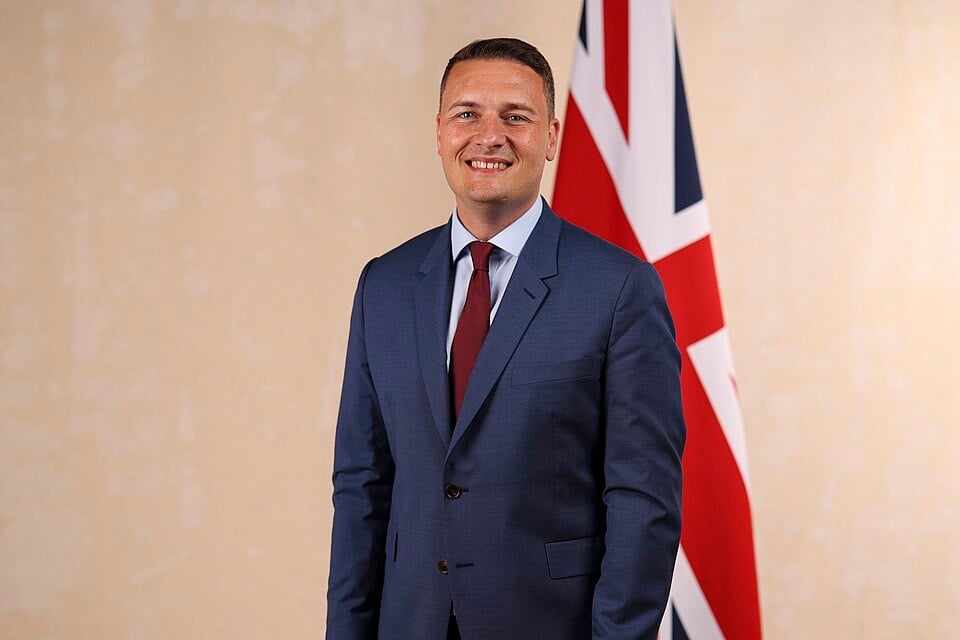
Wes Streeting has demanded a ban on social media for children under 16 and compared the technology industry’s resistance to regulation to the tactics once deployed by tobacco executives — in his first major intervention on the issue since leaving the Cabinet and calling for Sir Keir Starmer’s resignation.
The former health secretary said social media was “extremely addictive, bad for our health” and accused technology bosses of “borrowing the big tobacco playbook to avoid regulation.” His remarks carry particular political weight given that he has indicated he will stand for the Labour leadership if a challenge against the Prime Minister goes ahead. “We’ve got to give our children their childhood back,” he said. “A ban for under-16s must be the start, not the end. We have given the pen to tech moguls to write our future for us. It’s time to take the pen back.”
Streeting’s call came alongside a report from the Academy of Medical Royal Colleges which warned that social media and smartphone use now “ranks alongside smoking and wearing seatbelts in cars as a unifying force for the medical profession.” Of 454 doctors surveyed across 22 member royal colleges, half said they treated at least one child a week whose mental distress or physical injury was linked to online content. The report described an epidemic of harm from children being “continuously exposed to hateful, addictive and grossly distressing content,” including harrowing accounts of deaths and injuries linked to online challenges, extreme pornography and radicalisation.
The pressure on the Prime Minister is intensifying. Bereaved families, including parents who have lost children to social media-related harms, are due to meet Sir Keir on Tuesday to urge him to honour the government’s commitment to restrict under-16s’ access. Among them is Ian Russell, whose daughter Molly took her own life at 14 after being bombarded with suicide content on social media platforms. Russell has argued that a blanket ban would let technology companies off the hook and that tougher targeted regulation addressing fundamental design flaws would be more effective. Ellen Roome, who believes her 14-year-old son Jools Sweeney died attempting an online challenge, put the case more bluntly. “Social media is a product and, like any other faulty product causing the deaths of children, it should be restricted until the companies responsible have fixed it and proven it is safe,” she said. “We cannot go on with further speculation — we need clarity.”
In April, ministers announced they would introduce age or functionality restrictions on social media for under-16s regardless of the outcome of a public consultation, which closes at midnight on Tuesday, with proposals expected by summer and legislation before the end of the year. The concession followed sustained pressure from the House of Lords, where peers voted four times to press for an outright ban before standing down after ministers agreed to act. Lord Nash, the Conservative former education minister who led the Lords campaign, said the government must now “deliver on that commitment fully and in the shortest possible timeframe.”
Technology Secretary Liz Kendall said the government would act but indicated that two broad approaches remained under consideration — a full ban for under-16s or targeted restrictions on addictive features such as endless scrolling, autoplay, algorithmic amplification of harmful content and livestreaming, combined with robust age verification measures. “The question isn’t whether we’re going to act — we will,” she said, acknowledging that many children were still finding ways around existing age checks.
Not everyone believes age limits alone will solve the problem. The Children’s Coalition for Online Safety — led by the 5Rights Foundation and including the NSPCC and Girlguiding — warned that focusing solely on access risked missing the deeper structural causes of online harm. “We will not fix this by tinkering around the edges, by tweaking features or relying on age limits alone,” said Leanda Barrington-Leach, executive director of 5Rights Foundation. “The issue is not a single product or setting; it is built into the system itself, into business models and design choices that prioritise engagement, data extraction and profit over children’s well-being. If a product were unsafe for children offline, it would not be allowed onto the market. We must insist on this same logic online.”
