



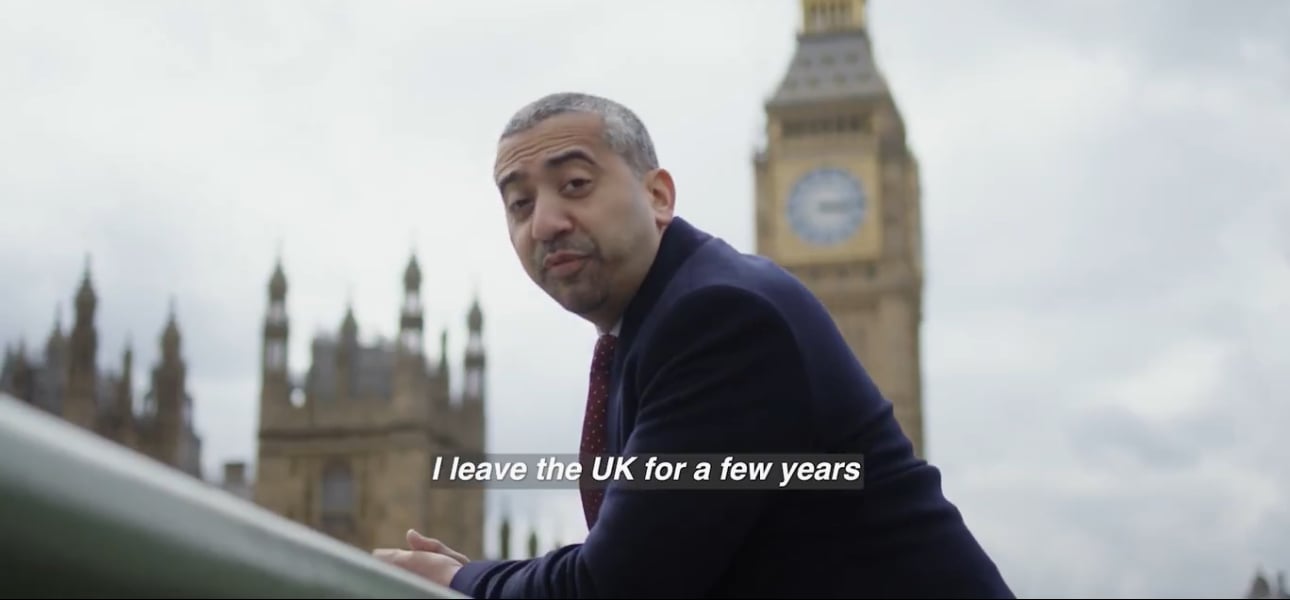
Mehdi Hasan has launched Zeteo UK, the first international expansion of his independent media company, promising unfiltered news and bold opinions free from political or corporate influence — as a team of high-profile British journalists lines up behind what supporters are billing as a much-needed challenge to the mainstream press.
The UK outlet soft-launched this week at zeteonews.co.uk, with a full hard launch planned for September 2026. It builds on the success of the main Zeteo platform, which Hasan founded in 2024 after leaving MSNBC and which has since grown to more than 650,000 subscribers.
Among the early team members is Shehab Khan, who joins as Political Editor after years at ITV News where he interviewed prime ministers and senior politicians. Khan reflected publicly on his departure from ITV and the “cool plans” ahead at the new venture. Former Guardian editor Becky Gardiner has also joined, alongside broadcaster Sangita Myska, who will host a video podcast series. Commentators Owen Jones and Peter Oborne are among the contributors.
Green Party leader Zack Polanski was among those welcoming the launch, describing it as brilliant news for what he characterised as a broken media landscape. Others have been more sceptical, questioning whether a platform with an overtly progressive editorial line — strong on foreign policy and particularly vocal on Gaza — can credibly claim independence from political sway.
Hasan, who is British-born, has described the UK as the natural first choice for Zeteo’s international expansion. The outlet is positioning itself as adversarial and agenda-setting in the mould of its American parent, which built its audience on combative interviews and uncompromising opinion journalism.
The launch has not been without controversy. Critics have revisited old recordings of speeches Hasan made in his twenties in which he quoted the Quran and compared atheists to “cattle,” using what he himself later described as offensive animal analogies. When the recordings resurfaced in 2019, Hasan issued a public apology, describing the remarks as “dumb” and “offensive” and stating they did not reflect his beliefs. “Speaking without notes, and trying to be bombastic, I made stupid sweeping remarks about non-Muslims, especially atheists. I cringe now when I rehear those remarks. I just want to say, I’m sorry,” he wrote at the time.
Whether Zeteo UK can carve out a sustainable audience in a crowded British media market — and whether it can persuade sceptics that independence means more than editorial alignment with one end of the political spectrum — will become clearer when the full launch arrives in September.
