



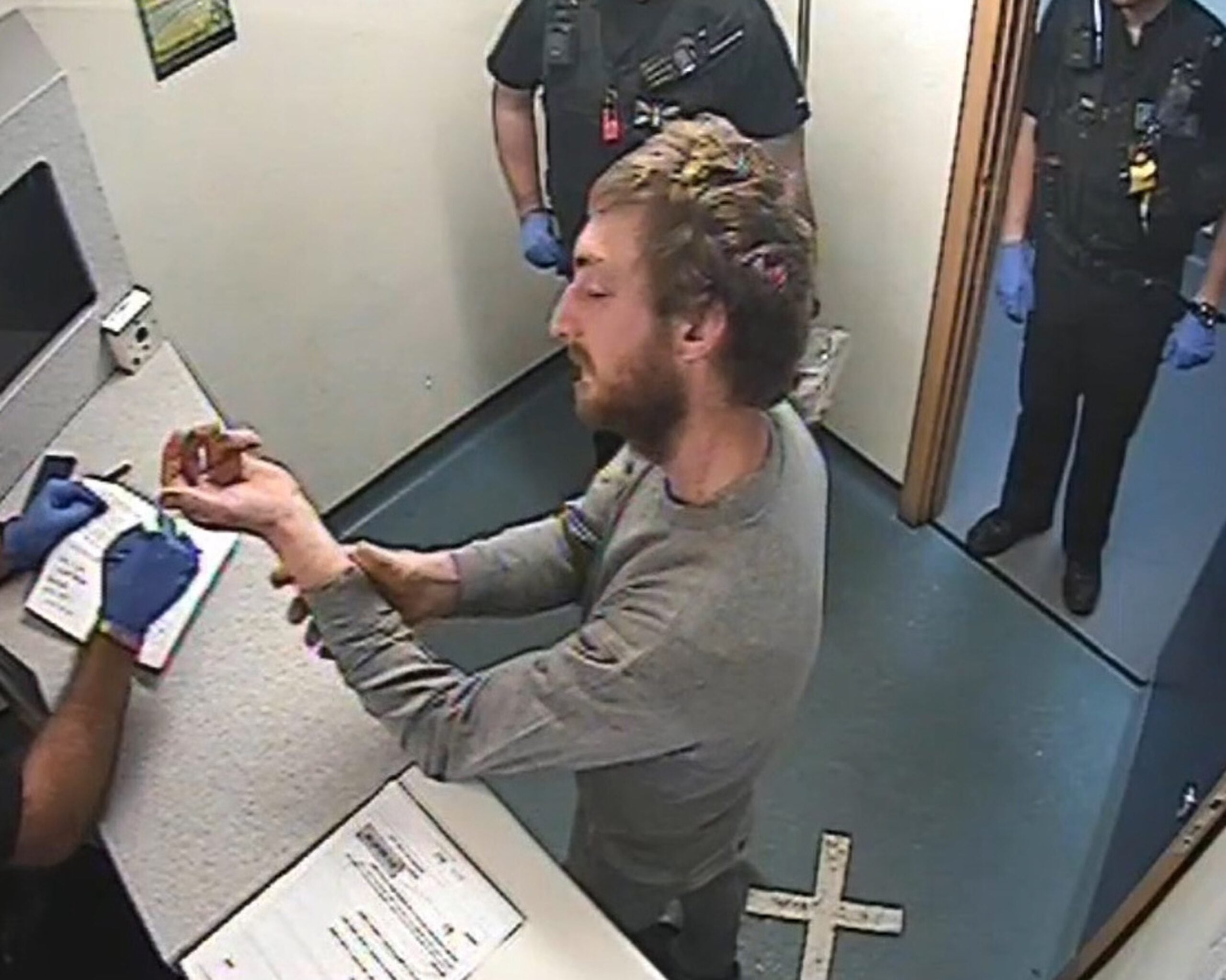
Alexander Lewis-Ranwell, who has paranoid schizophrenia, was arrested and released twice in the 48 hours before the 2019 killings. The families of the three men are still seeking answers and an apology.
A man with paranoid schizophrenia who killed three men in Exeter during a psychotic episode had been released from police custody twice in the preceding 48 hours after a “catalogue of failures”, an investigation has found. Alexander Lewis-Ranwell killed Anthony Payne, 80, and the twin brothers Roger and Dick Carter, 84, at their homes in 2019. A joint investigation by the Sunday Times and BBC Radio 4’s File On 4 Investigates found that officers ignored warnings from a national database and a mental health assessor. Devon and Cornwall Police say they are addressing “areas of learning”.
What the investigation found
The Sunday Times and File On 4 Investigates examined hours of police video, detention logs and witness testimony. They found numerous failings:
- The medical professional sent to examine Lewis-Ranwell did not have expertise in mental health and dismissed his unpredictable behaviour.
- Key details that would have shown how severe his illness was were not recorded or shared.
- Officers did not know that they had the legal power to detain him under the Mental Health Act without a medical assessment.
- Warnings from his mother that he was having a psychotic episode and should be kept in custody were ignored.
The 48 hours before the killings
Two days before the deaths, Lewis-Ranwell was arrested after breaking into a farm. After his release he was arrested a second time for attacking a farmer with a 1.2-metre (4ft) logging saw. Police bodycam footage shows him behaving in a disturbing way in custody, including ranting about paedophiles and seeing animals, according to the investigation. He was released again.
He then went on a rampage lasting several hours, threatening several people, before killing the three men.
Court and inquest
At Exeter Crown Court in December 2019, Lewis-Ranwell was found not guilty by reason of insanity and given a hospital restriction order. He will remain in hospital until agencies are confident he could be released into the community. A psychiatrist who studied the case told the court he believed Lewis-Ranwell was “one of the illest people” he had come across.
An inquest has since found that failings by police led to his release after a doctor missed “clear signs of delusion and disordered thinking”.
Families seek an investigation and an apology
The families of the three men have asked the Independent Office for Police Conduct (IOPC) to open an investigation into Devon and Cornwall Police. They say they are still waiting for answers and an apology. According to the investigation, the watchdog said the force should investigate itself, and the families say they have heard nothing for two years. The IOPC said the family has a right to ask for a review of the internal investigation and that it has not yet received a request.
Amanda Taylor, whose uncles were the Carter brothers, told the Sunday Times that the family still wants justice and would like the IOPC to revisit the case. “All I want is for just one of the agencies involved to stand up and say: ‘We are so sorry. Serious mistakes were made. We recognise the devastating consequences of those failures and we will do everything in our power to make sure this never happens again,’” she said.
A Devon and Cornwall Police spokesperson said the force was addressing “areas of learning” and would reflect on the inquest jury’s recommendations. “Our thoughts, as always, remain with the loved ones of Anthony Payne and Dick and Roger Carter,” the spokesperson said.
A pattern of failures?
The case is one of several in which failures by police and mental health services to manage risk have been followed by deaths. A Care Quality Commission review of the treatment of Valdo Calocane, who has paranoid schizophrenia and killed three people in Nottingham in 2023, concluded that a “series of errors and misjudgments” led to his discharge despite repeatedly not taking medication and showing signs of aggression. It warned of “systemic issues with community mental health care which, without immediate action, will continue to pose an inherent risk to patient and public safety”. NHS England has since strengthened guidance on community mental health support for people with severe mental illness who face high risk or struggle to engage with services.
Julian Hendy of the victims’ charity Hundred Families noted that there are an estimated 100 to 120 mental health-related killings in the UK each year. “In my view, had the lessons in the Lewis-Ranwell case been learnt earlier, and effective action taken, there is a real chance that the Nottingham attacks could well have been prevented,” he said. “Services aren’t learning and totally innocent people are losing their lives as a result.”
