



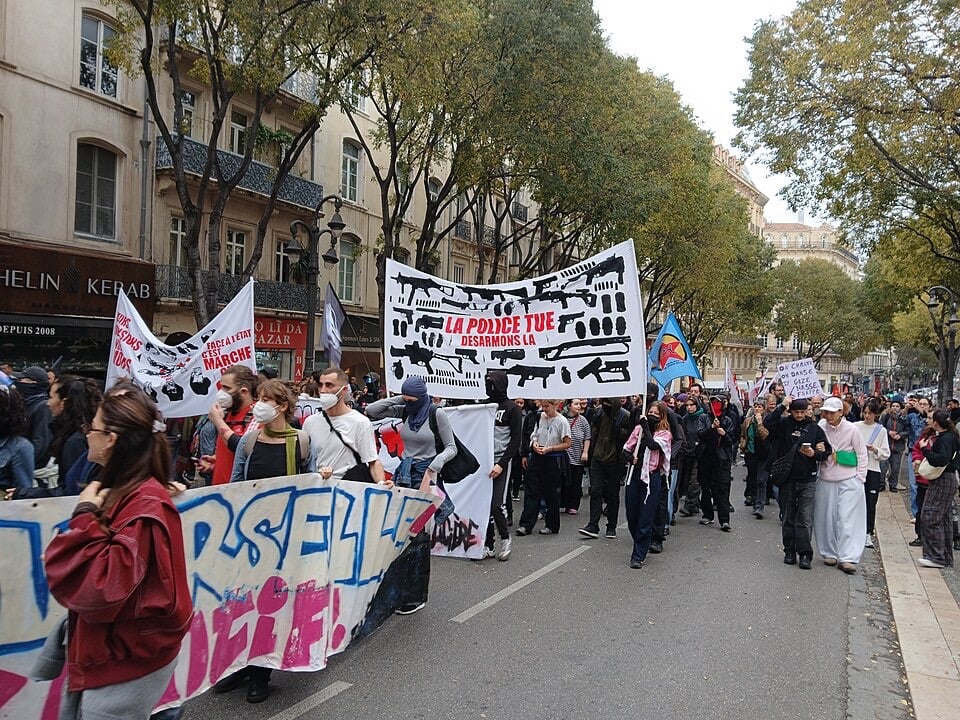
Turnout has fallen by about 85% since 17 October, the Interior Ministry says, but breakaway groups clashed with police in several cities as President Macron blames “ultra-left” agitators.
Protests across France entered a sixth consecutive Saturday on 21 November, with the Interior Ministry reporting 144 arrests by 6pm and clashes between police and breakaway groups in several cities. The ministry counted 82,500 demonstrators nationwide, against 550,000 on 17 October, while organisers put the figure at 150,000, Reuters reported. Police said vehicles were set alight and shopfronts damaged in Marseille, and nine officers were injured in Bordeaux. The unrest began with student-led protests over school conditions and teacher shortages.
The national picture
The Interior Ministry recorded 112 demonstrations on Saturday, compared with 137 on 14 November and 430 on 17 October, when Interior Minister Laurent Nuñez announced the 550,000 figure. Its Saturday attendance counts have gone from 550,000 on 17 October to 146,000, 106,000 and then 82,500 on 21 November. Organisers’ figures are higher. In Paris, the student union put the turnout at 45,000, more than double the police count of 21,500. About 70,000 police officers and gendarmes were deployed nationally, Reuters reported.
The ministry named Grenoble, Marseille, Lille, Tours, Nantes, Angers, Lyon and Bordeaux as places affected by disturbances. It said groups broke away from authorised marches, damaged street furniture, set bins alight and tried to enter restricted city-centre areas. Former police commander Bruno Cayzac told BFMTV that police numbers “may appear extremely large relative to the number of demonstrators” but that the violence of “people who are not protesters, [but] either rioters or insurgents” justified them.
The unrest began around a month before 17 October with student protests over deteriorating school conditions and teacher shortages. In October it grew into nationwide demonstrations over soaring living costs and public spending cuts. Earlier in the unrest, shops were looted and municipal buildings, including a historic town hall, were set on fire. With the April 2027 election approaching, it has become highly politicised, and President Emmanuel Macron has blamed “ultra-left” agitators. The Yellow Vest movement, formed in November 2018 over fuel prices, marks its eighth anniversary this weekend.
City by city
Marseille: Police reported seven vehicles damaged by fire, which spread from burning bins to parked cars in some cases and was allegedly set deliberately in others, and 15 damaged shopfronts but no completed looting, Le Figaro reported. There were 10 arrests. The prefecture said small groups repeatedly threw projectiles at officers before the situation was brought under control later in the evening. Turnout was 4,600.
Bordeaux: Nine police officers were injured and 17 people arrested, according to regional authorities. About 1,000 people were involved in confrontations after the authorised march, which had drawn about 4,500 people on a route organised with the CGT, FSU and FO unions and passed off peacefully. Authorities said groups gathered around Place de la Victoire and the Capucins district, lit barricade fires, lifted paving stones and tried to enter shops.
Lyon: The Rhône prefecture asked for the Westfield La Part-Dieu shopping centre to be temporarily closed after groups moved towards it, inside an area where demonstrations were restricted. Eight people were arrested, and attendance was estimated at 4,000, against 8,000 a week earlier.
Nantes: Ouest-France reported 16 arrests among about 5,000 demonstrators. Police kept protesters away from the Christmas market, which opened that day, and it was largely undisturbed. Clashes occurred near the Beaulieu shopping centre at about 4.40pm.
Paris: The main procession was largely peaceful until it dispersed at Place de la Nation, where Le Figaro reported projectiles thrown and tear gas used. On the Boulevard Voltaire, owners of the Afrikan Kut hair salon stuck messages on their window reading “Have pity on our shop window please” and “we’re for change, but not for our shop window”. Many shopkeepers have shuttered their businesses amid worries about the run-up to Christmas.
Elsewhere, about 5,000 people marched peacefully in Rennes, about 1,500 protested in Angers, and police used tear gas in Brest and Caen, Ouest-France reported.
Police conduct inquiry
Paris prosecutors confirmed on Saturday that they are investigating two police officers over alleged violence during the 31 October demonstrations, with one also being investigated over an allegation of sexual assault. The inquiry follows a complaint filed on 4 November by two young men who say they were mistreated when arrested. They face allegations of assaulting officers, which they deny. None of the allegations has been tested in court.
What next
Youth Strike organisers announced demonstrations in about 400 European cities on Friday under the slogan “Fight for our future, not their wars”, the Guardian reported. The scale is an organisers’ projection, not a verified attendance. The CGT has called further action for Saturday 28 November linked to the international campaign against violence towards women. The Local reported that some Yellow Vest groups urged supporters to return to roundabouts and toll stations between 20 and 22 November.
