



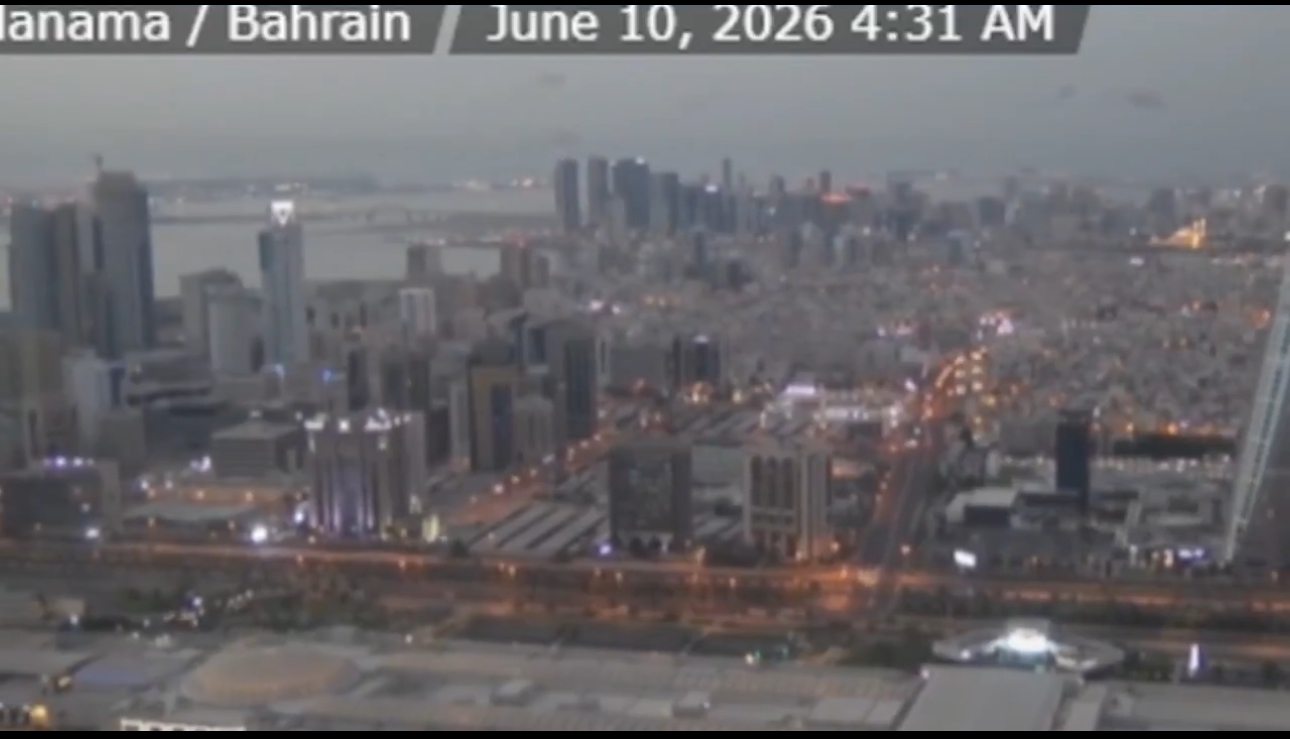
Iran has escalated its military confrontation with the United States by launching drone attacks on the US Fifth Fleet in Bahrain and missile strikes on an American airbase in Jordan — as a retired US general urged calm and expressed hope the exchange of fire could mark the beginning of de-escalation rather than a slide toward all-out war.
Iran’s Islamic Revolutionary Guard Corps confirmed both attacks on Tuesday, saying they were a direct response to US strikes on Iranian military installations in the south of the country earlier in the day. Kuwait’s General Staff simultaneously announced that its air defence systems were “currently intercepting hostile aerial targets,” urging residents to adhere to safety instructions and obtain information only from official sources — indicating the spreading footprint of the conflict across the Gulf region.
The sequence of events began when US Central Command said it had carried out “self-defence strikes” against Iranian air defence sites, ground control stations and surveillance radar installations near the Strait of Hormuz, in retaliation for what it described as Iran’s downing of a US Army Apache helicopter on Monday. Tehran’s deputy foreign minister told Al Jazeera that Iran had not deliberately targeted the helicopter — a claim that sits uneasily alongside the scale of what followed.
Iranian Foreign Minister Abbas Araghchi made no attempt to soften his country’s position, warning Washington it had chosen to “test our determination” and that Iranian forces would “leave no attack or threat unanswered.” His message to US forces in the region was blunt: “Leave our region if you want to be safe.”
Despite the rapid escalation, at least one senior military voice urged against assuming the worst. Retired US General Mark Kimmitt, a former assistant secretary of state for political-military affairs, told Al Jazeera he believed the scope and nature of the strikes on both sides could indicate a controlled exchange rather than the opening of a broader war. “I would be looking at this, right now, as, rather than seeing this as an escalation, I would be seeing this, hopefully, as de-escalation,” he said. He noted that the US response had been necessary to demonstrate that shooting down an American helicopter “would not be accepted,” and that Iran’s retaliation had been conducted “in a less exploratory manner” than might otherwise have been expected. “I would be very surprised at this point if this escalates, and I’m certainly hoping it’s showing that it’s de-escalating so we can get back to diplomacy,” he said, noting that Iran typically signals when it considers a military operation concluded.
The wider regional picture remained deeply unstable. Israeli strikes killed almost 20 people in southern Lebanon on Tuesday as Israel issued fresh forced displacement orders ahead of planned military operations. Gaza’s Health Ministry accused Israel of effectively killing patients by blocking more than 16,500 Palestinians from leaving the besieged territory for medical treatment abroad, according to Al Jazeera.
