



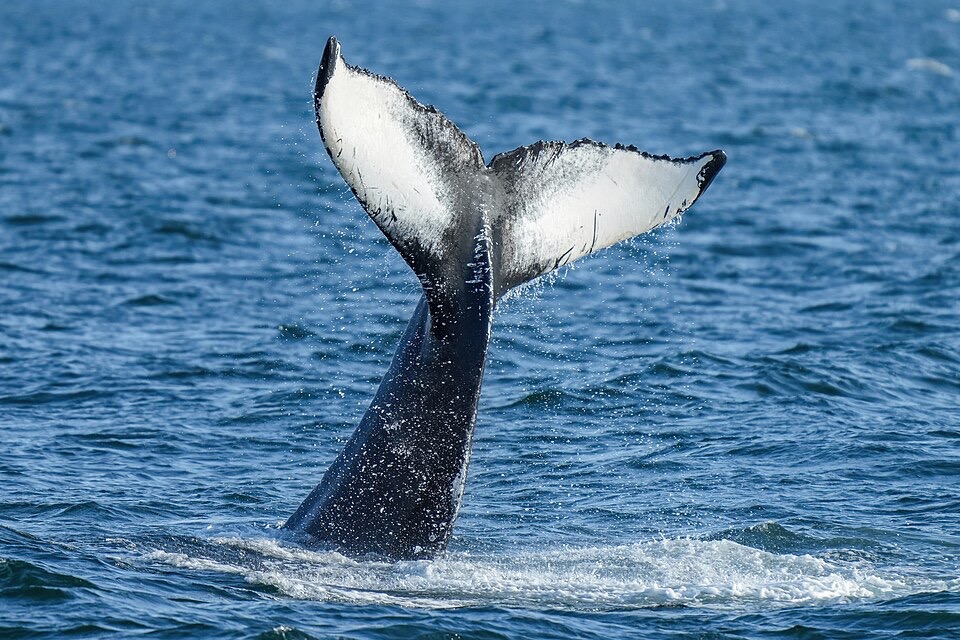
The humpback whale that captivated Germany for months likely died only five or six days after a controversial final rescue attempt failed to guide it back into the Atlantic, officials confirmed on Friday, drawing a sad close to a saga that divided scientists, government officials and the public.
The whale, nicknamed “Timmy” and “Hope” by German media, was found dead on 14 May, stranded off the small island of Anholt in the Kattegat, the broad strait between Denmark and Sweden connecting the Baltic Sea to the North Sea. Its discovery brought an end to a months-long rescue effort that culminated on 2 May, when the animal was transported towards the North Sea by barge in a final attempt to return it to its natural habitat.
Data from a tracking transmitter attached to the whale’s dorsal fin showed its death likely occurred on 6 or 7 May, according to Till Backhaus, environment minister for the state of Mecklenburg-Western Pomerania. In the five days following the rescue attempt, the whale had swum roughly 215 kilometres, but in the wrong direction — heading back towards the Baltic Sea rather than out into the Atlantic. Backhaus said the data suggested the whale likely drifted aimlessly after that point, or that the transmitter’s signal was simply lost.
Timmy was first spotted off the German coast on 3 March, sparking a media frenzy that included push alerts and live blogs tracking its health and movements. It remains unclear why the whale entered the Baltic Sea, an environment it was not suited to, though some experts have suggested it may have lost its way while following a shoal of herring or during migration. The decision over whether to continue rescue efforts or allow the weakened animal to die naturally became a point of public and scientific contention throughout the saga, involving a private rescue initiative alongside government bodies.
An autopsy has not yet established a definitive cause of death, though officials did determine that Timmy was in fact female, after months of assumptions that the whale was male. Backhaus said the autopsy found no serious injuries and no signs of violence or foreign objects that could explain its death. “Did it have any nets or other foreign objects on its body, in its mouth or on its body?” he said. “Nothing was found.”
According to German news agency dpa, some of the whale’s remains will be turned into biodiesel in Denmark, while some of its bones will be sent to a Danish museum.
