



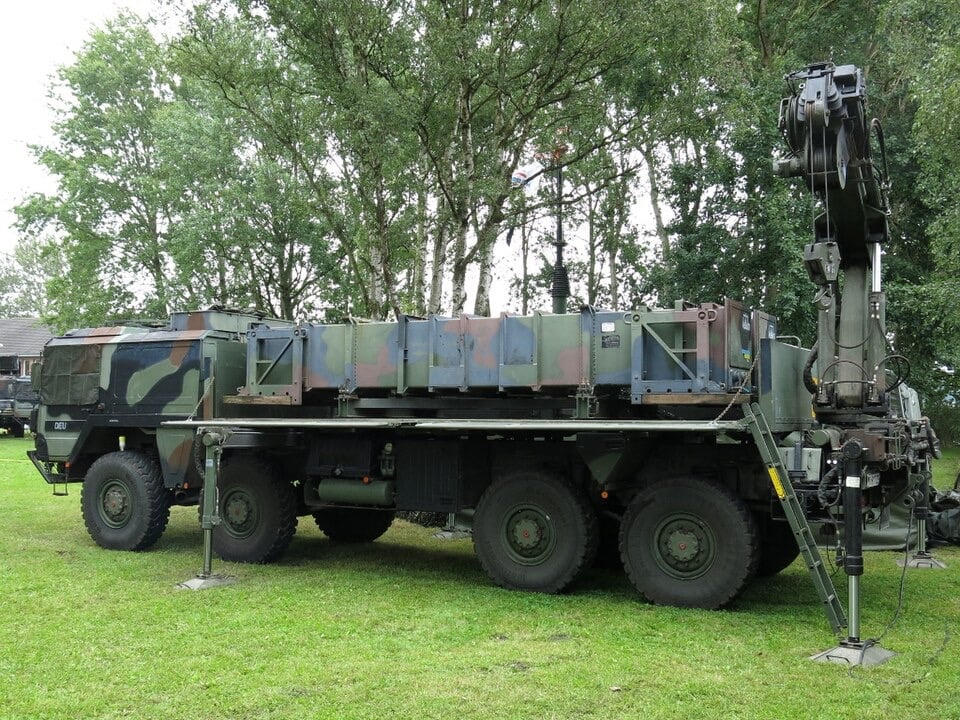
Britain is working with Ukraine and European allies to develop an alternative anti-ballistic missile system that would reduce Kyiv’s dangerous dependence on American Patriot supplies — as the Trump administration’s diversion of resources to the Middle East leaves Ukraine exposed to relentless Russian bombardment.
Ukrainian President Volodymyr Zelensky confirmed the development after meeting Prime Minister Sir Keir Starmer, French President Emmanuel Macron and German Chancellor Friedrich Merz on Sunday, saying the three European powers would help Ukraine build anti-ballistic capabilities. “I hope that we will manage to develop a European anti-ballistic system together with the UK,” he said. “We are working on it. We need it, and the UK needs it.”
The urgency behind the initiative is stark. Washington has significantly reduced its supply of Patriot Pac-3 interceptor missiles to Ukraine, with American resources redirected to the conflict in Iran and the broader Middle East crisis. The shortage has left Ukrainian cities dangerously exposed, with Moscow exploiting the gap by barraging populated areas with ballistic missiles that would ordinarily be intercepted. Zelensky has been, in his own words, “very persistent” in pressing the United States for more Patriots, but the supplies have not materialised at the scale Ukraine needs.
The gap is now being filled through a coordinated NATO effort. According to The Telegraph, Ukraine hopes to develop its own radar, guidance systems and tracking technology alongside European organisations, producing the interceptors domestically through its own defence industry. “Ukraine’s role is to produce anti-ballistic interceptors, and we’re already testing them,” a Ukrainian source told the paper. The European alternative is expected to be significantly cheaper than the American system — each Patriot battery costs approximately $400 million, with individual missiles priced at up to $6 million apiece — and more easily scaled up for mass production.
NATO has been facilitating the coordination by arranging meetings between national security advisors from member states and industry leaders. Zelensky’s meeting with the three European leaders on Sunday also addressed the “urgent need” to scale up production of interceptors and co-develop deep-strike capabilities — discussions that took on added gravity after a Russian drone strike damaged a storage facility for spent nuclear fuel in the Kyiv region, just nine miles from the Chernobyl power plant. Zelensky described the strike as “extremely vile” and “an increase in Russia’s brazenness.”
The scale of America’s redirected firepower has not gone unnoticed in Kyiv. Zelensky has accused Trump of using 800 Patriot missiles in just the first three days of the Iran conflict — more than Ukraine received or used throughout the entire duration of its war with Russia. Britain, France and Germany are expected to raise additional funding for Ukraine at next week’s G7 summit, and there is understood to be a concerted push to redirect Trump’s attention toward a diplomatic resolution to the Russia conflict, having spent recent weeks consumed by the Middle East.
Ukraine entered the push for a European alternative from a position of significant weakness. Before a devastating Russian Iskander hypersonic missile strike in 2024 destroyed two truck-mounted Patriot launchers, Kyiv had just five Patriot batteries in total — each costing approximately one billion dollars including missiles. The development of a cheaper, domestically producible European system is therefore not merely strategically desirable but an existential necessity.
