



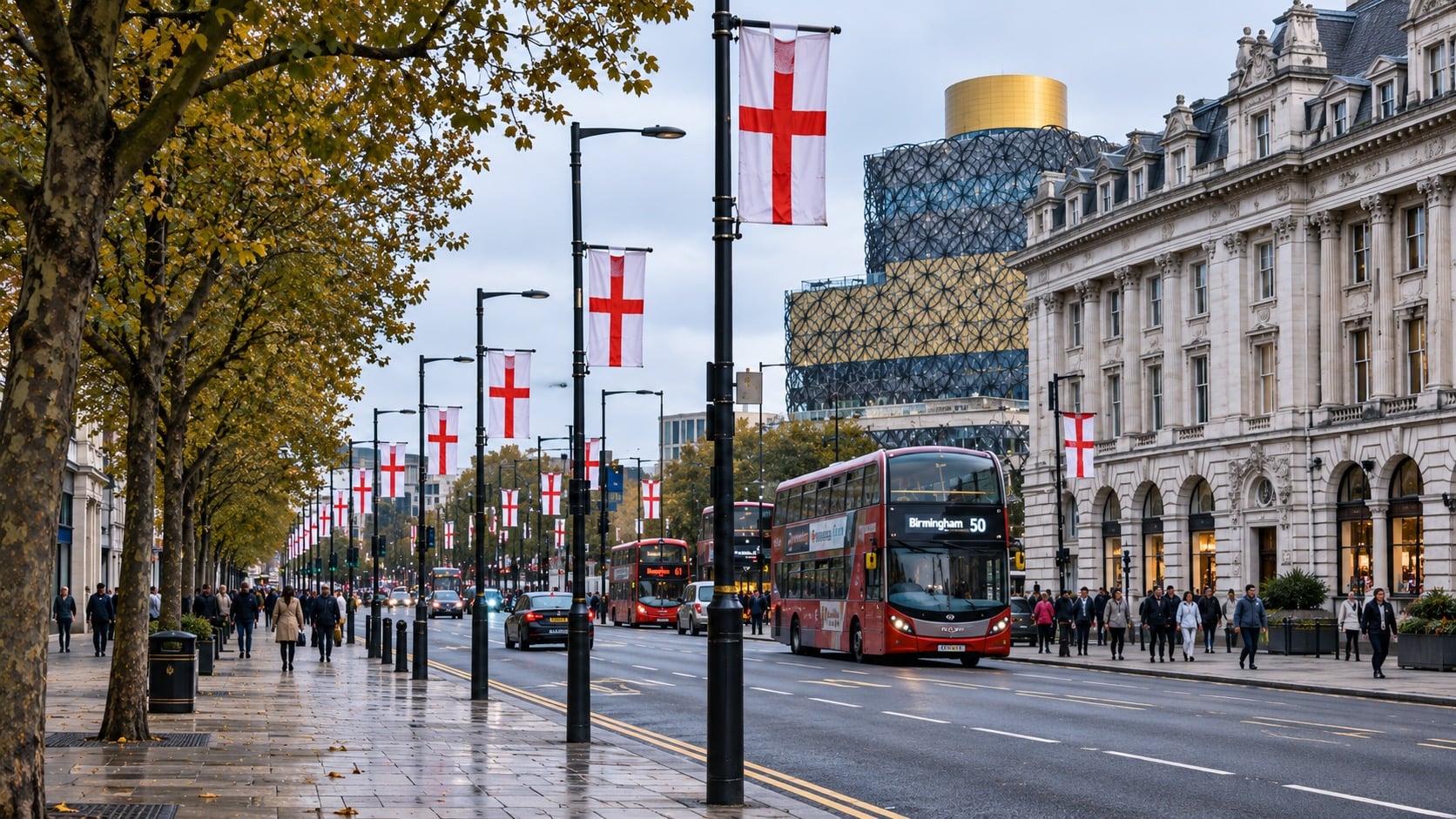
The interim order, which follows a campaign of St George’s flag displays across the city, carries a possible two-year prison term for breaches. The judge stressed it does not ban the Union flag or pride flags.
A judge has granted Birmingham City Council an interim injunction that stops people attaching flags, including St George’s flags, to lampposts, bridges and other highway infrastructure without permission. The order was made on Wednesday against Ryan Bridge, a co-founder of the Raise The Colours group, Ben Cullen, who is associated with it, and “persons unknown”. Anyone who breaches it could be jailed for up to two years. The council had argued the displays posed safety risks and contributed to tension in the city.
The ruling
Judge Kelly said “very emotive language” had surrounded the application and that the injunction must be “understood for what it is”. “It is not the court nor the claimant banning the Union Jack or the display of pride flags or anything of the like,” she said. She said it covers flags of all types but is limited to unauthorised flags attached to highway street furniture or infrastructure, and to related conduct, within the Birmingham council area.
Police can detain someone without a warrant if they reasonably suspect the order has been breached. The council said the power of arrest applies to Mr Bridge and persons unknown, and its statement did not extend it specifically to Mr Cullen. The council said anyone in breach could be jailed for up to two years, fined or have their assets seized for contempt of court.
The council said the flags “pose safety risks, obstruct visibility, interfere with highway assets and contribute to tensions and disorder”. It said its application included reports of “alleged intimidation, harassment and obstruction” connected with flag-raising. The court heard that on one occasion a man was run over by a cherry picker and had his leg broken while Raise The Colours members were putting up flags. It also heard allegations of others being assaulted or threatened. These are allegations, and the court has not made findings on them.
Mr Bridge’s opposition
Mr Bridge, who attended the Birmingham Civil and Family Justice Centre at an earlier hearing this month, opposed the injunction. He argued it would breach his rights to freedom of expression and to protest under the European Convention on Human Rights. His lawyer, Liam Wells, told the court that Mr Bridge accepts attaching flags to street furniture but has only encouraged others to “express their views”. Mr Wells said the order would have a “chilling effect”. About 20 Raise The Colours members attended in T-shirts bearing the group’s name, while three protesters stood outside holding Union flags.
Councillor Jane Baston, cabinet member for equalities, communities and social justice, said the council was grateful for the order. “Residents remain free to display flags on their own property,” she said. “The injunction relates specifically to the unauthorised attachment of items to street furniture and highway infrastructure, and we ask residents and community groups to support this approach by ensuring any displays are placed only where permission exists.”
A follow-up hearing is due on Thursday 19 November at 10.30am at Birmingham Civil and Family Justice Centre. Hits Radio Birmingham describes it as a consequential hearing dealing with the form and operation of the injunction and arrest powers.
Cost and political reaction
LocalGov reported in September that the council estimated removing about 20,000 unauthorised flags could cost £2.6m, or £132 per flag. That is a projection and not money already spent. BirminghamLive reports that the council spent £167,575 excluding VAT removing unauthorised attachments to council property in 2026 up to the end of October. The figure covers flags and other items such as advertising material. The cost of the legal proceedings has not been confirmed.
Birmingham Conservative leader Robert Alden said the council was concentrating resources on flags while the city faces waste-collection disruption, deteriorating roads and financial pressure, the Express & Star reported. He called for designated places where English and British flags can be displayed legally and for the council to publish the cost of the legal action. Reform UK’s Birmingham leader Jex Parkin said the proceedings were an inappropriate use of public money, but acknowledged highway safety and protecting infrastructure were legitimate concerns, according to BirminghamLive. These are their opinions and not court findings.
Related developments
West Midlands Police announced on Monday that Mr Bridge, 45, has been charged with two public-order offences over an incident on Mayfield Road, Stirchley, on 14 May. Police accuse him of using threatening or abusive words or behaviour likely to cause harassment, alarm or distress, The Guardian reported. He is due before Birmingham magistrates on 10 December. Mark Keating, 49, from Tamworth, faces four counts of assault by beating over the same incident and is due to appear on 9 December. A third man, aged 53, remains on police bail on suspicion of wounding. The charges are separate from the injunction, and both men are entitled to the presumption of innocence.
A High Court judge granted Oxfordshire County Council a separate 12-month injunction on 31 July against Kevin Good and persons unknown over similar displays. The judge, Mr Justice Dexter Dias, found that attaching flags to highway structures without permission could amount to trespass and an offence under the Highways Act 1980. He accepted that freedom of expression and assembly were engaged but ruled the restrictions proportionate because other lawful ways of displaying flags remained available.
