



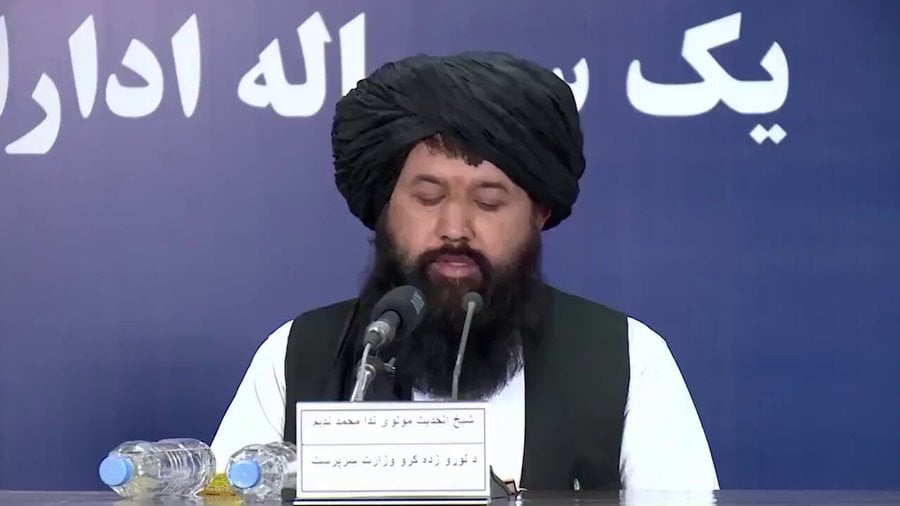
Restrictions that have kept millions of girls out of secondary school since 2021 remain in force. French officials say talks with the Taliban concern deportations and do not amount to recognition.
The Taliban’s restrictions on girls’ and women’s education remain in place five years after they began. Amu TV reported on 15 November that France has agreed to receive several Taliban representatives in Paris within weeks. French officials say their contacts with the Taliban concern the return of undocumented Afghans seen as security threats, and are not diplomatic recognition.
The education ban
Girls have been excluded from formal schooling beyond grade six since 2021, and women have been barred from university since December 2022, according to UNICEF. The latest UN monitoring report documents the Taliban’s continued refusal to reopen schools, citing unresolved religious considerations in remarks by spokesman Zabihullah Mujahid in August.
A UNESCO and UNICEF report published on 4 November found that:
- more than 2.6 million girls have been denied secondary education since 2021;
- 53% of primary-school-age children are outside formal general education;
- only about one in four assessed fourth-grade pupils reached minimum third-grade mathematics proficiency, in an assessment of more than 55,000 children across all 34 provinces;
- fewer than one in 100 children aged three or four take part in early childhood education;
- about 208,000 students were enrolled at university in 2026, against around 430,000 in 2020; and
- 1.23 million Afghans had returned to the country by September 2026, with more than 245,000 returning children needing education support.
UNESCO projects a shortage of more than 11,000 qualified female teachers by 2030, Reuters reported.
Amu TV reported on 20 September that six Kabul schools began registering girls in grades 10 to 12 for a UNICEF-backed programme of exams and a six-month course. It said Taliban education and intelligence officials ordered them to stop, citing four sources including teachers and administrators.
On 10 November, Amu TV reported that a pro-Taliban cleric, Mufti Hedayatullah Hikmat, publicly questioned the ban on women’s medical education. He set out nine arguments from Hanafi jurisprudence, saying that training women as doctors and midwives can be a religious duty when female patients need care. Radio Free Europe/Radio Liberty reported on 15 November that Afghan women who fled to Iran and Pakistan are also struggling to resume their studies. One medical student, using the pseudonym Zahra, said she was months from qualifying when the university ban came in, and could not continue in Iran after her residency papers expired.
The UN Assistance Mission in Afghanistan recorded more than 50 incidents between July and September 2026 in which women were detained, arrested or cautioned over dress requirements, mostly in Kabul and Herat.
The education minister and the ICC
On 5 October, the International Criminal Court unsealed arrest warrants, first issued in 2025, for four senior Taliban officials. They are Education Minister Habibullah Agha, Higher Education Minister Neda Mohammad Nadim, supreme leader Haibatullah Akhundzada and Chief Justice Abdul Hakim Haqqani. Judges found reasonable grounds to believe they were responsible for persecution on gender and political grounds, including depriving people of education and freedom of movement. The warrants are not convictions. The EU sanctioned Mr Agha in July 2023, saying he implemented restrictions on girls’ secondary education and ordered private and NGO-run learning centres closed.
France and the Taliban
Amu TV, citing an unnamed source in the Taliban administration, reported that France will receive several Taliban representatives in Paris. French Interior Minister Laurent Nuñez told a parliamentary committee on 2 November that technical talks were under way, with the aim of setting procedures for returning certain undocumented Afghans, particularly those considered public-security threats, Le Monde reported. France says the planned cooperation does not cover asylum seekers or women, and that the contacts are not recognition of the Taliban government, Afghanistan International reported.
Le Monde reported that the Taliban sought permission to place a working group in the Afghan consulate in Paris, which has remained under representatives of the former government. The French Foreign Ministry declined to confirm this on 5 November, saying no Taliban consular delegation was in Paris and no such group had been set up. France’s 22 October country statement makes normalisation conditional on respect for the rights of women and girls and on UN Security Council Resolution 2593. The Foreign Ministry says France has given more than €177m in humanitarian aid to Afghanistan since August 2021, with an emphasis on women and girls.
Activists’ warnings
Former Afghan parliamentarian Fawzia Koofi joined European lawmakers in June in opposing Taliban participation in migration talks in Brussels. They argued that admitting Taliban representatives to European institutions risks normalising their rule, Afghanistan International reported. That followed reports that Belgium had issued visas to Taliban representatives. In a commentary for The Guardian on 3 June, Ms Koofi described threats to her family and said European governments should not overlook the Taliban’s treatment of Afghan women when negotiating migration policy.
