



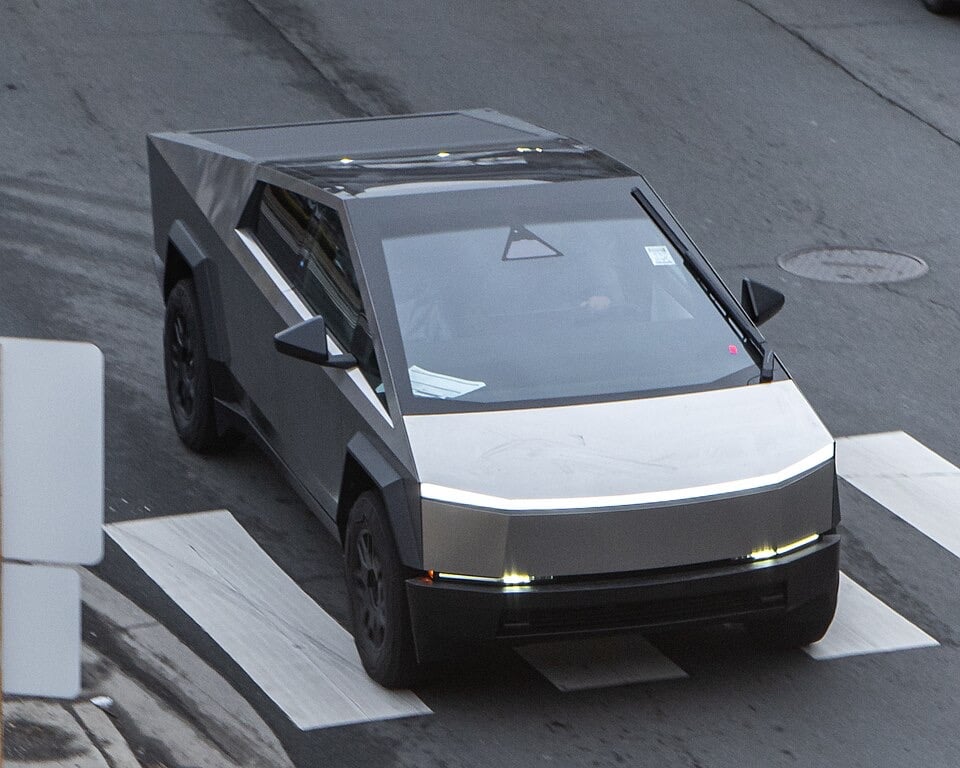
California tuning specialist Unplugged Performance says it could take over production of the pickup after Tesla’s planned wind-down. It admits it cannot do so alone, and has no investors confirmed.
An aftermarket tuning company has offered to take over production of Tesla’s Cybertruck once Elon Musk ends manufacturing of the divisive electric pickup. Unplugged Performance, a California firm that specialises in modifying Tesla vehicles, set out the proposal in an open letter on X. It says it could assemble a consortium of investors to fund a production line, leaving Tesla free to concentrate on its driverless Cybercab. Road & Track reported on 11 November that neither Tesla nor Mr Musk had publicly responded.
What Unplugged Performance is proposing
The company says it fully backs Mr Musk’s decision to prioritise the Cybercab. Its plan would use none of Tesla’s factory space, employees or management time. Tesla would instead receive licensing fees and a share of revenue on every vehicle built. Unplugged also pledged to put the Cybercab first for battery supply, taking only the cells left over.
Its ambitions go beyond keeping the angular pickup alive. The firm wants to build a three-row “CyberSUV” and an unmanned cargo vehicle it calls “CyberCargo”. It says private pickup buyers, seven-seat SUV customers and operators of autonomous passenger or cargo vehicles together could support a line that would not pay its way on pickups alone. Tesla North reported on 10 November that the firm expects some vehicles to be sold to individuals and others to run on Tesla’s autonomous ride-hailing network. It has not published financial forecasts for either model.
The original post reportedly drew more than 240,000 views within hours. Unplugged has invited investors and strategic partners to register their interest but stressed that it is only testing the market and is not taking money or commitments. It has not disclosed who the investors might be or how much funding it would need.
Responding to questions, the company acknowledged to Road & Track that it cannot make Cybertrucks on its own at present. It said a takeover would require outside manufacturing expertise, extra partners and significant preparation. It also said it had received an unexpectedly large response from former Tesla employees who want the platform to survive, though it named none and disclosed no employment agreements.
Teslarati reported that Unplugged was founded by Ben Schaffer in 2013 and is based in Hawthorne, California. Its UP.FIT division has already delivered Cybertrucks configured for police use to the Las Vegas Metropolitan Police Department, and it sells its own UP INVINCIBLE range of off-road equipment, suspension modifications and protective accessories for the truck. That gives it experience modifying finished vehicles, though not building complete ones.
Musk’s position on the wind-down
Mr Musk revealed plans to wind down Cybertruck production in 2027. CBS News and Business Insider reported on 11 November that, five days after first announcing a wind-down around mid-2027, he said Tesla would now keep building the pickup until the end of summer 2027, to fill more outstanding customer orders. “This is not the smartest move from a profit-maximizing standpoint btw, but there must be some room in this world for sentimentality or what’s the point?” he wrote, according to CBS.
The extension is not a response to Unplugged’s offer. It concerns Tesla’s own production schedule.
Reuters reported on 9 November that Tesla warned some customers would have their deposits refunded, because outstanding orders exceed the remaining planned production. Tesla has not said how many customers are affected. CBS News reported that Mr Musk rejected the suggestion that the truck was being dropped because it lost money. He argued instead that the resources needed for its complex manufacturing process would be better used for the Cybercab.
Sales have fallen short of Musk’s hopes
Mr Musk once predicted the Cybertruck could sell 250,000 units a year. In 2025, Tesla sold 20,237 in the US, a fall of 48% from the 38,965 sold in 2024. The pickup was unveiled four years before it reached customers in late 2023, and its stainless-steel body has divided motorists almost as much as its high price.
Cox Automotive figures cited by Yahoo Autos show about 13,500 sold in the first nine months of 2026. Business Insider, citing Cox, reported that about 76,000 have been sold over three years, including to corporate customers. Electrek reported that a cheaper dual-motor version began reaching customers in June 2026. It also reported that Tesla’s July 2026 lawsuit against a casting supplier said thousands of trucks already committed to buyers could not be built without the necessary tooling, which reportedly interrupted production for several weeks.
Tesla’s wider “Other Models” category, which includes vehicles besides the Cybertruck, delivered 8,295 vehicles worldwide in July to September, against 15,933 a year earlier, a fall of 48%, according to Electrek. Those figures cannot be treated as Cybertruck-only sales.
Reuters reported in May that SpaceX bought about $131m worth of Cybertrucks from Tesla in 2025, according to its regulatory filings. Both companies are controlled by Mr Musk, so these are related-party transactions. The sum is purchase value, not Tesla’s profit. SpaceX and xAI together bought about $650m of Tesla products and services in 2025, including $506m of Megapack energy storage. Electrek, citing S&P Global Mobility registration data, reported that about 1,339 Cybertrucks registered in the last quarter of 2025 went to Musk-affiliated companies.
Obstacles to a takeover
Reuters reported on 6 November that Tesla’s Austin plant is the only publicly identified facility equipped for the Cybertruck’s specialised production, and that no alternative site had been announced. Reuters also counted 11 recalls of the vehicle. The US safety regulator NHTSA recorded a recall in March 2025 covering 46,096 vehicles because stainless-steel cant-rail panels could detach. The affected production period ran from 13 November 2023 to 27 February 2025. No agreement has been announced on who would be responsible for warranties, recalls or repairs under a licensed manufacturer.
Reuters said European sales remain limited by safety-approval rules, including pedestrian protection, which the vehicle’s stainless-steel construction makes harder to meet. Unplugged has not set out a European approval strategy.
The wider market is difficult. Car and Driver reported that six major electric pickups sold a combined 232,809 vehicles in the US between 2024 and September 2026, while Ford sold 801,525 F-Series pickups in 2025 alone. Cox Automotive recorded 262,649 US electric vehicle sales in the third quarter of 2026, down 39.5% year on year, though the comparison was distorted by strong demand before federal incentives expired in 2025. Stephanie Valdez Streaty, Cox Automotive’s industry insights director, said the Cybertruck’s experience shows how hard it is to turn early publicity into lasting demand in America’s competitive and brand-loyal truck market.
What it means for owners
Tesla’s published US warranty remains in place, according to its official documentation: four years or 50,000 miles of basic cover, and eight years or 150,000 miles on the battery and drive unit, including a guarantee of at least 70% battery capacity retention. Tesla has not said it will cancel those commitments. Electrek reported on 6 November that Tesla has not said how long it will supply parts or support existing owners after manufacturing ends.
