



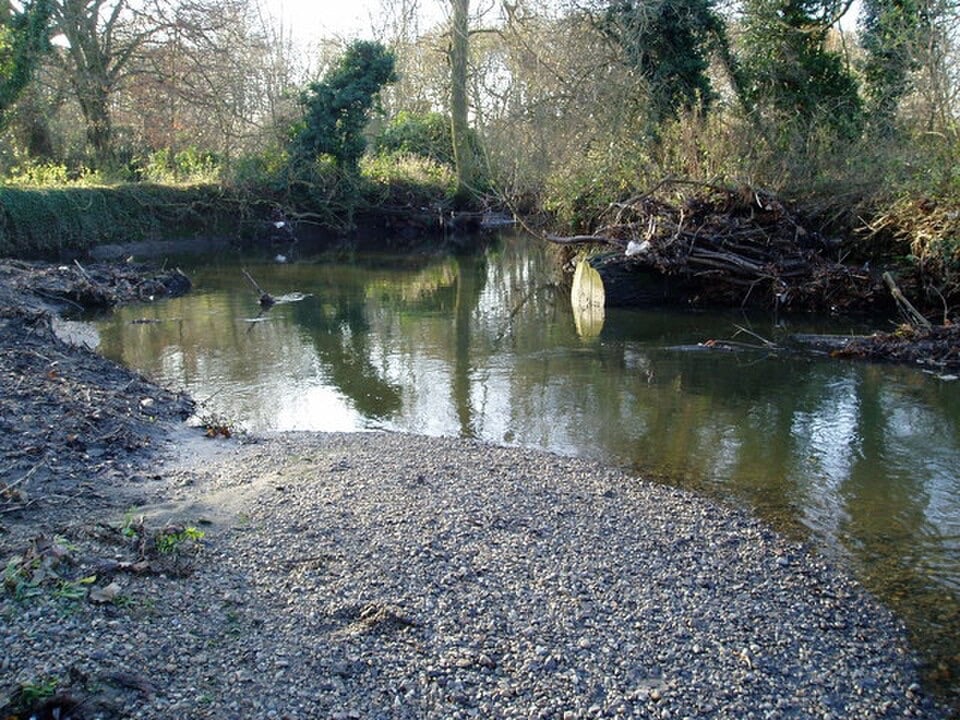
Faulty plumbing is sending wastewater from toilets, washing machines and sinks straight into the capital’s waterways, according to inspections run by the Zoological Society of London.
Volunteer-led inspections of London’s small rivers, brooks and streams have found dozens of cases of household wastewater flowing into local watercourses instead of the sewer system. The Zoological Society of London (ZSL), which operates London Zoo, has run the Outfall Safari programme for the past decade. It trains volunteers to patrol riverbanks and spot drainage pipes discharging household sewage. Its latest snapshot survey found pollution from plumbing “misconnections” on the Wandle, Brent, Ravensbourne and Pinn.
‘Pretty disgusting’
Ella Carbery-Tarrant, a ZSL project officer who leads the programme, said the state of some watercourses was “pretty disgusting”. “The Brent is a hotspot for poor water quality,” she said. “It is pretty disgusting to be honest. There are some pretty bad surface water outfalls that are polluting a lot of watercourse.”
The audit covered 22.4km of the River Brent in north and north-west London. It identified 44 “polluting outfalls” among 123 inspected, and prompted emergency alerts to Thames Water over 15 high-priority incidents. City Hall appointed a full-time enforcement officer last month to tackle misconnections across west London, following persistent pollution on the Brent.
What volunteers found elsewhere
The findings varied between rivers:
- River Wandle, south London: Ms Carbery-Tarrant said conditions were “not too bad compared to other catchments”, though chronic misconnections remain a problem. Of 105 surface water outfalls inspected, 90 showed no visible contamination and nine were actively polluting. Two of those were severe leaks that triggered immediate alerts to Thames Water and the Environment Agency.
- River Ravensbourne, south-east London: The audit found 18 polluting outfalls, six of which required emergency alerts.
- River Pinn, west London: Volunteers found 17 polluting outfalls, with three severe incidents of contamination raised to Thames Water.
On the Wandle, a rare 12-mile chalk stream running from Carshalton to the Thames at Wandsworth, a recent focus uncovered 77 household appliances wrongly plumbed into rainwater pipes across just eight properties on Wandle Road.
How misconnections happen
In a correctly connected system, wastewater from toilets, washing machines and sinks goes into the foul sewer, while rainwater drains carry surface water away from buildings and roads. When plumbing is wrongly connected, wastewater can enter surface-water drains and flow directly into rivers without passing through any sewage treatment.
The faults can occur during renovations, extensions or other building work, and can go undetected for years. They may involve appliances in a single property, but can also affect entire blocks of flats or whole housing estates. The problem differs from the more widely reported sewage spills from treatment works.
Not every polluted outfall has the same cause. Damaged pipes, blockages and other infrastructure defects can also affect drainage outlets, so investigations are needed to establish the source before responsibility is assigned. That determines whether a property owner, a water company or another organisation must put things right.
The scale and the response
The Outfall Safari programme recorded more than 1,300 incidents involving misconnected appliances or defective pipework between 2020 and 2025. Volunteers report their findings to the relevant authorities, which helps water companies and regulators prioritise investigations and repairs. Thames Water also runs a Surface Water Outfall Programme, which uses dye tests and household surveys to identify misconnections along the capital’s rivers.
The Mayor of London has highlighted existing powers under the Building Act 1984 that can be used to require faulty drainage connections to be corrected. City Hall is also developing a waterways plan with more than 50 partner organisations, including measures on misconnections. How effective the new enforcement officer proves will depend on identifying the properties responsible and getting the faults repaired.
Community groups
ZSL is not the only group investigating. The citizen-led Haringey Water Squad regularly posts about its work on the River Moselle, a small and mostly hidden waterway in north London. In an Instagram post, the group said it had found sanitary waste and high chemical readings at the Moselle Brook in Lordship Recreation Ground, Tottenham. “These findings point to a serious, and sadly widespread, source of water pollution: misconnected plumbing,” it said.
