




Paul Powlesland, a river conservation volunteer, is under investigation and risks up to two years in prison if charged and convicted over an unpermitted clean-up operation, while a man who sexually assaulted five women and a schoolgirl in uniform on London’s rail network was sentenced to just 16 months.
Paul Powlesland, a 40-year-old environmental lawyer and founder of the River Roding Trust, is being investigated by the Environment Agency and risks up to two years in prison if he is charged and convicted over a volunteer clean-up of a polluted stretch of Alders Brook in east London. Separately, Zevenor Gordon, 24, of Lewisham, was jailed for just 16 months at Woolwich Crown Court after admitting to sexually assaulting five women and a schoolgirl in school uniform on London’s transport network. The contrast between the two cases has fuelled renewed debate over so-called “two-tier” justice in Britain.
Why Powlesland risks two years in prison
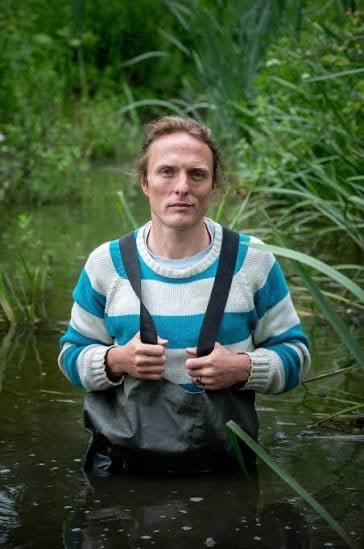
Powlesland organised a ten-day volunteer effort in February 2026 to clear roughly 250 metres of Alders Brook, which he said had become blocked and stagnant after years of neglect. Volunteers removed approximately 200 bags of rubbish, along with silt, weeds and fallen branches from the waterway.
The Environment Agency says the work required an environmental permit under the Environmental Permitting (England and Wales) Regulations 2016, as it allegedly involved dredging the river, undertaking flood-risk activities, and leaving material within the floodplain. The agency’s investigation concerns alleged permitting and waste offences.
Powlesland risks up to two years in prison, but only if a specific chain of events unfolds: he must first be charged, the case would then need to go to court, he would need to be convicted, and a judge would ultimately need to decide that a custodial sentence was appropriate. As things stand, according to the Times, no charges have been brought and no decision on prosecution has yet been made.
Powlesland’s response
Powlesland has said he repeatedly asked the Environment Agency to address pollution and fly-tipping on the River Roding but received little response. He has argued the agency is targeting volunteers rather than larger polluters responsible for illegal dumping and sewage discharges.
“After decades of ignoring rampant environmental crime on the Roding, the Environment Agency has finally decided to act… but against the River Roding Trust for restoring a river without a permit,” he said.
He has also pointed to what he describes as visible environmental benefits from the clean-up, saying fish, dragonflies, herons and other wildlife have returned to the restored section of the brook.
The Environment Agency’s position
The Environment Agency has said it welcomes community efforts to improve rivers, but maintains that permits exist to ensure such work does not unintentionally increase flood risk, damage drainage systems, or harm habitats and the wider environment. The agency has stressed, via the Times, that it has not yet decided whether to pursue a prosecution.
The sex offender jailed for just 16 months
Separately, Zevenor Gordon, of Glenton Road, Lewisham, was sentenced to 16 months in prison at Woolwich Crown Court on 5 June 2025, after pleading guilty to six counts of sexual assault against five women and a schoolgirl on London’s rail network. The offences took place over a four-month period between December 2023 and March 2024, with victims ranging in age from their teens to their fifties.
According to British Transport Police, the assaults followed a pattern across several stations:
- On 9 December 2023, Gordon approached and sexually assaulted a 27-year-old woman travelling to Dalston Junction.
- On 14 December 2023, he followed a woman in her fifties after she left the Tube at Dalston Junction, assaulted her, then boarded a departing train.
- On 7 February 2024, he sexually assaulted a woman in her twenties on the platform at Baker Street station.
- On 26 February 2024, he sexually assaulted a 32-year-old woman at London Bridge station.
- On 11 March 2024, he sexually assaulted a schoolgirl in uniform as she boarded a train at Cutty Sark station.
- On 13 March 2024, he sexually assaulted another woman in her early twenties, again at Cutty Sark station.
British Transport Police identified Gordon through CCTV footage and further investigative work before arresting him at his home in Lewisham. He later pleaded guilty to all six offences.

Sentencing and safeguarding orders
Alongside his 16-month prison sentence, the court imposed a ten-year Sexual Harm Prevention Order and required Gordon to sign the Sex Offenders Register for ten years. The order prohibits him from approaching, gesturing towards, or acting in a way that causes harassment, alarm or distress to women or girls in public places or on public transport, and bars him from entering female public toilets.
Detective Constable Gemma Lee of British Transport Police praised the six victims for coming forward, saying their cooperation helped investigators establish Gordon’s pattern of predatory behaviour and bring him before the courts.
Two-Tier Britain, Laid Bare
Put the two cases side by side and it’s hard not to see exactly what critics mean when they talk about “two-tier Britain.”
A man who admitted sexually assaulting five women and a schoolgirl in school uniform, stalking his victims through Tube stations and train platforms over a four-month campaign of predatory violence, walked away with 16 months. He’ll likely serve a fraction of that behind bars before release. Meanwhile, a volunteer who spent ten days hauling 200 bags of rubbish, silt and rotting branches out of a neglected London brook, restoring habitat that brought fish, dragonflies and herons back to the water, is being pursued by a state regulator that has so far shown no comparable urgency about the sewage discharges and illegal dumping Powlesland says it ignored for years.
To be clear on the facts: Powlesland has not been charged, and the Environment Agency has not decided whether to prosecute. The two-year figure is the maximum sentence that would apply only if he is charged, convicted, and a judge decides custody is warranted — a chain of ifs that critics say should never have been set in motion in the first place. That’s precisely the point being made by those angered by this case: that a man cleaning up a river is facing the machinery of prosecution at all, over a permitting technicality, while violent, repeated sexual offending against women and a child draws a sentence measured in months.
Supporters of the Environment Agency’s position will say permits exist for good reason, and that comparing an ongoing regulatory investigation to a concluded criminal sentence is comparing apples to oranges. Critics will say that’s exactly the kind of bureaucratic hair-splitting that lets the state come down hard on the law-abiding while treating violent offenders with kid gloves. Readers can draw their own conclusions about which system of priorities Britain’s institutions are actually protecting.
