



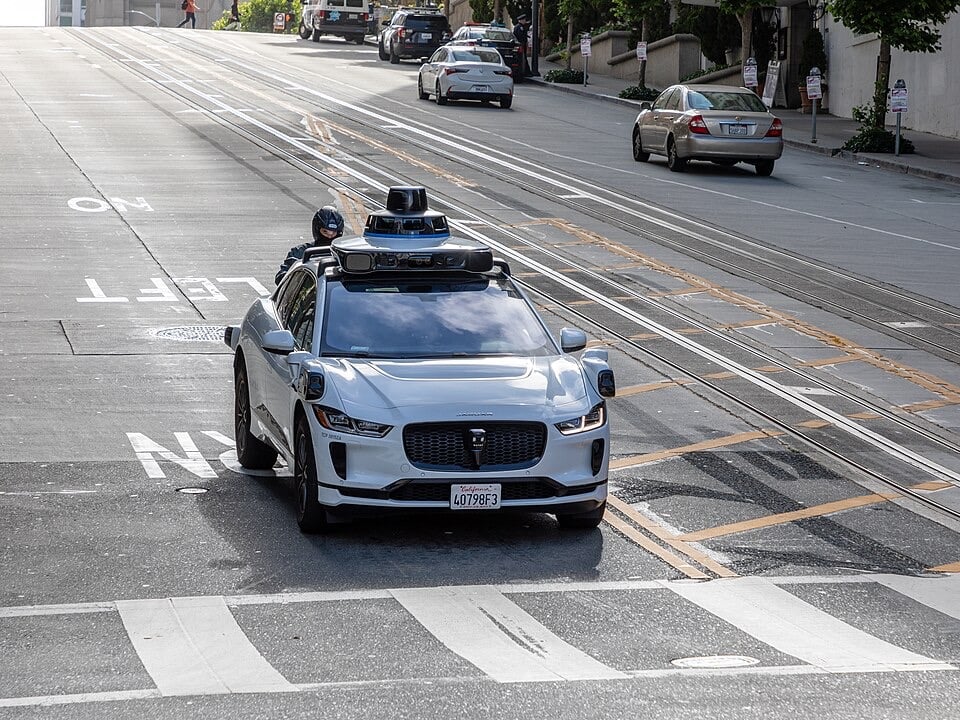
Two juveniles were arrested after a Waymo robotaxi alerted police to a firearm inside the vehicle, with officers discovering an unserialized AR-style rifle during a high-risk stop in San Francisco.
Two young people have been arrested after a Waymo driverless vehicle alerted the company to a suspected firearm inside the car in San Francisco. Police responded to the Outer Richmond area shortly before 4am on September 3 and carried out a high-risk vehicle stop before discovering an AR-style rifle described as a ghost gun. Officers also reported finding suspected marijuana and mace, while the male and female passengers were booked into the Juvenile Justice Center on firearm-related allegations. (SFGATE)
Waymo alerts police after suspected gun detected
The incident happened in the early hours of September 3 in San Francisco’s Outer Richmond neighbourhood.
According to SFGATE’s report, a Waymo employee was alerted that a firearm had been detected inside one of the company’s autonomous vehicles.
The vehicle was stopped and police were contacted.
Officers were dispatched to the 800 block of 40th Avenue at around 4am, where they carried out what the San Francisco Police Department described as a “high-risk vehicle stop.”
Police detained the two occupants, a male and a female juvenile, before searching the vehicle.
They discovered an AR-style assault rifle that officers described as a ghost gun, along with suspected marijuana and mace spray. (SFGATE)
Both suspects were booked into San Francisco’s Juvenile Justice Center on allegations relating to illegal firearm possession.
Their identities have not been released because they are minors.
The investigation remains ongoing.
How did Waymo detect the firearm?
One of the biggest unanswered questions surrounding the case is exactly how Waymo detected the weapon.
Neither police nor Waymo has publicly explained the specific technology or process that generated the firearm alert in this incident.
Waymo does, however, acknowledge that its vehicles contain cameras inside the passenger cabin.
According to Waymo’s official information, interior cameras can be used for several purposes, including helping during emergencies, locating lost property and checking whether the company’s in-car rules are being followed. (Waymo)
The company has also published information explaining how its support team can respond when something goes wrong during a journey.
In certain circumstances, support staff can review vehicle footage and, in more urgent situations, access live video during a trip.
That does not establish that an interior camera was responsible for identifying the firearm in the San Francisco case. The precise detection method has not been disclosed.
Waymo prohibits weapons inside its vehicles
Waymo’s rules explicitly prohibit passengers from bringing weapons into its cars.
Its Rider Rules state that passengers must not carry weapons of any kind inside a Waymo vehicle. (Google Help)
The rules also prohibit passengers from consuming drugs or alcohol inside the vehicles.
Waymo says it can suspend or permanently terminate a rider’s access if it believes its rules have been violated.
The company also has specific requirements concerning children and teenagers. Its general rule is that riders must be 18 or older to travel alone, although Waymo currently operates a teen-account system in the Phoenix metropolitan area for riders aged 14 to 17 with parental or guardian involvement. (Google Help)
Waymo’s rules therefore provide an important distinction between the presence of minors in a vehicle and whether they are permitted to travel without an accompanying adult.
What is a ghost gun?
The rifle recovered by police was described as a ghost gun, a term generally used for firearms manufactured without valid serial numbers.
California has introduced additional measures targeting such weapons.
According to the California Department of Justice, ghost guns are firearms manufactured without valid serial numbers, typically by people who are not licensed firearm manufacturers.
The department says the lack of a serial number can make the weapon more difficult to trace during criminal investigations. (California Attorney General)
New California laws concerning ghost guns came into effect on January 1, 2026.
The state’s Department of Justice said the legislation introduced additional requirements and restrictions connected with the manufacture and distribution of firearms and products used to produce them. (California Attorney General)
That legal background is particularly relevant to the San Francisco case because police say the weapon they recovered was unserialized.
Waymo has previously called police over teenage passengers
The latest arrest is not the first time a Waymo vehicle has become involved in a police response involving teenagers.
In July, two 15-year-old boys were detained in San Mateo after Waymo contacted police about their behaviour inside one of its vehicles.
According to ABC News, the teenagers had been drinking and were firing gel-ball blasters from the driverless vehicle.
San Mateo police said the projectiles were actually Orbeez water beads.
Officers stopped the vehicle and removed the teenagers before determining that the guns were toys. Police nevertheless warned that toy guns, water guns and BB guns can cause serious concern because members of the public may mistake them for real firearms. (ABC News)
The incident also raised questions about how autonomous vehicles monitor what passengers are doing inside the cabin.
Teenagers were able to leave the vehicle
The San Mateo incident prompted further discussion about whether passengers can be effectively kept inside a driverless vehicle while police are being called.
According to the San Francisco Chronicle’s report, San Mateo police spokesperson Jeanine Luna said the teenagers were not locked inside and had the ability to leave the vehicle.
Police were also able to communicate with a Waymo representative through the vehicle’s communication system during the stop. (San Francisco Chronicle)
Waymo’s own safety guidance explains that its vehicles can communicate with support staff and that support can assist law enforcement during an interaction.
The company says its vehicles are designed to recognise police lights and sirens and pull over appropriately. Support can then communicate with both riders and officers through the vehicle’s systems. (Google Help)
It has not been established whether the same procedures were used during the September 3 San Francisco firearm incident.
Driverless vehicles are creating new safety questions
The two incidents illustrate a new problem created by autonomous transport.
In a conventional taxi or rideshare vehicle, a driver can potentially see a passenger carrying a weapon, hear an argument or notice suspicious behaviour and decide to stop the car or contact police.
With a driverless vehicle, those responsibilities can instead fall on cameras, sensors, automated driving systems and remote support personnel.
Waymo’s technology allows its support team to become involved when a vehicle encounters a safety or security issue, but the San Francisco firearm case demonstrates the potential seriousness of those interventions.
The company has also faced broader questions over young people travelling in its vehicles.
The San Francisco Chronicle has reported that some parents in the Bay Area have been allowing teenagers to use Waymo vehicles without adults, despite the company’s general requirement that riders be 18 or older unless the relevant teen-account arrangements apply. (San Francisco Chronicle)
Police have not explained how the weapon was identified
Despite the discovery of the rifle, several details about the incident remain unclear.
Authorities have not publicly explained precisely how the firearm was detected, how long the weapon had been inside the vehicle or whether the suspects were already known to police.
It is also not clear from the publicly available information whether the detection involved Waymo’s cabin cameras, a passenger report, an automated system or intervention by the company’s support staff.
What is known is that Waymo alerted authorities, the vehicle was stopped in San Francisco, and police say they recovered an unserialized AR-style rifle from inside.
The two juveniles were subsequently booked into the Juvenile Justice Center and face allegations connected with illegal firearm possession. (SFGATE)
The case remains under investigation.
