



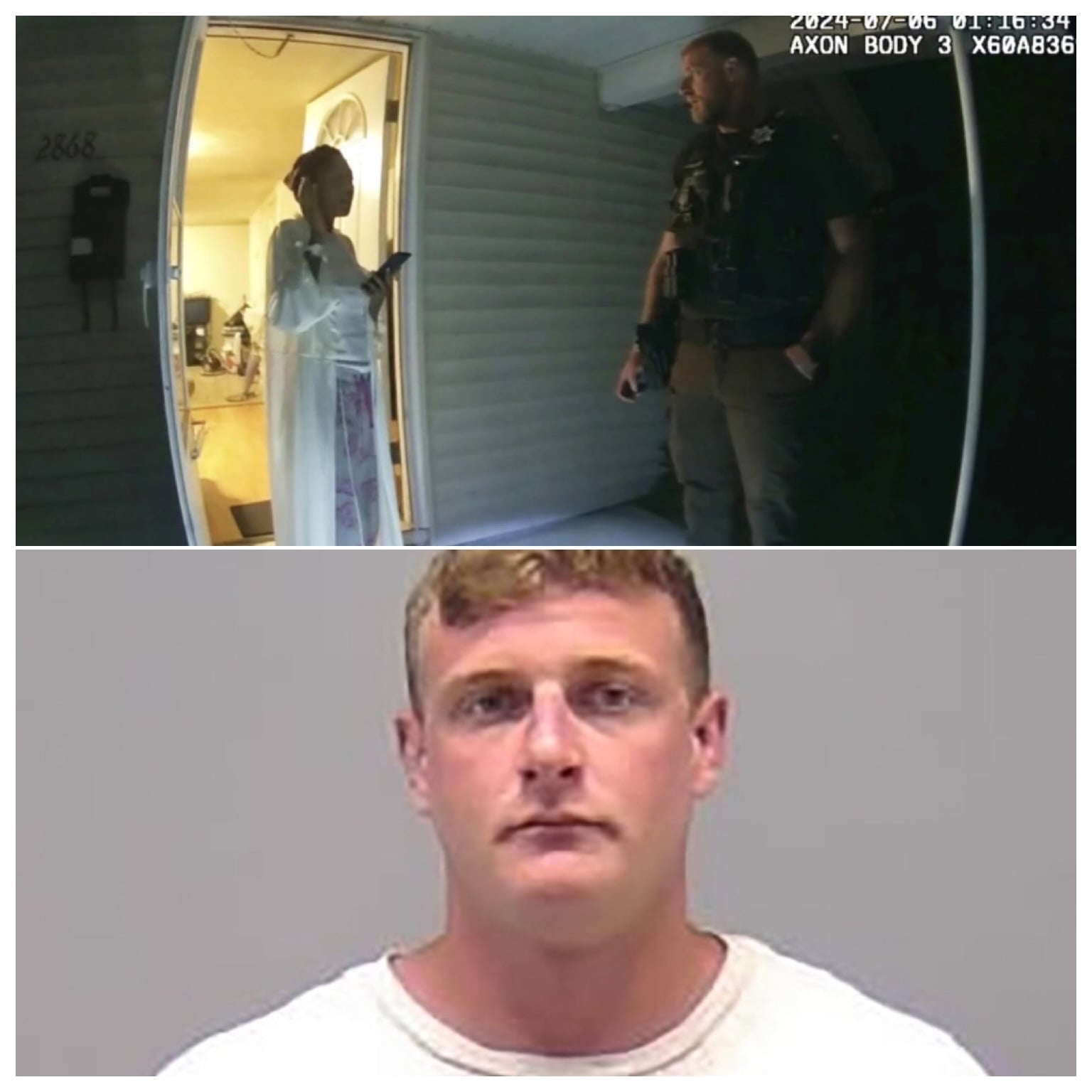
Sean Grayson, the former Illinois sheriff’s deputy convicted of fatally shooting Sonya Massey inside her own home in 2024, has died in prison just weeks after his request for compassionate medical release was rejected, his attorney has confirmed.
Sean Grayson, the former Sangamon County sheriff’s deputy convicted of fatally shooting Sonya Massey after she called 911 to report a prowler, has died in prison, his attorney said on Sunday. Daniel Fultz, who represented Grayson during his murder trial, said he died at around noon, six months into a 20-year sentence for second-degree murder. Grayson, 32, had been diagnosed with Stage 3 colon cancer in 2023, according to another defence attorney, Mark Wykoff, who disclosed the diagnosis at his sentencing in January. It was not immediately clear whether cancer was the cause of his death.
The shooting of Sonya Massey
Grayson shot and killed Massey, 36, in 2024 after responding to her 911 call reporting a prowler. The incident, which was captured on body camera footage, sparked widespread protests and calls for justice, and Grayson was convicted of second-degree murder in 2025.
According to court testimony, during the encounter Massey picked up a pot of boiling water from her stove, prompting Grayson to back away. Grayson testified that he believed Massey was preparing to throw the boiling water at him after she said, “I rebuke you in the name of Jesus,” a phrase she reportedly repeated when he appeared confused. Prosecutors said Grayson then threatened to shoot Massey, who apologised and dropped to the floor, before he fired three shots, striking her. Sangamon County State’s Attorney John Milhiser told the court that Grayson declined to offer her medical care afterwards. Massey was pronounced dead at hospital.
A rejected bid for compassionate release
By the time Grayson sought compassionate release from prison, his cancer had reportedly progressed to Stage 4 and spread to his liver and lungs. He applied for release in May 2026 under Illinois’s Joe Coleman Medical Release Act, a law that allows certain terminally ill or medically incapacitated prisoners to seek early release. Medical documentation considered as part of his application indicated advanced cancer, though reports differed over his precise prognosis.
The Illinois Prisoner Review Board unanimously rejected his application in a 3-0 vote in July. In his handwritten application, Grayson maintained that Massey had “attacked” him with the pot of boiling water, and reportedly did not express remorse over the shooting in his account.
Opposition from prosecutors and Massey’s family
Sangamon County State’s Attorney John Milhiser opposed Grayson’s bid for medical release, arguing that Grayson had already been diagnosed with cancer at the time he shot Massey, and that his medical condition had already been taken into account during sentencing.
Massey’s family also personally opposed his release. Four family members delivered victim impact statements to the Prisoner Review Board before it rejected Grayson’s application, and reports indicated no letters supporting his release had been submitted to the board. Massey’s father, James Wilburn, said following the board’s decision that officials had “done the right thing.”
Grayson had separately sought a reduced sentence in May 2026, but that request was also denied. At one stage during his imprisonment, he was reportedly receiving cancer treatment outside an Illinois Department of Corrections facility, according to court documents filed by his legal team, though the precise location was not disclosed.
Death comes weeks after rejection
Grayson’s death came just over three weeks after his medical-release application was rejected. Authorities had not immediately confirmed the official cause of death at the time of reporting.
