



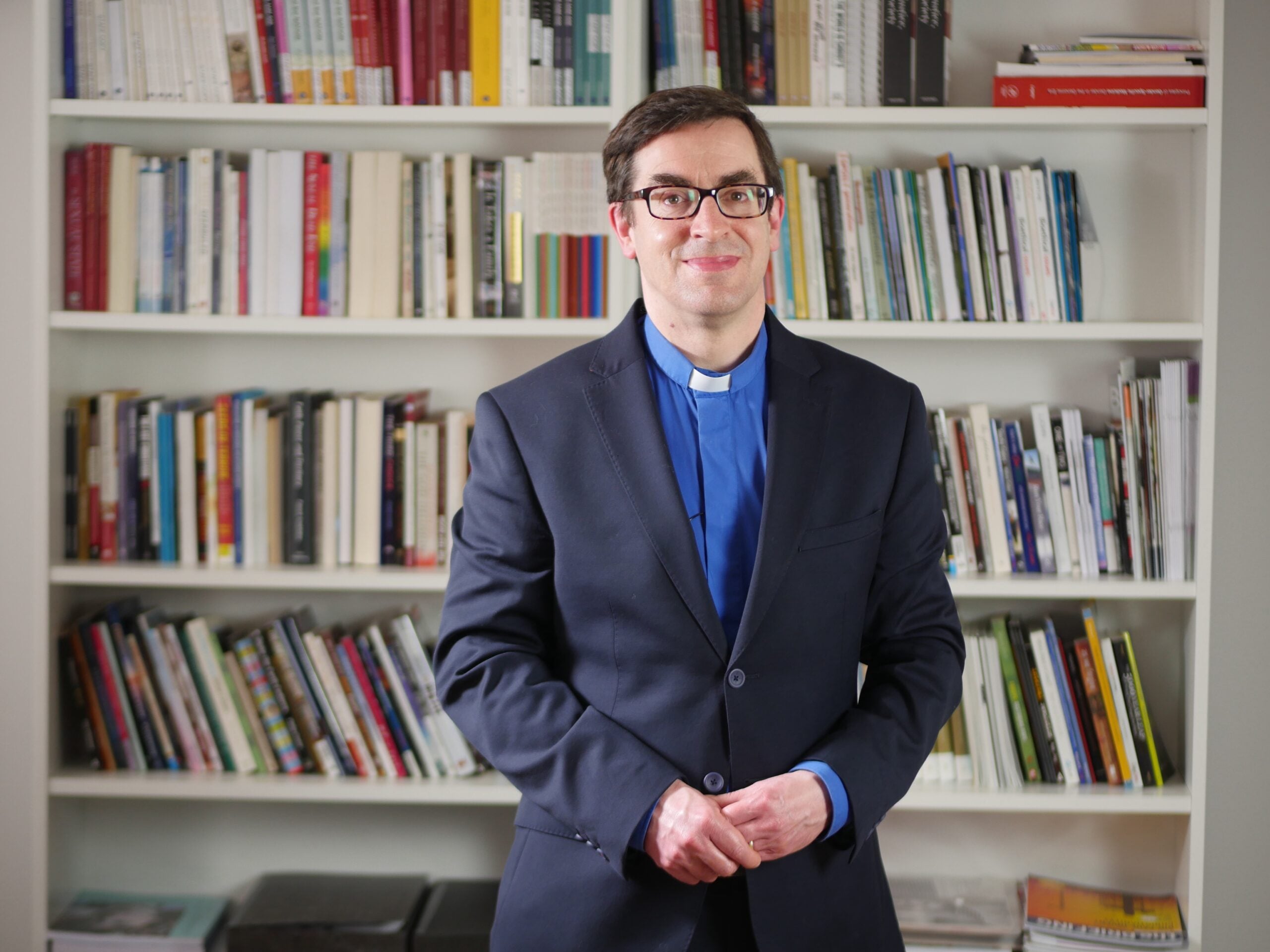
Rev Dr Bernard Randall has finally been cleared over a sermon on gender identity that cost him his job and his standing with the Church of England, after an independent safeguarding review found no evidence he caused any harm and a separate legal settlement was reached with the school that dismissed him.
Seven years after delivering a sermon that upended his career, Rev Dr Bernard Randall can once again preach and work in schools. An independent review has cleared the former Cambridge college chaplain of any safeguarding concerns, and he has separately settled his legal dispute with Trent College, the Derbyshire school where the controversy began. Backed throughout by the Christian Legal Centre, Randall spent the intervening years dismissed from his post, reported to the government’s Prevent programme, and formally blacklisted by the Diocese of Derby as a safeguarding risk.
How a School Assembly Sparked a Seven-Year Battle
The saga began in June 2018, when Trent College brought in outside group Educate and Celebrate to run staff training. Staff, including Randall, were told to chant “smash heteronormativity” by the group’s founder, Elly Barnes, who also wrongly claimed during the session that “gender identity” was legally protected under the Equality Act and that her organisation carried Ofsted’s endorsement — neither of which was accurate. As school chaplain, Randall flagged concerns to senior leadership about whether the material was appropriate or accurate, particularly given the school’s Christian character. His objections were overruled: by January 2019 the school had rolled the curriculum out to every year group, nursery included, sidelining Randall in the process.
Months later, in June 2019, a pupil asked in a written question why students were being told they “have to accept” the school’s teaching on gender identity. Randall responded with a chapel sermon called “Competing ideologies” — delivered, notably, inside a Church of England chapel at a Church of England school, a setting where orthodox Christian teaching might ordinarily be expected, and one that reflected the Church’s own doctrine on marriage and identity.
Reported to Counter-Terror Police Without His Knowledge
What followed was swift and severe. Trent College reported Randall to Prevent, the UK’s counter-extremism programme, alleging “religious extremism” — without ever telling him. He was separately flagged to the Local Authority Designated Officer as a possible safeguarding risk. Both bodies cleared him. Regardless, the school moved to dismiss him in August 2019, with headmaster Bill Penty citing gross misconduct. An appeal reversed the sacking, but Randall returned only under tight restrictions that effectively muzzled his role as chaplain.
By January 2020 he had begun legal proceedings against the school, alleging discrimination, harassment, victimisation and breaches of his human rights. The relationship deteriorated further after lockdown, when the school proposed slashing his role to seven hours a week; unwilling to accept the cut, Randall was made redundant, and by April 2021 his claim had expanded to cover unfair dismissal too.
Blacklisted Without a Single Complaint
It was around this point that the Diocese of Derby’s safeguarding team took an interest — despite no one having lodged a complaint or allegation against him. One staff member reportedly called his sacking “a game changer.” The resulting safeguarding process ended with Bishop of Derby Libby Lane refusing to grant him a Permission to Officiate licence.
Randall later described the ordeal as a series of “Kafkaesque interrogations,” conducted without him ever being told precisely what was being investigated. In July 2021, he was informed he would need to be assessed by a psychologist whose usual work involved evaluating sex offenders. He declined, arguing that agreeing would effectively amount to admitting guilt — and was blacklisted as a result.
Archbishop Welby Ruled ‘Plainly Wrong’
Having exhausted other options, Randall filed a formal misconduct complaint against Bishop Lane in July 2022, under the Clergy Discipline Measure 2003, alleging her handling of the case had been abusive. Then-Archbishop of Canterbury Justin Welby blocked a formal investigation and dismissed the complaint outright, without referring it to the Church’s National Safeguarding Team.
That decision didn’t hold. Gregory Jones KC, a senior legal officer for clergy discipline, later found Welby had “misunderstood the scope of his powers” and was “plainly wrong” to dismiss the complaint — and separately described the entire process that led to Randall’s blacklisting as “egregious” and a “gross” error, finding nothing to support the idea he posed any safeguarding risk. Nine of his thirteen allegations were sent back to Bishop Lane for response. Even so, the process crawled on: Welby ruled again in July 2023 that no action should follow against the bishop, and it took until November that year for Randall’s complaint to reach the Designated Officer for investigation. President of Tribunals Dame Sarah Asplin eventually branded the whole handling “highly unsatisfactory” and ordered it restarted from scratch, though stopped short of recommending disciplinary action against Lane.
A Tribunal Panel Undermined by Bias
Running in parallel was Randall’s employment case, heard at Nottingham Justice Centre from September 2022 before Employment Judge Victoria Butler, sitting with lay members including trade unionist Jed Purkis. The tribunal ruled against Randall in February 2023, with Judge Butler concluding he had “misconceived” the nature of Educate and Celebrate and taken “an extreme view” of the group, while repeatedly and wrongly asserting it held Ofsted recognition.
It later came out that Purkis had posted a string of anti-Christian remarks on social media, both before and after the ruling — including “Only atheists should be allowed to run for office,” and “Damn right, you won’t catch us killing in the name of our non-god.” He had also written of Christians: “If they’re that f***ing super how come there’s so much shit going on in the world?” and “I need no ‘higher power’ to tell me the right way to treat people and behave…”
The same tribunal panel went on to hear a comparable case in March 2024, brought by a teacher known only as “Hannah,” who had been sacked after raising safeguarding concerns over an eight-year-old “transitioning” under Stonewall guidance at her primary school. Once Purkis’s posts surfaced during that hearing, lawyers successfully argued apparent bias, forcing Judge Butler to step aside along with the rest of the panel and collapsing the case entirely. The Judicial Conduct Investigations Office later ruled Purkis’s comments amounted to misconduct and issued him a formal rebuke — a finding that would prove pivotal when Randall’s own appeal came around.
Educate and Celebrate Collapses in Scandal
Meanwhile, Trent College had also referred Randall to the Teaching Regulation Agency and the Disclosure and Barring Service. Both cleared him. Educate and Celebrate, the group at the heart of the original controversy, meanwhile imploded under its own scandals and was quietly wound up by the Charity Commission — a collapse that included the jailing of one of its patrons, Stephen Ireland, for 24 years over a string of child sex offences, including the rape of a 12-year-old boy. None of this prompted the Church to reinstate Randall.
Appeal Wins, Settlement Follows
Randall’s Employment Appeal Tribunal was put on hold in February 2024 pending the outcome of the landmark Kristie Higgs case, another Christian Legal Centre matter, in which the Court of Appeal delivered a significant ruling on Christian workplace rights on 12 February 2025. His own appeal opened weeks later, on 4 March 2025, built on thirteen grounds — among them bias on the original tribunal, mishandling of the sermon’s theological substance, and failure to properly account for the safeguarding blacklist and Prevent referral.
Judge James Tayler ruled the original tribunal decision “unsafe” and ordered a fresh trial. Trent College, having accepted Purkis’s bias, was ordered to pay £20,000 in costs, and a confidential settlement with Randall soon followed.
Safeguarding File Finally Closed
On the safeguarding side, an independent review by the Diocese of London — ordered on the recommendation of the Church’s most senior legal officer — found the original concerns could not be substantiated. “After full consideration and review of the available information I cannot establish, on the balance of probabilities, that harm was caused by the delivery of the sermons. This allegation is therefore unsubstantiated,” the review concluded, recommending “the investigation finds the concern or allegation was unsubstantiated and there are no ongoing safeguarding concerns.” Randall has since completed the mandatory safeguarding training and is now eligible for a Permission to Officiate licence — though the Bishop of Derby has taken no visible steps to help him return to ministry.
His legal team have pointed to one line in the report — that Randall would benefit from safeguarding training to better “understand what safeguarding both means and strives to achieve” — as evidence the Church still, in effect, holds his refusal to admit wrongdoing against him. They also note the stark contrast in timescales: the secular LADO needed just a single day back in 2019 to conclude the matter was “an issue regarding the subject’s beliefs which ran contrary to his employer’s,” while the Church took nearly seven years to reach broadly the same conclusion — despite its own bishops stating in 2021 that Randall’s sermon contained “nothing … outside the doctrine and teaching of the Church of England.”
‘Seven Years Have Been Taken From Me’
Randall spoke candidly about the personal cost of the case. “Seven years have been taken from me for doing my duty as a CofE chaplain in a school with a CofE ethos. I encouraged pupils to think, to debate, and to love their neighbours whatever they believed. No minister, teacher or chaplain should be punished for upholding Christian teaching in a Christian setting,” he said. “I am relieved that this legal ordeal has finally reached a settlement, but nothing can restore the years that have been taken from me. I was reported to Prevent, treated as a safeguarding risk, and shut out of ministry for preaching a sermon rooted in CofE doctrine.”
He continued: “The process and repeated delays has been an extreme punishment which has denied me justice for so long. I still don’t really know what the specifically safeguarding concern might have been… No one from the Church has suggested there was misconduct or inappropriate behaviour on my part, let alone anything remotely abusive. I can only conclude it was opposition to the Church’s own teaching from within, coupled with an inability to own up to it all being a mistake from the start.” He thanked those who had stood by him, adding: “It is time for the Church and our institutions to recognise what has happened to me and to ensure it never happens again.”
Christian Legal Centre Demands Change
Andrea Williams, chief executive of the Christian Legal Centre, called it one of the most troubling cases her organisation has ever handled. “Bernard Randall has endured one of the most extraordinary and disturbing cases we have ever supported. It has always been and still is a huge scandal. Secular bodies repeatedly vindicated him, but the Church of England, the institution that should have supported him the most, repeatedly failed him,” she said. She described the Trent College settlement as amounting to “an admission that Bernard was deeply wronged, revealing how a school can so badly lose its way once it bows the knee to transgender ideology,” and urged current Archbishop of Canterbury Sarah Mullally to meet with Randall without delay.
Whether the Diocese of Derby and its bishop will now take active steps to help Randall return to full ministry within the Church of England remains to be seen.
