



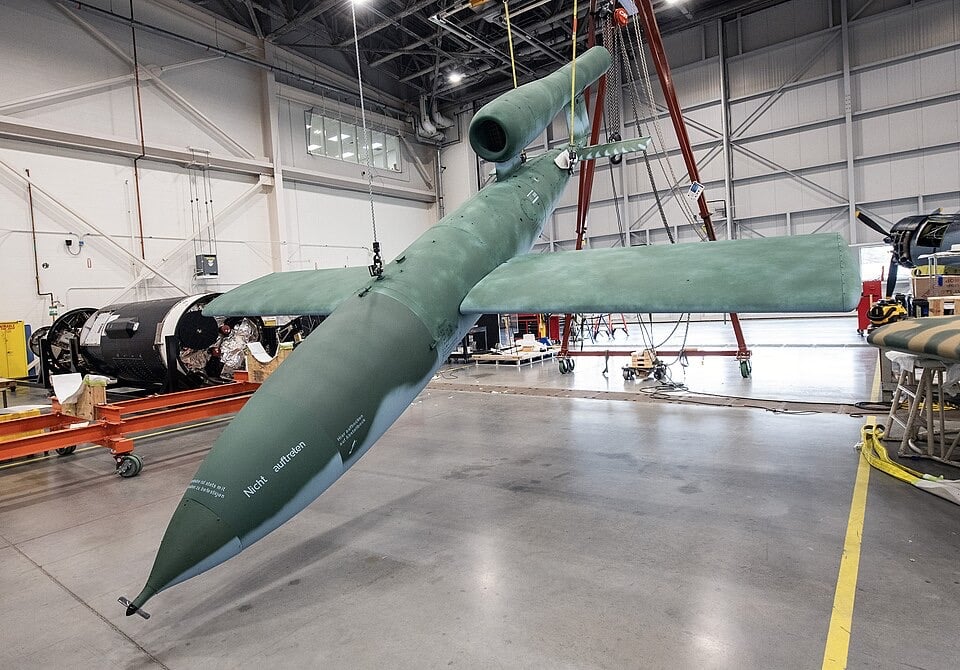
Russia has begun launching daily attacks using upgraded jet-powered Geran drones capable of speeds exceeding 300mph, according to Ukrainian Air Force data, prompting President Volodymyr Zelensky to warn of an unfolding “horror” over Kyiv’s skies as Ukraine races to develop faster interceptor missiles.
Russia has begun deploying its new, jet-powered Geran drones on a daily basis, according to Ukrainian Air Force data, marking the first time such attacks have been recorded every day. The upgraded munitions can cruise at more than 300mph, significantly outpacing older drone models and exceeding the top speed of Kyiv’s existing interceptors. President Volodymyr Zelensky has condemned the growing use of jet-propelled and other varieties of drones, describing the situation over Kyiv as an unfolding “horror.” The drones are powered by turbojet engines, some of which, according to Ukrainian military intelligence, are sourced from China.
A growing share of Russia’s drone attacks
Ukrainian military reporting indicates that jet-powered drones now make up a substantial proportion of Russia’s Shahed-type attacks, rather than remaining an occasional experimental weapon. In an attack on 2-3 September, roughly half of the 163 drones launched were jet-powered. A further large-scale attack on 5 September saw Russia launch 167 strike UAVs, again with approximately half described as jet-powered; Ukrainian forces reported neutralising 128 of the incoming drones, though impacts were still recorded at 23 separate locations.
A separate analysis of August’s Ukrainian Air Force data estimates that Russia used more than 5,100 Shahed-type UAVs, including decoys, during that month alone, indicating a shift toward sustained day-and-night drone pressure on Ukraine.
Deadly toll from recent attacks
According to Zelensky, the drones formed part of a wave of attacks on 1 September that killed at least 12 people and injured a further 20. Six of those killed were railway workers, after a depot in Kyiv was struck during the assault.
An escalating arms race
Earlier this year, Ukraine had shown relative success in countering Russian drones, intercepting 94% of long-range drones, according to Zelensky. However, the increased speed of the newer models has triggered a fresh escalation in the ongoing arms race between Kyiv and Moscow. On 10 August, Ukraine’s deputy head of military intelligence, Major General Vadym Skibitskyi, said his forces needed new interceptor missiles “capable of matching [jet-drones’] speed.”
Officials in Kyiv have said four Ukrainian companies have begun testing missiles designed to shoot down the newer Geran models, with the country’s new defence minister, Yevhenii Khmara, tasking them with producing “thousands of units” as quickly as possible.
More sophisticated and harder to predict
Ukrainian defence-technology adviser Serhii Beskrestnov said Russia is increasingly deploying the Geran-4 and Geran-5 variants, with the latter reportedly launched from around 400 kilometres away during recent attacks on Kyiv. Beskrestnov noted that Ukrainian air defences have successfully intercepted some Geran-5 drones, pushing back against the idea that the newer jet-powered weapons are currently impossible to shoot down.
Even so, Russia is simultaneously developing remote-controlled versions of the Geran-type drones. Ukrainian officials say operators can maintain control over these weapons through networks of other drones acting as communications relays, potentially extending control to between 150 and 175km beyond the furthest ground-control station.
Ukrainian officials believe some of the newest Geran variants can also be operated with live human control, rather than simply following pre-programmed coordinates. Ukrainian analysts say Russia has been experimenting with mesh-network technology that allows drones to function as communications relays, potentially enabling operators to change a drone’s target or flight path while it is already airborne. This capability could make the weapons considerably more difficult to defend against than older Shahed-type drones, since defenders can no longer necessarily rely on a drone following a predictable, pre-programmed route.
A cost and production challenge for Ukraine
Ukrainian officials estimate that Russia can now produce approximately 3,000 jet-powered UAVs per month, with intelligence assessments cited by defence analysts suggesting Moscow is aiming for an annual output of between 36,000 and 40,000 UAVs. The core concern for Kyiv is therefore not simply the speed of individual drones, but Russia’s capacity to manufacture large numbers of increasingly capable weapons cheaply and continuously, potentially forcing Ukraine to expend far more expensive interceptor missiles against comparatively inexpensive attack drones.
John Hardie of the Foundation for Defense of Democracies, a think tank focused on national security and foreign policy, said the increased speed and manoeuvrability of the newer drones was blurring the distinction between drones and more expensive cruise missiles. “Long-range one-way attack drones are basically a poor man’s cruise missile,” he said. “The more you add capability to a drone, the less meaningful the distinction between the drone and a lower-end cruise missile.” However, analyst organisation Conflict Armament Research has cautioned that jet-drones remain less advanced than true cruise missiles, noting that they have a shorter attack range, carry much smaller warheads, and remain more susceptible to jamming systems.
Ukraine appeals to allies for more interceptors
Defence Minister Khmara has said Ukraine needs 300 Patriot interceptor missiles from allied stockpiles, along with 500 air-to-air missiles capable of engaging cruise missiles, and additional man-portable air-defence systems. Khmara said Ukraine has contracts in place for roughly 1,000 further Patriot missiles, partly supported by an EU loan, but warned that most of these will not arrive until future years, prompting Kyiv to ask partners to supply missiles from their existing inventories immediately. Ukraine’s defence ministry has identified jet-powered drones and ballistic missiles as the country’s two most pressing current aerial threats.
The threat spreading beyond Ukraine’s borders
In a significant new development this week, a jet-powered Russian drone entered both Moldovan and Romanian airspace during an attack on Ukraine. The incident temporarily disrupted Moldovan aviation and delayed President Zelensky’s departure from Moldova for Norway. Norwegian Prime Minister Jonas Gahr Støre subsequently said Zelensky’s aircraft had narrowly avoided being struck by a drone immediately before take-off. One of the drones eventually crashed in Moldova, while another continued on into Romanian airspace, raising concerns that the higher speed of Russia’s latest drones is reducing the reaction time available to neighbouring countries.
How Ukraine is adapting
Ukrainian forces have begun deploying fighter aircraft, including F-16s and Mirage 2000s, alongside ground-based air defences, in response to the newer drone threat. However, analysts note a trade-off in this approach: concentrating aircraft and air-defence assets around Kyiv can leave other Ukrainian regions with comparatively weaker protection. Ukrainian officials are simultaneously working to develop cheaper interceptor solutions, given that using high-value missiles against mass-produced drones is becoming increasingly economically unsustainable over the longer term.
