



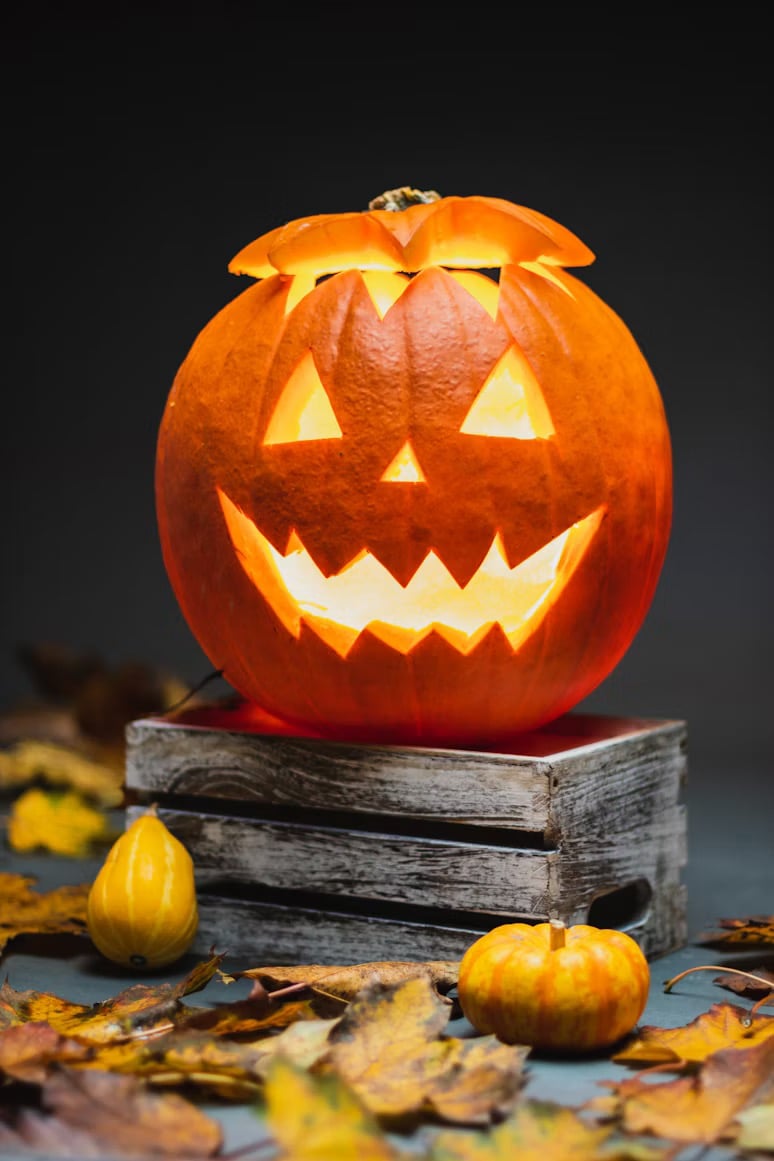
Some growers say crops have failed almost entirely, while major retailers are still selling Halloween pumpkins from 55p.
Farmers across Britain have reported smaller and fewer pumpkins this Halloween after the hottest summer on record. About 24 million are sold in the UK each year. In Bury St Edmunds, Suffolk, Liz Paterson and Andrew King, who usually grow around 10,000, have just 50. Supermarket sales have nonetheless risen, and several chains are still advertising low prices.
‘They just didn’t pollinate’
Ms Paterson said: “The pumpkins just didn’t grow this year. We could have tried to irrigate; we have got water, but we also have 500 breeding ewes, so we needed to give the water to them.”
She added: “I think the weather was too hot as well; they just didn’t pollinate, so it just never worked at all really.” The “horrendous” drought also scorched the grass the farm needs for its sheep. Ms Paterson said she would still try to grow a batch next year, but warned: “If it doesn’t work, then we’ll have to start thinking this climate doesn’t work for pumpkins. What else can we do?” There is little optimism that next year will be much better, because of El Niño.
Niall Smith, of Picking Patch, a seasonal farm attraction in the New Forest, Hampshire, said it was the second season in a row in which crops had been badly hit. The attraction turned to a local family farm for its pumpkins, but they came out 50% to 60% smaller than usual. “I know there’s a lot of patches that have got very, very disappointing crops, and by half term they’ll be out,” he said. Farms with thousands of spare pumpkins normally help each other out, but this year “there’s not a chance”. Ross Wright, a farmer from Exeter, said there was a national shortage, especially of large pumpkins. “We’re just going to have to grow more acres to get the pumpkins we need for Halloween every year,” he said.
According to the research notes, Rookery Farm near Thatcham, on the Hampshire-Berkshire border, lost about half its crop, and farmer Eleanor Gilbert, 24, said she might have to reconsider growing pumpkins. Suffolk grower David Coulter, of Home Farm Pumpkins, said some pumpkins stopped growing early and developed thicker skins, which could make them harder to carve. He suggested decorating smaller ones with paint. In August, Mr King told the BBC the weather could cost his business about £40,000, a quarter of its annual income. That was an early estimate and not a final loss.
Supermarkets less affected
Despite the shortages, Worldpanel by Numerator reports that UK supermarket pumpkin sales are up 10% on a year ago. That figure does not show whether more pumpkins were sold or whether higher spending explains part of the rise. About 1.2 million households bought pumpkins in the four weeks to 4 October, also up 10%. Lincolnshire Field Products, based in Spalding, has supplied 1.25 million pumpkins to Asda, according to Fruitnet.
Reported prices for a medium pumpkin are 55p at Aldi, Tesco and Lidl, 59p at Morrisons and £1.15 at Sainsbury’s. Aldi’s promotion, which began on 12 October, also includes extra-large pumpkins at £2.39. These are promotional prices and may change before Halloween.
The hottest summer
The Met Office says summer 2026 averaged 16.5C across the UK, about 0.4C above the previous record set in 2025. England averaged 18.2C. Some 54 weather stations broke their daily maximum records. England had 64% of its normal summer rainfall, Wales 59% and the UK as a whole 77%. July was England’s driest on record. The Met Office estimated that human-caused climate change made a summer this hot about 130 times more likely.
Some growers have adapted. At RHS Garden Harlow Carr in Yorkshire, gardeners used compost-rich beds to hold moisture, according to the Guardian. That is not a guaranteed answer for commercial farms.
The Dalston Pumpkin Lantern Festival in east London has been cancelled for 2026 after about 15 years, but organisers cited overcrowding and community character, not the drought. They plan to bring it back in 2027.
