




Tens of thousands of migrants have fled South Africa after gangs issued death threats to the country’s estimated ten million foreign nationals, demanding all undocumented migrants leave by a 30 June deadline or face being hunted down and killed.
The anti-migrant group March by March had set the deadline weeks in advance, triggering waves of violence across major cities including Johannesburg, Durban and Pietermaritzburg. While some demonstrations remained peaceful, others descended into looting, riots and clashes with police, resulting in more than 900 arrests. South African police have confirmed the deaths of at least four people — one Malawian, two Mozambicans and one Ethiopian — though pro-migrant groups insist the true death toll is considerably higher.
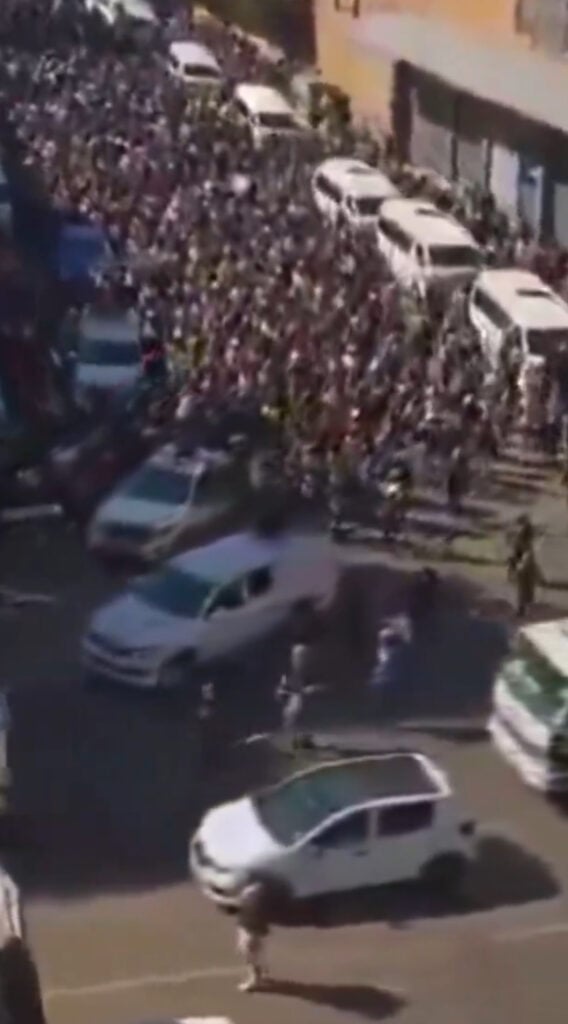
The exodus has been extraordinary in scale. Local authorities report that more than 15,000 Malawians have already left the country, alongside thousands of citizens from Zimbabwe, Nigeria and Ghana who have returned home. Aid workers described desperate scenes at makeshift camps in Durban, where migrants — many of them women carrying babies — slept on cardboard sheets while waiting for buses to take them back across the border. Reports emerged of people collapsing from hunger and exhaustion during the wait.
Many of those fleeing insist they had been living and working legally. Takesure Nyawo, a Zimbabwean carpenter who had lived in South Africa for nine years on a valid permit, described how a group of men armed with knives raided his home and began systematically looting it. “They started to take my property. They took the fridge, they took the TV, then they went to my tools,” he said. “When they wanted to come back for the bed, I locked the door because they were holding big knives. I was afraid of my life and for my kids.” He said legal documentation offered no real protection. “It’s not the police that are coming to check the documents. It’s the locals and some of them can’t even read.”
Ahamadi Assani, a 33-year-old Malawian national, said a gang stormed his compound in Pietermaritzburg, smashing doors and attacking those sheltering inside. He returned to his rural village in Malawi with only a few bags. “We were hiding inside our homes because we feared for our lives,” he said. “It was one of the most painful and traumatic experiences I have ever witnessed. We came back with nothing.”
South Africa has been periodically convulsed by anti-migrant violence for decades, with deadly riots in 2008, further attacks in 2015 and another wave in 2019. The latest surge reflects deep economic frustration in a country struggling with severe unemployment, a rising cost of living and widespread anger over crime. Some activists have blamed migrants for taking local jobs and straining public services — claims that research challenges. Migrants represent approximately four per cent of South Africa’s population and studies suggest they contribute positively to the economy rather than draining it.
