



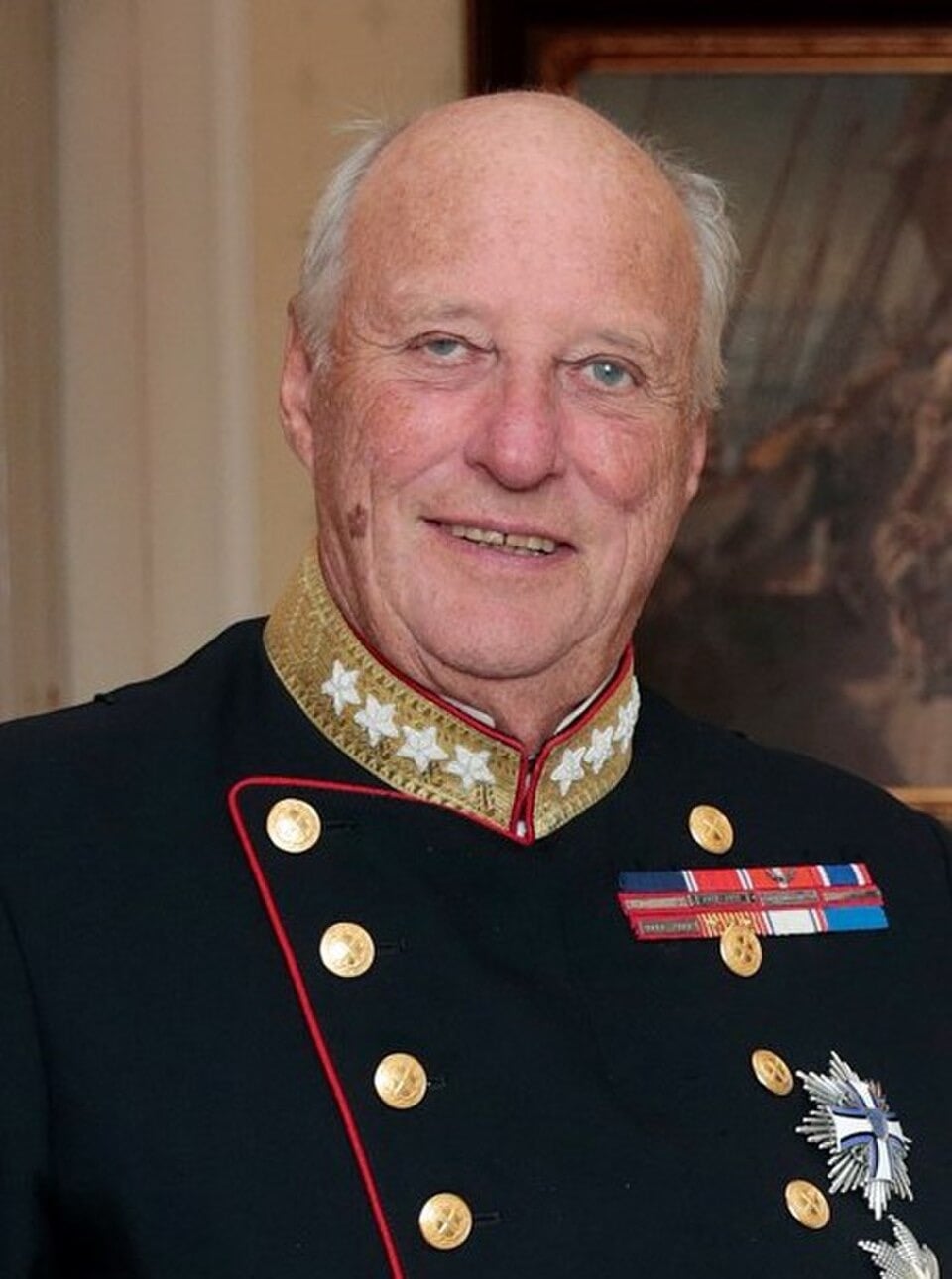
King Harald V, who reigned as Norway’s monarch for more than 35 years and became known for helping modernise the country’s royal institution, has died at the age of 89, the palace confirmed on Friday, with his son Crown Prince Haakon now succeeding him to the throne.
King Harald of Norway has died at the age of 89, the palace confirmed on Friday. His son, Crown Prince Haakon, has now succeeded him as Norway’s monarch, bringing to an end a reign that lasted more than 35 years, from 1991 until his death. No official funeral or burial arrangements have yet been announced, with further details of the funeral programme still expected to follow.
Likely burial arrangements
Based on Norwegian royal tradition, King Harald is widely expected to be laid to rest at the Royal Mausoleum at Akershus Fortress in Oslo, where his father, King Olav V, is buried alongside Harald’s mother, Crown Princess Märtha. Harald’s grandparents, King Haakon VII and Queen Maud, are also buried at the same site.
King Olav’s funeral in 1991 took place at Oslo Cathedral, before his coffin was taken to Akershus Fortress and laid to rest in the Royal Mausoleum, a sequence of events that could offer some indication of how Harald’s own state funeral may be organised, though the palace has not yet confirmed that the same arrangements will be followed. The Palace Chapel has traditionally been used for members of the Norwegian Royal Family to lie in state, with King Haakon VII, Crown Princess Märtha and King Olav V all placed there in closed coffins while members of the public paid their respects.
Early life shaped by war
Harald V was born on 21 February 1937 at Skaugum in Asker, outside Oslo, the son of Crown Prince Olav, who later became King Olav V, and Crown Princess Märtha of Sweden. His grandfather was King Haakon VII. Harald’s birth carried particular historical significance, as he was the first Norwegian-born prince in 567 years.
His early childhood was dramatically disrupted by the Nazi invasion of Norway in April 1940. Harald, along with his mother and two sisters, fled the country, escaping first to Sweden before travelling on to the United States. He did not return to Norway until June 1945, following the end of the German occupation. He later received military training and went on to study at the University of Oxford.
Path to the throne
Harald became Crown Prince following the death of his grandfather, King Haakon VII, in 1957. He ascended to the Norwegian throne in 1991, after the death of his father, King Olav V, going on to serve as monarch for more than 35 years, making him one of Norway’s longest-reigning kings.
Marriage to Queen Sonja
Harald’s relationship with Sonja Haraldsen was once considered controversial, since she was a commoner rather than a member of a royal or aristocratic family. The couple reportedly knew each other for nine years before their engagement was announced in 1968. Permission for the marriage was eventually granted, and Harald and Sonja married at Oslo Cathedral on 29 August 1968, a union that would go on to become an important turning point in the modernisation of the Norwegian monarchy.
Children and grandchildren
King Harald and Queen Sonja had two children: Princess Märtha Louise, born on 22 September 1971, and Crown Prince Haakon, born on 20 July 1973, who has now succeeded his father as Norway’s monarch.
Harald had five biological grandchildren. Princess Märtha Louise’s three daughters from her marriage to the late Ari Behn are Maud Angelica Behn, born in 2003, Leah Isadora Behn, born in 2005, and Emma Tallulah Behn, born in 2008. Crown Prince Haakon’s children are Princess Ingrid Alexandra, born in 2004 and next in the line of succession after her father, and Prince Sverre Magnus, born in 2005. Harald was also grandfather to Marius Borg Høiby, Crown Princess Mette-Marit’s son from a previous relationship, who became part of the wider royal family following her marriage to Haakon in 2001.
Surviving family
Harald had two older sisters, Princess Ragnhild, who died in 2012, and Princess Astrid, who is now his only surviving sibling.
Legacy
Harald was known as an enthusiastic sailor and sportsman, and represented Norway at the Olympic Games in sailing. Throughout his reign, he became recognised for efforts to modernise the monarchy and for speeches emphasising unity and inclusion within Norwegian society.
Despite increasingly serious health problems in recent years, Harald repeatedly resisted calls to abdicate, maintaining that his role as monarch represented a lifelong commitment rather than one he could choose to step away from.
