



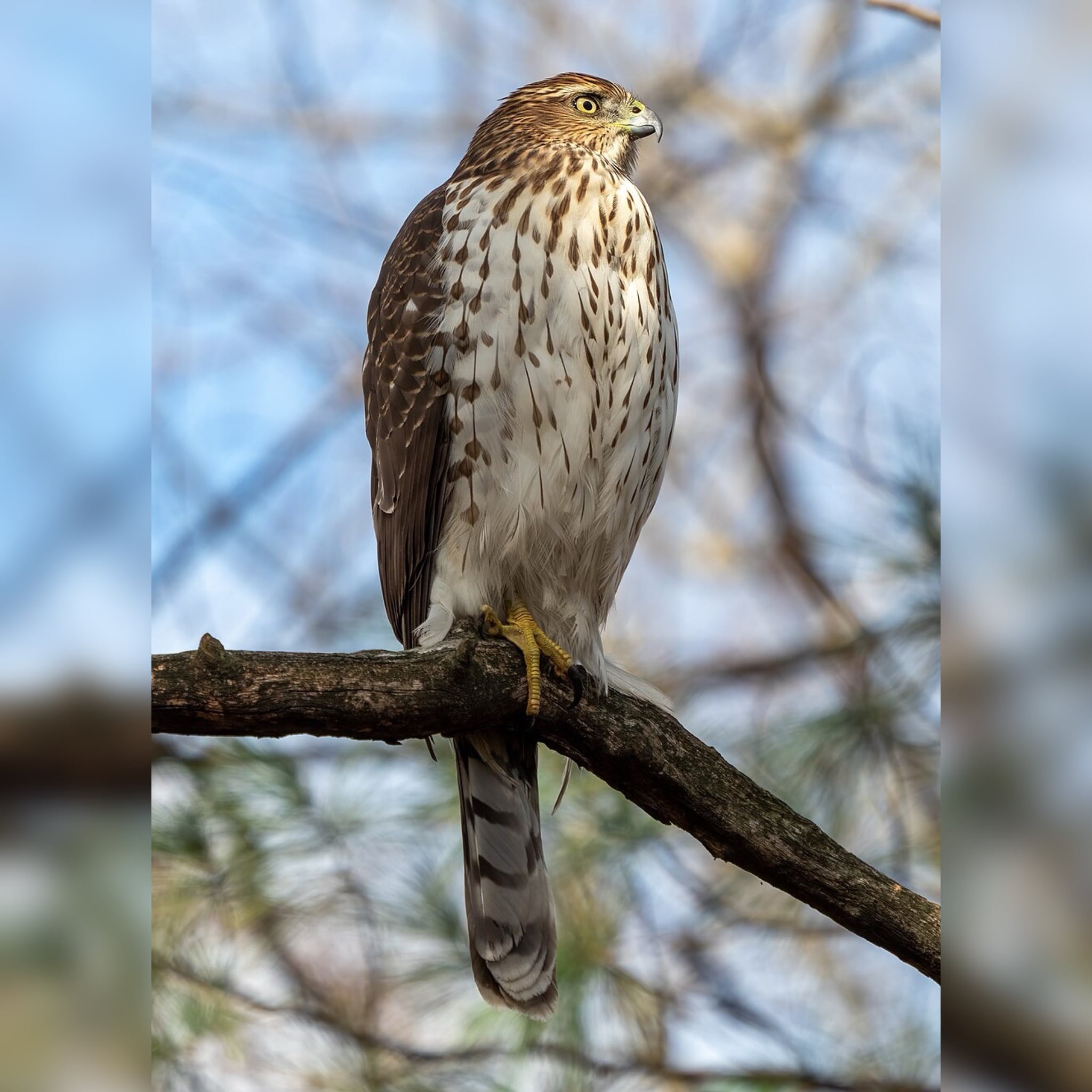
Developers behind the £500million replacement for the old Elephant and Castle shopping centre have revealed plans to use birds of prey to keep pigeons at bay, joining a growing list of British landmarks turning to falconry as a humane form of pest control.
Birds of prey are set to be deployed to keep pigeons away from London’s newest shopping centre, according to planning documents submitted by developer Get Living. The £500million scheme, known as The Elephant, is being built on the site of the former Elephant and Castle shopping centre, which was demolished in 2021 after becoming overrun with pigeons in its final years. Regular “hawking” will form part of a wider bird control strategy for the new development, which is expected to open later this year.
Learning from the old centre’s decline
The original Elephant and Castle shopping centre opened in 1965 on a site that had suffered heavy bombing during the Second World War. It was initially praised for its ambition and design, featuring a glass-roofed concourse that could be opened up in warm weather, and became a hub for London’s Latin American community. Over time, however, the concrete complex fell out of favour with critics, who came to regard it as a costly misstep, and pigeon nests taking hold across the site became emblematic of its broader decline.
Developers are hoping to avoid a repeat of that problem at the new mall. Planning documents submitted last month confirm that Get Living has agreed to install additional bird netting beneath the bridge crossing the New Kent Road, alongside “bird roosting prevention works” designed to stop the structure being colonised by pigeons in the way its predecessor was. The use of hawks is intended to complement these measures, since the mere presence of a bird of prey can be enough to encourage pigeons to relocate elsewhere, without causing them any harm.
Part of a wider trend across Britain
The Elephant and Castle scheme joins a lengthening list of British sites turning to falconry to manage pigeon populations. Earlier this year, train operator Greater Anglia introduced hawking at Chelmsford station in Essex after complaining that pigeons were producing “hazardous and corrosive droppings” capable of damaging the building. The operator said a Harris’s hawk had proven “particularly effective” thanks to its pack-hunting instincts and close bond with its trainer, while a gyrfalcon was also used on site, its presence alone enough to deter pigeons as a natural predator.
Hawks have similarly been used at Waterloo, Euston and Cambridge stations. Perhaps the best-known example, however, is at Wimbledon, where a Harris’s hawk named Rufus has kept the courts at the All England Club clear of pigeons for 18 years. Raised in Brigstock, Northamptonshire, Rufus owes his role to an incident during the 1999 men’s final between Pete Sampras and Andre Agassi, when pigeons interrupted play. His handler, Donna Davis, subsequently approached the south-west London club and offered the services of her previous hawk, Hamish, leading to the tradition that continues today.
A landmark project for Elephant and Castle
The Elephant will comprise between 40 and 50 shops, 485 homes, a cinema and a college campus, and forms part of Get Living’s much larger £1.5billion regeneration of Elephant and Castle town centre — one of the biggest redevelopment schemes currently under way in central London. The first phase alone is expected to deliver around 135,000 square feet of shops, restaurants and leisure space, together with 55,000 square feet of workspace, a new public square and a new entrance to Elephant & Castle Underground station.
The scheme will also house a new campus for the London College of Communication, allowing the University of the Arts London institution to remain in the area. Get Living has already secured its first retail tenants, including Marks & Spencer, Blank Street Coffee, Jungle Berry and the long-established Latin American retailer DistriAndina, with further brands expected to be announced ahead of opening.
Under the Mayor of London’s planning strategy, Elephant and Castle has been designated an Opportunity Area, with the potential to deliver around 5,000 new homes and 10,000 jobs by 2041 as the wider regeneration continues.
