



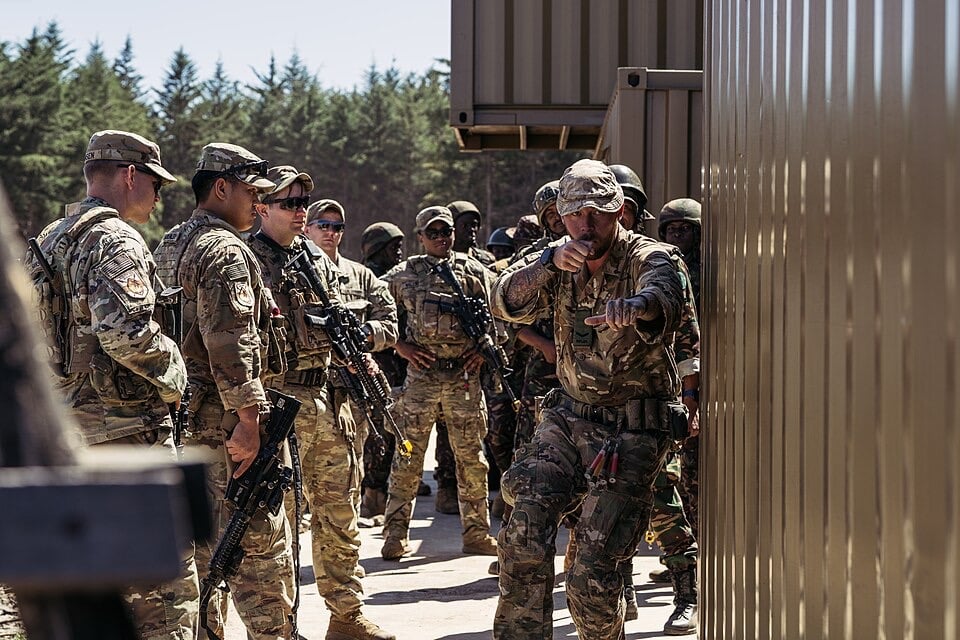
The British Army has been forced to scrap a major training deployment to Kenya after the Kenyan Government withheld the necessary licence, with 1st Battalion, the Duke of Lancaster’s Regiment redirected to Salisbury Plain instead amid growing diplomatic tensions.
The British Army has cancelled a major overseas deployment after the Kenyan Government refused to issue a licence allowing troops to train in the country. 1st Battalion, the Duke of Lancaster’s Regiment had been due to deploy to Kenya in September for Exercise Haraka Storm, a six-week combat training programme planned for Laikipia County. According to Forces News, the unit will now deploy to Salisbury Plain in Wiltshire instead, after the Ministry of Defence was unable to secure the necessary licence from Kenyan authorities.
Why the deployment was cancelled
The dispute centres on Kenya’s refusal to ratify a new UK-Kenya defence agreement. Kenyan lawmakers are seeking greater powers to prosecute British soldiers accused of crimes committed in Kenya, while a further point of disagreement concerns the amount of money the UK pays Kenya to host British military training exercises.
Nelson Koech, chairman of Kenya’s National Assembly Defence Committee, said the two governments are continuing negotiations in an attempt to resolve the outstanding issues.
A Ministry of Defence spokesperson said: “The UK highly values its relationship with Kenya, which is underpinned by mutual benefit, respect and cooperation. The UK-Kenya Defence Partnership is one of the great strengths of our relationship. Our joint training and operations with the Kenyan Defence Forces are keeping both Kenyan and British people safe. It is with regret that the necessary licences required to allow training to take place in Laikipia later this year have not been forthcoming. As a result, the planned training will now be conducted at an alternative location outside Kenya.”
Wider tensions between the UK and Kenya
The cancellation comes amid strained relations between the two countries in recent years, following the murder of a local woman allegedly at the hands of a British soldier, along with continued uncertainty over the legal status of UK soldiers during deployments to Kenya. Pressure has grown on the British Army to improve the conduct of its soldiers while stationed in the country, following the 2012 murder of 21-year-old Agnes Wanjiru from Nanyuki. Ms Wanjiru’s body was found in a septic tank near a ranch used by soldiers deployed in Kenya, sparking a long-running campaign for justice.
A Kenyan parliamentary inquiry last year also raised concerns over alleged human rights abuses, environmental damage and sexual abuse linked to the British Army Training Unit Kenya (BATUK), adding further pressure on the Kenyan government to strengthen accountability measures.
Economic and strategic impact
The Ministry of Defence has acknowledged that the cancellation will represent a financial blow to local Kenyan communities, which typically benefit economically from the presence of British troops during large-scale training exercises. Despite the setback, the UK has said it remains committed to resuming training in Kenya as soon as the licensing and legal issues are resolved.
Earlier this year, the Ministry of Defence said it had planned to carry out five major exercises in Kenya during the 2026-27 financial year, underlining the significance of BATUK to the British Army’s wider training programme.
