



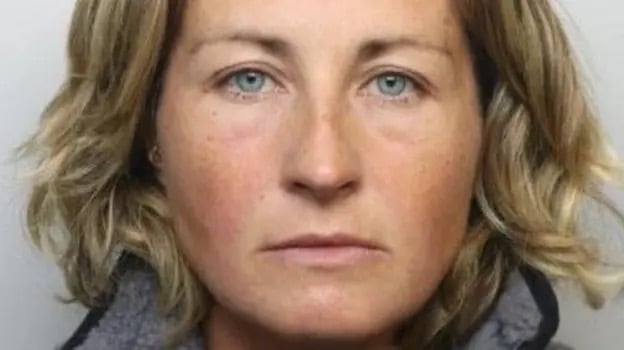
A former paddleboard company owner who led four people to their deaths on a flooded Welsh river — with no safety briefing, no wetsuits and no qualifications to be leading the tour — has failed in a bid to have her ten-and-a-half-year sentence reduced, with three Appeal Court judges ruling the term was entirely proportionate.
Nerys Bethan Lloyd, 39, a former South Wales Police firearms officer from Port Talbot, pleaded guilty to four counts of gross negligence manslaughter in March 2025 following the deaths of Paul O’Dwyer, Andrea Powell, Morgan Rogers and Nicola Wheatley on the Western Cleddau river in Haverfordwest, Pembrokeshire in October 2021. Her barrister David Elias KC argued the sentence was “manifestly excessive,” but Lady Justice May, sitting with two fellow Appeal Court judges, dismissed the application, finding that the trial judge’s approach had been proportionate given the number of victims.
The four died after Lloyd led a group of seven participants onto the river in “extremely hazardous conditions” on 30 October 2021. Heavy rain in the preceding days had left the river in flood, with a visibly strong current. Lloyd, who was neither qualified nor insured to lead such a tour, had been warned about the dangers but pressed ahead — choosing a route that included a weir with a section called the fish pass: an 11-metre incline at a gradient of approximately one in seven, with what the prosecution described as “immense turbulence.”
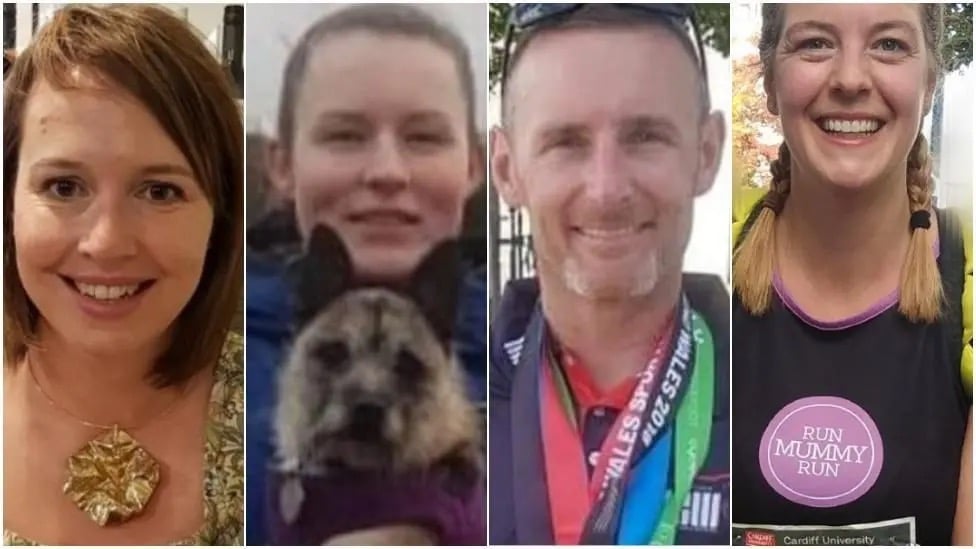
Sentencing Lloyd in April 2025, Mrs Justice Stacey said Lloyd had intended to take the group over the weir because it would be “more interesting” than carrying the boards around it. Her co-instructor O’Dwyer had researched alternative routes and raised valid concerns about the drop, but all were “dismissively rejected” by Lloyd as the company owner. CCTV footage showed Lloyd heading straight down the middle of the weir rather than attempting to reach the side. Within 20 seconds, the group had fallen over the face of the weir and been sucked into a hydraulic jump — a powerful recirculating flow described by the court as similar to a washing machine. Ankle leashes attaching participants to their boards, which were entirely unsuitable for fast-flowing water, made it harder for them to break free.
None of the participants had been given a safety briefing. Four were not wearing wetsuits. One had decided not to wear a life jacket. Lloyd had not taken anyone’s next of kin details. Stacey said Lloyd’s interest “seemed to be more in an exciting route than safety” and that she had shown “a blatant disregard for a very high risk of death.”
O’Dwyer initially made it out of the water safely before going back in to try to rescue the others. He, Rogers and Wheatley all died at the scene. Powell died in hospital a week later. The judge acknowledged Lloyd was “horrified” at the outcome, but noted that as a trained firearms officer she “knew better” and would have been well-versed in the importance of health and safety and risk assessment. Lloyd had been sacked by South Wales Police in November 2021 for a matter unrelated to the paddleboarding incident; a month earlier she had accepted a caution for fraud relating to a vehicle insurance claim.
The impact on the families was laid bare in devastating statements read to the sentencing hearing. Morgan Rogers’ mother Theresa Hall said Lloyd had “guided Morgan to her death” and that “the physical and mental pain that I now live with is too much to bear.” Nicola Wheatley’s husband Darren called Lloyd “a coward” who had “hidden behind a carefully orchestrated smoke screen,” saying he and their two children Oscar and Ffion had “cried all day” the first Christmas they spent without their mother. Mark Powell described watching his wife in a coma, her face and body covered in cuts and bruises, and the moment he told their seven-year-old son Finn she had died — a sound of “uncontrollable tears” that would stay with him forever. Ceri O’Dwyer, whose husband Paul died trying to save others, said she had once considered Lloyd a friend but had been met with “blame, rejection and gaslighting” and that “grief is in our household every single day.”

Detective Superintendent Cameron Ritchie of Dyfed-Powys Police described the tragedy as “completely avoidable.” HSE inspector Helen Turner said the victims had placed their trust in Lloyd “but through her incompetence, carelessness and complacency she failed to plan or assess the obvious risk at the weir or to take even basic safety measures.”
