



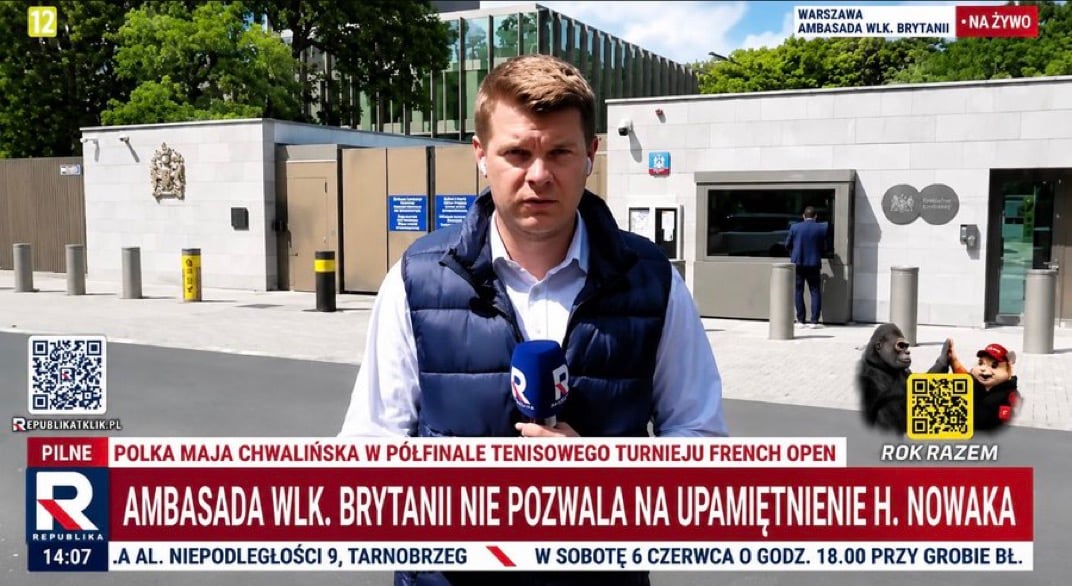
Staff at the British Embassy in Warsaw have removed a portrait and candles placed outside the building in memory of Henry Nowak — a 18-year-old British student of Polish descent whose murder has gripped both the United Kingdom and Poland — in scenes that have drawn widespread condemnation and been amplified by politicians including Nigel Farage.
Video footage captured by Republika TV reporter Michał Gwardyński shows embassy staff removing the tribute, which had been placed outside the diplomatic building in Warsaw as a simple act of remembrance for Henry, who was stabbed to death in Southampton in December 2025. Gwardyński subsequently confronted embassy staff via intercom, requesting the items be returned so that Henry’s memory could be properly honoured. Neither the embassy nor the Foreign, Commonwealth & Development Office had issued a public statement explaining the decision at the time of publication.
The removal has been met with fury online and in Polish media, where Henry’s case has drawn particular attention because of his Polish heritage. Farage and multiple accounts on X described the act as disrespectful and callous, with the incident feeding into the already charged national atmosphere surrounding Henry’s case.
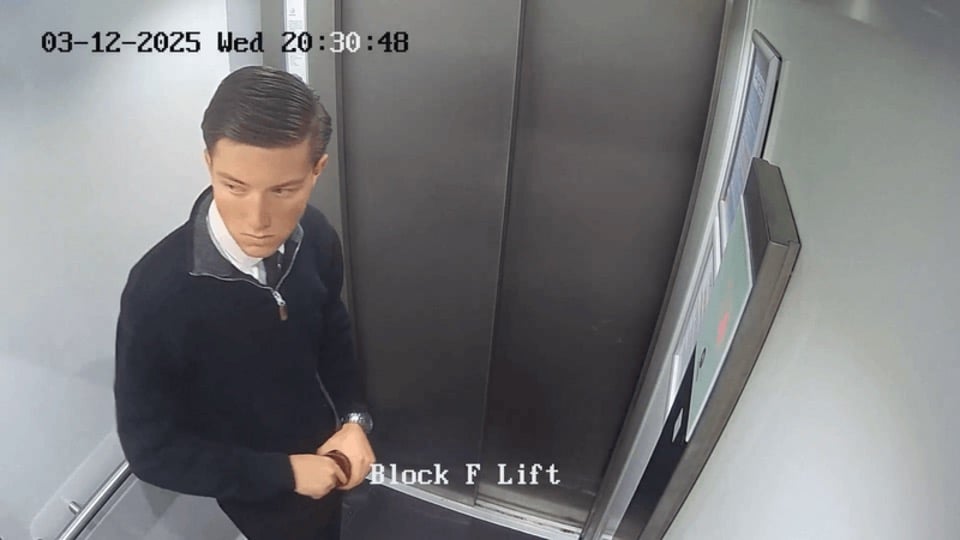
Henry Nowak, a first-year accountancy and finance student at the University of Southampton, was stabbed six times by Vickrum Digwa on 3 December 2025. Digwa falsely told responding officers that Henry had racially abused him and attacked him first, causing police to handcuff the bleeding teenager despite his repeated pleas that he had been stabbed and could not breathe. Henry died at the scene. Digwa was subsequently convicted of murder and jailed for life with a minimum of 21 years. His mother was convicted of assisting an offender. Hampshire Police’s chief constable has publicly apologised for the officers’ conduct and the Independent Office for Police Conduct is investigating the response.
The case has become one of the most politically charged in recent British memory, fuelling intense debate about knife crime, religious exemptions for bladed weapons, policing priorities and accusations of two-tier justice. Henry’s family have throughout urged the public and politicians not to use his death to sow division or hatred, and have called for his legacy to drive positive and lasting change.
Embassies routinely remove unsolicited items from their perimeters for reasons of security, protocol and fire safety, and diplomatic premises are not designated public memorial sites. But the timing and context of this particular removal — amid raw and widespread public grief over a case that has touched Polish and British communities alike — has made it deeply damaging in terms of perception, regardless of the procedural reasoning behind it.
