



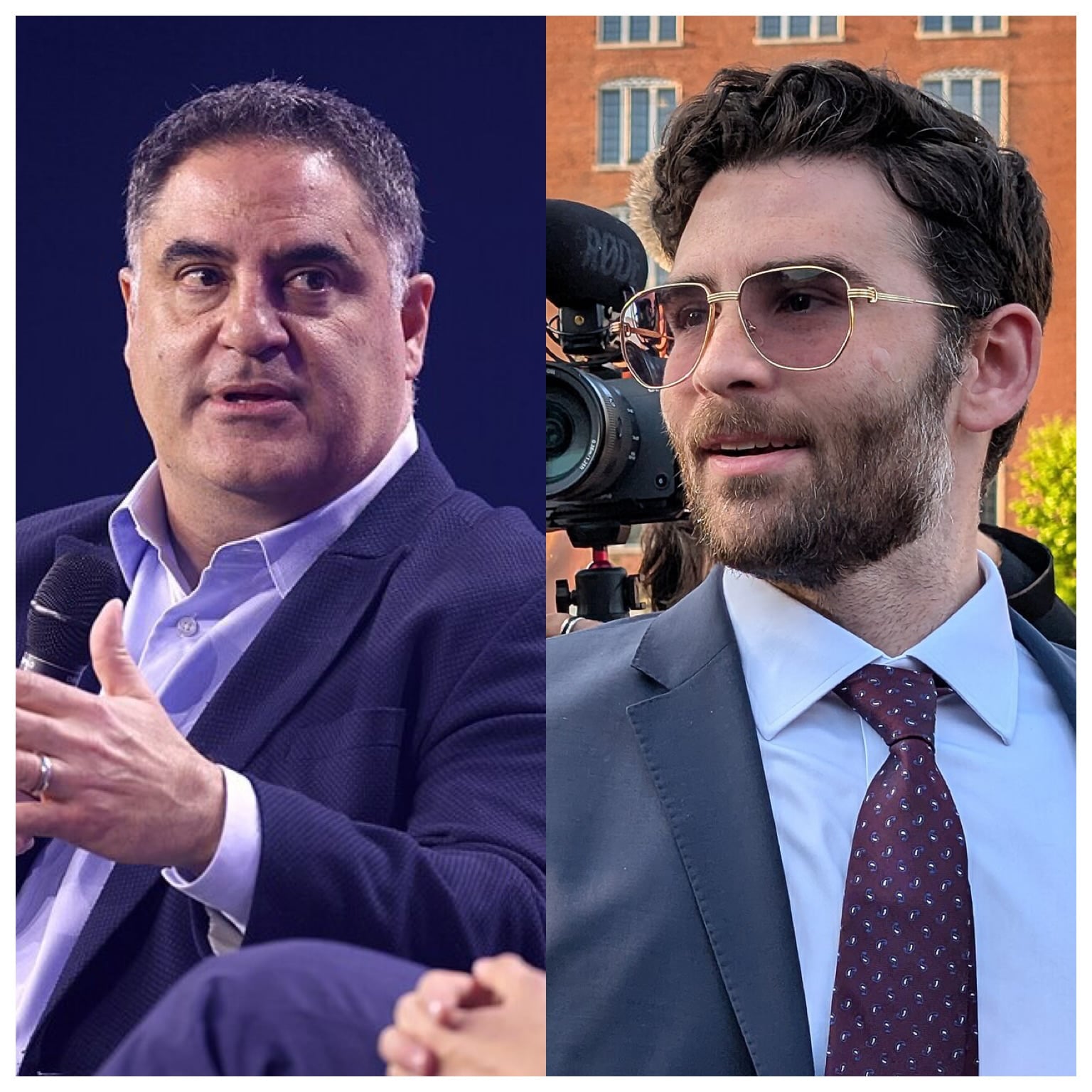
Two of America’s most prominent online commentators have been barred from entering the United Kingdom after their travel authorisations were revoked as they attempted to board flights to London — sparking an immediate free speech row that has drawn criticism from voices across the political spectrum.
Cenk Uygur, founder of The Young Turks, had his Electronic Travel Authorisation cancelled at the gate as he attempted to fly to London to attend SXSW London and deliver a speech at the Oxford Union. His nephew, Twitch streamer Hasan Piker, had his visitor visa separately revoked, blocking him from an interview with economist Yanis Varoufakis and further Oxford engagements. Both men publicly attributed their bans to their criticism of Israel. Uygur posted on X: “I’ve been banned from the UK. I tried to get on a flight to London to attend SXSW London and give a speech at Oxford. I’ve been banned for criticising Israel.” Piker quoted the post and added that his own visa had been revoked “at the behest of Israel,” calling it a betrayal of liberal values for a “genocidal fascist foreign government.”
The Home Office invoked its standard immigration power to refuse entry where a person’s presence is deemed not “conducive to the public good” — a broad discretionary provision regularly used on national security or public order grounds. No detailed explanation for either specific decision was provided, in line with standard government practice.
The bans did not emerge without context. In the weeks before the planned visits, UK Jewish organisations including the Community Security Trust and at least one Labour MP, David Taylor, publicly lobbied the Home Office to deny Piker entry, citing a series of inflammatory statements. Among those highlighted were a declaration that he would “choose Hamas over Israel every single time,” past remarks about Orthodox Jews that critics described as antisemitic and broader commentary on the Israel-Hamas conflict that lobby groups argued risked inciting hatred. Uygur’s own public statements — including characterising Israel as a “genocidal terrorist state” — were also reported to have been factored into the decision once his family connection to Piker became relevant.
The reaction to the bans cut across conventional political lines in a way that surprised many observers. Shabbos Kestenbaum, a pro-Israel commentator who had been due to debate Uygur at the London event, publicly called the ban “unfounded” and authoritarian, arguing it set a dangerous precedent. Critics from the left, libertarian commentators and even some conservative voices argued that Western governments were increasingly barring citizens for their opinions on foreign policy — and that the vagueness of the “public good” threshold made it ripe for abuse. Supporters of the decision, including UK Jewish organisations and a number of Labour-aligned figures, described it as responsible border control against platforms for what they characterised as hate speech or extremism.
Several commentators noted the irony that the same legal power has been deployed in both directions — the UK has also refused entry to pro-Israel activists and journalists in recent months, illustrating that the provision is not ideologically selective in its application, even if individual decisions inevitably generate accusations of political targeting.
The Home Office is unlikely to expand on its reasoning. Both events will proceed without the two men, whose exclusion has in many ways amplified the narrative they were travelling to promote — that criticism of Israel now routinely triggers disproportionate state responses in the West. Whether that argument is vindicated or overblown by the decision will depend entirely on where one already stood before it was made.
