



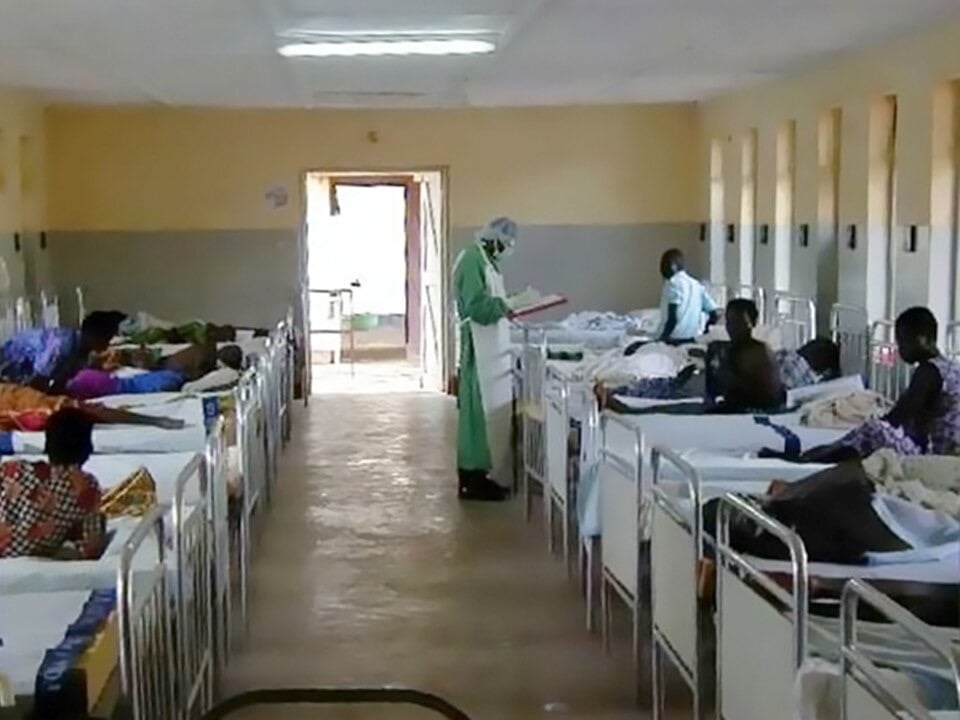
A suspected Ebola case has been admitted to hospital in Austria after a person from the Urfahr-Umgebung district returned from Uganda displaying symptoms of the deadly Bundibugyo virus — as the outbreak in central Africa continues to escalate and European health authorities brace for further imported cases.
Austrian health officials confirmed the admission in a statement, saying: “Yesterday, a person from the Urfahr-Umgebung district was admitted to the hospital for inpatient evaluation due to symptoms of illness.” The patient had recently returned from Uganda, one of the countries at the centre of the ongoing outbreak, and is being assessed for Bundibugyo virus — the rarer strain of Ebola for which there is currently no approved vaccine or specific treatment.
The development comes as the global picture around the outbreak darkens rapidly. As of 27 May 2026, 1,205 suspected and confirmed cases and at least 264 deaths had been reported across the Democratic Republic of Congo and Uganda, with experts warning the true infection toll is likely significantly higher. The outbreak has now spread beyond its original epicentre in Ituri Province, with confirmed cases recorded in Nord-Kivu, Sud-Kivu, Kinshasa and Uganda’s capital Kampala. The WHO declared the outbreak a Public Health Emergency of International Concern on 17 May.
Austria is not the first European country to record a suspected case. Two aid workers who returned to Italy from Uganda were hospitalised in Milan’s Sacco Hospital — a specialist facility for high-risk infections — after developing symptoms including high fever, nausea and vomiting. Italian health authorities said at the time there was “still no certainty” the cases were confirmed Ebola. An American doctor working in the DRC tested positive for the virus in mid-May and was transferred to Germany for treatment, with high-risk contacts moved to Germany and the Czech Republic.
The Bundibugyo strain presents a particular challenge for responders because existing Ebola treatments and vaccines have been developed and approved against the Zaire ebolavirus, not Bundibugyo, leaving clinicians with limited therapeutic options. The virus can incubate for up to 21 days before symptoms appear — a window during which infected travellers can cross multiple international borders unknowingly. Early symptoms include fever, headache, muscle pain and vomiting, progressing to internal bleeding and organ failure in severe cases. Médecins Sans Frontières has warned the outbreak is occurring in areas of acute insecurity and population displacement, with several listed contacts becoming symptomatic and dying before they could be isolated.
The European Centre for Disease Prevention and Control has been coordinating with EU member states on surveillance and screening, providing diagnostic protocols and testing support to health authorities across the bloc. The US has rerouted all air travellers arriving from DRC, Uganda and South Sudan through designated airports for health screening.
Health officials across Europe have been at pains to stress that the risk to the general public remains low, given that Ebola does not spread through the air and requires direct contact with infected bodily fluids. However, the Austria case underlines that as long as the outbreak continues to grow in central Africa, the threat of further European importations will remain very much live.
