



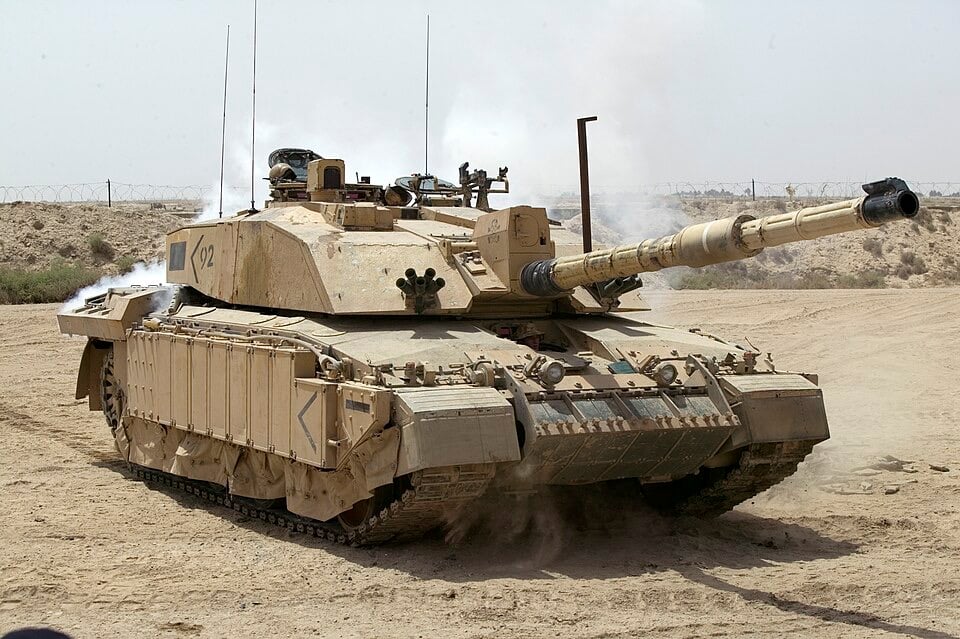
Britain is withdrawing its Challenger 2 tanks from Estonia and replacing them with a new fleet of drones, marking a significant shift in how the UK contributes to Nato’s defence against Russia on its eastern frontier. The Ministry of Defence said the new drone-based force would be faster, deadlier and harder to hit than the tank squadron it replaces, as an additional 400 British troops surge into the country, taking the total UK deployment in Estonia to 1,200 personnel.
The new Mobile Anti-Armour Force will combine surveillance drones, loitering munitions and one-way attack drones, technology the MoD says has already been proven effective in Ukraine, to detect and destroy enemy armour before it can reach Nato positions. According to the MoD, the switch “reflects the realities of modern conflict,” with officials arguing the new formation will be able to deploy, disperse and demonstrate combat readiness far more rapidly than a traditional armoured unit.
A shift shaped by the war in Ukraine
The decision follows extensive analysis of the conflict in Ukraine, where drones have repeatedly destroyed tanks and other armoured vehicles, reshaping military thinking across Europe. The MoD said its own decision followed “comprehensive war-gaming with Estonia,” and claimed the new drone-led formation would “deliver greater operational effect than the current armoured construct.”
The move marks a notable moment for the Challenger force, which has now spent a decade on the frontline in Estonia, having been stationed there since 2017 in response to Russia’s assaults on Ukraine and its capture of Crimea. It also sits awkwardly alongside Labour’s own Defence Investment Plan, which had previously stated that tanks “remain essential” to defending Nato territory, arguing they ensure land forces can “seize or defend ground in all environments and conditions.”
Speed seen as the new priority
Army Chief General Sir Roly Walker has previously stressed the importance of rapid response in any future conflict, warning that British drones stationed in the Baltic state must be ready to strike Russia “within 30 minutes” should deterrence fail. Speaking at a conference last month, Walker said: “If deterrence fails… the cost we impose on the aggressor must be felt immediately and preferably before they get out of their assembly areas.”
Why now: warnings over Russian intentions
The changes come amid US warnings that Moscow may be preparing a “major provocation” against the Baltic states or Poland, with officials suggesting Putin could look to test Nato’s resolve now that Russia finds itself on the back foot in Ukraine. The enhanced UK deployment forms part of Nato’s wider effort to strengthen deterrence across the Baltic region, amid continued concern over Russian military activity in the wake of the war.
Estonia welcomes the deployment
Estonia’s Defence Minister, Hanno Pevkur, welcomed the additional troop commitment as a sign of Britain’s enduring support. “The decision to deploy additional troops reinforces the close cooperation between our two countries and the United Kingdom’s long-term commitment to our shared security,” he said. “British troops train alongside the Estonian Defence Forces every day. In addition, a British Army brigade remains at high readiness in the United Kingdom to reinforce us if required.” British troops stationed in Estonia will continue training alongside Estonian forces, with a UK brigade held at high readiness at home, available to reinforce the deployment should the need arise.
