



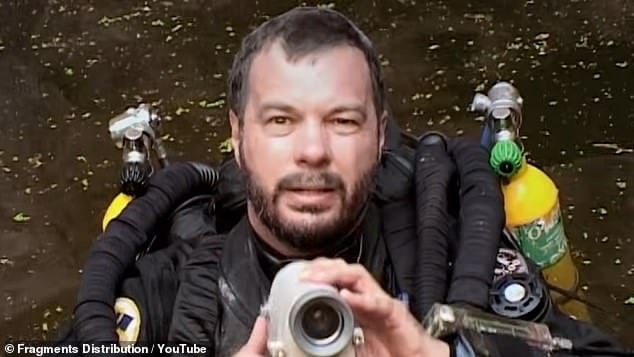
A world-record diver who descended 900 feet into one of South Africa’s most notorious underwater caves on a mission to recover a fellow diver’s body made a single catastrophic error that cost him his life — a tragedy whose haunting echoes have resurfaced following the deaths of five Italian divers in a cave system in the Maldives earlier this month.
Australian diver Dave Shaw, a commercial pilot and celebrated cave explorer, first visited Bushman’s Hole in the Northern Cape in October 2004, setting a world record for the deepest dive using a rebreather device at 927 feet — a depth roughly equivalent to the height of the Eiffel Tower. As he explored the floor of the cavern, his torch illuminated a discovery that would consume the final months of his life: the body of Deon Dreyer, a young South African diver who had vanished in the cave a decade earlier. Dreyer’s hands and head had decomposed to bone, but his diving mask had somehow remained in place.
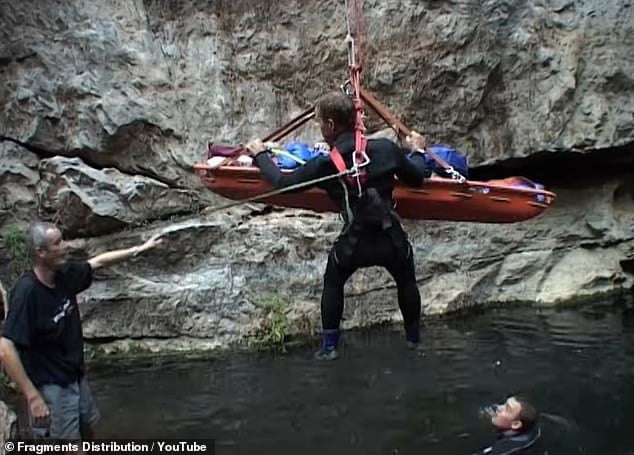
Shaw attempted to free Dreyer’s remains from the sediment during that first visit but failed. In the diving community, leaving a fellow diver behind is considered unacceptable, and Shaw spent the following year preparing a recovery mission. On 8 January 2005, he entered Bushman’s Hole for what would be his 333rd and final dive.
The operation had been meticulously planned. Shaw and his support diver Don Shirley brought 35 backup gas cylinders into the water — enough to survive a total rebreather failure. A rope-and-sling system was rigged to haul stricken divers to a police recompression chamber positioned at the surface, and diving physiology expert Dr Jack Meintjes from the University of Stellenbosch was recruited as medical backup. A relay system of divers positioned at progressively shallower depths would pass Dreyer’s body upward while those deeper completed their decompression stops.
Shaw reached the bottom in 11 minutes. Thirteen minutes into the dive, Shirley began his own descent to the 725-foot mark where the two were due to meet. But as Shirley passed 500 feet, he noticed Shaw’s torch was completely stationary below him. He attempted to descend further but encountered technical problems at around 800 feet. He wrote four words on his waterproof communication slate and sent the message to the surface team: “Dave not coming back.”
Bodycam footage later revealed what had happened. Dreyer’s body had transformed over the years into a soap-like substance, making it far harder to control than anticipated as the remains began floating free. As Shaw struggled to secure them in a recovery bag, he dropped his torch, which drifted away. Attempting to retrieve it, he became entangled in the main guide rope leading to the surface. The mistake proved fatal. Shaw began to panic, his breathing accelerated and he consumed his air supply rapidly, drowning beside the remains he had come to rescue.
Shirley later said he regretted missing a practice dive during which Shaw had mentioned occasionally setting his torch to one side. He described allowing equipment to float free underwater as “a recipe for disaster” — a lapse that, in expert cave diving, can have lethal consequences.
Dreyer’s own story was no less tragic. A passionate diver from Vereeniging who had completed 200 dives by the age of 20, he disappeared on 17 December 1994 during a practice run for a deep technical dive, becoming separated from his group at around 160 feet during his ascent. The exact cause of his death was never established, though theories have included oxygen toxicity and hypercapnia. Subsequent recovery attempts, including the deployment of a remotely operated submersible by the De Beers mining company, failed to locate his body. His family eventually accepted he would never be found, placing a memorial plaque near the cave entrance. “He had the most majestic grave in the country,” his father said. “And I said, ‘Well, this will be his final resting place.'” Against all odds, both Shaw and Dreyer’s remains were ultimately recovered by two of the Australian’s friends in a subsequent mission.
The details of Shaw’s final dive have taken on renewed significance in recent weeks following the deaths of five Italian divers in the Thinwana Kandu cave system, also known as Shark Cave, in the Maldives on 14 May. The group — which included marine biology professor Monica Montefalcone, her daughter Giorgia Sommacal, researchers Federico Gualtieri and Muriel Oddenino, and their Maldives-based guide Gianluca Benedetti — entered caverns in the Vaavu Atoll and never resurfaced.
A team of expert divers from Finland, working for diving medical and safety organisation Dan Europe, recovered the bodies this week. According to the company’s chief executive Laura Marroni, as reported by Italian newspaper La Repubblica, the group was found in a dead-end corridor inside the cave complex. “There was no way out from there,” she said. Investigators are examining whether the divers took a wrong turn while attempting to exit the cave, or whether they were drawn deeper by a powerful underwater current known as the Venturi effect — a phenomenon in which water forced through a narrow passage accelerates and creates suction strong enough to drag divers inward, according to Alfonso Bolognini, president of the Italian Society of Underwater and Hyperbaric Medicine. Poor visibility caused by bad weather on the day of the incident is also being examined as a potential factor.
Benedetti’s body was recovered at the mouth of the cave, while the remaining four victims were found together in the cavern’s third and innermost chamber. All five were experienced divers, but investigators noted that the equipment they carried — including 12-litre oxygen tanks and, in Montefalcone’s case, a short diving suit — appeared to be standard recreational gear unsuited to the depths at which they were operating.
