



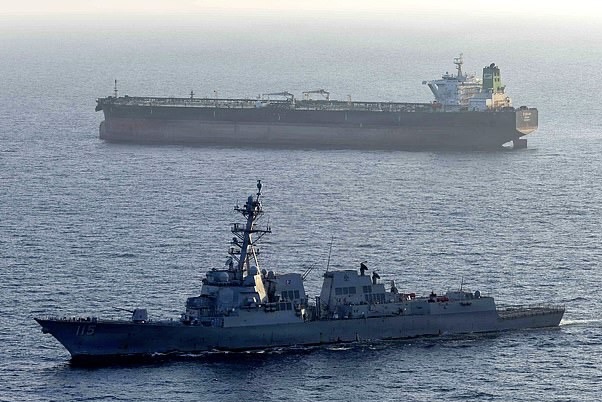
Iran has seized a US-sanctioned oil tanker in the Sea of Oman and traded fire with American warships in the Strait of Hormuz, in a dramatic escalation that has cast serious doubt over the fragile ceasefire between Washington and Tehran — even as both sides claim the truce technically remains in force.
Iran’s navy announced it had intercepted and redirected the vessel Ocean Koi to Iranian shores, saying the tanker had attempted to “damage and disrupt Iran’s oil exports.” The ship had been carrying Iranian oil and was subject to US sanctions. Tehran offered no further elaboration on the precise circumstances of the seizure.
The tanker incident came amid some of the most intense confrontations since the ceasefire was announced on 7 April. Donald Trump revealed on Thursday that three US Navy destroyers had come under attack while transiting the Strait of Hormuz — the critical waterway through which approximately a fifth of the world’s oil and liquefied natural gas flows, and which Iran has effectively closed since the conflict began on 28 February when the US and Israel launched airstrikes on Iran. “Three World Class American Destroyers just transited, very successfully, out of the Strait of Hormuz, under fire,” Trump wrote on Truth Social. “There was no damage done to the three Destroyers, but great damage done to the Iranian attackers.” Speaking to reporters in Washington, he added: “They trifled with us today. We blew them away.”
Trump simultaneously issued a blunt warning to Tehran over ongoing nuclear negotiations. “Just like we knocked them out again today, we’ll knock them out a lot harder, and a lot more violently, in the future, if they don’t get their Deal signed, FAST!” he wrote. He nonetheless maintained that the ceasefire remained in effect and sought to play down the exchanges.
Iran told a markedly different story. Tehran accused US forces of breaching the ceasefire by targeting an Iranian oil tanker and a separate vessel, and conducting airstrikes on civilian areas on Qeshm Island and surrounding coastal areas near the Strait of Hormuz. Iran’s top joint military command said its forces had responded by attacking US military vessels east of the strait and south of the port of Chabahar, with an Iranian military spokesperson claiming the strikes had inflicted “significant damage.” US Central Command flatly contradicted this, stating that none of its assets had been hit.
Iranian state media later signalled a de-escalation. Press TV reported that after several hours of exchanges, “the situation on Iranian islands and coastal cities by the Strait of Hormuz is back to normal now.”
The confrontation extended beyond the waterway. The United Arab Emirates said its air defences had been engaged against missile and drone threats from Iran early on Friday, though details remained limited. It is not the first time the UAE has been targeted — since the conflict began, Iran has repeatedly struck Gulf states hosting US military installations.
The Daily Mail reports that Washington is currently awaiting Tehran’s formal response to a US proposal to end the war entirely, with the mounting instability threatening to derail any prospect of a negotiated settlement.
