



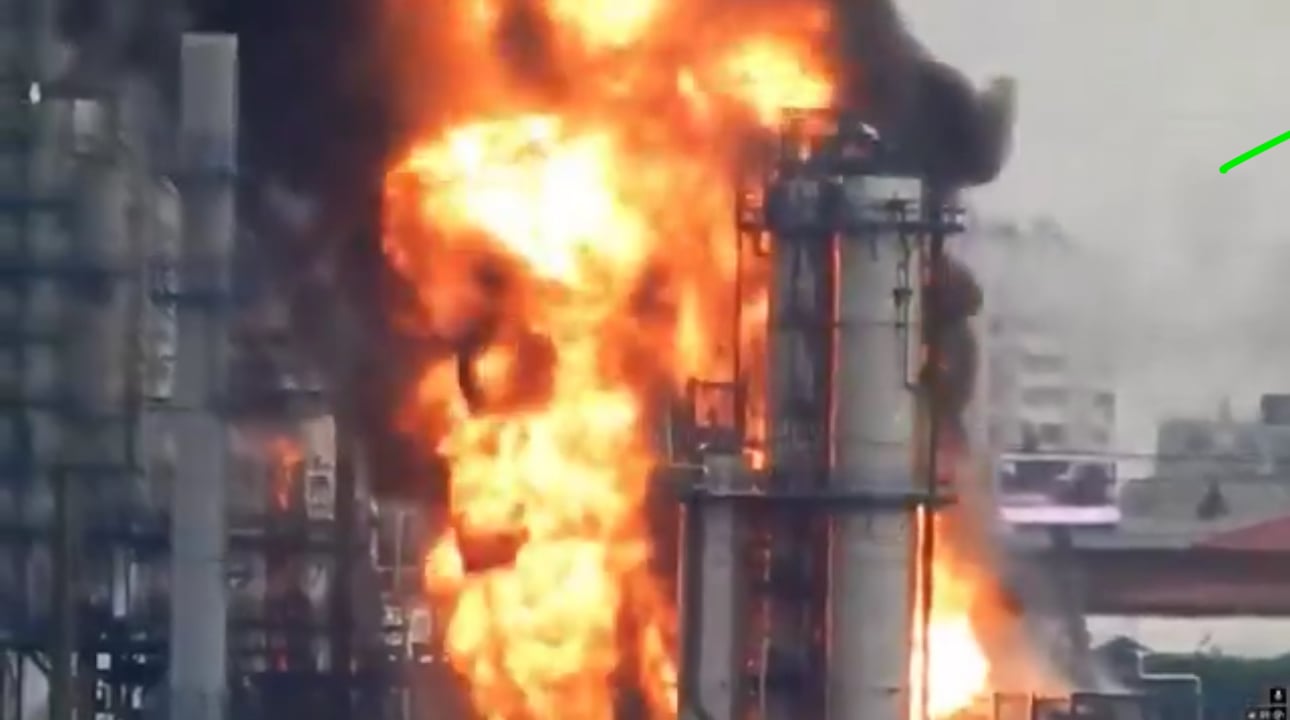
Ukrainian drones struck the Kapotnya oil refinery in Moscow, just ten miles from the Kremlin, in one of the most significant strikes on the Russian capital since the war began, causing fires and sending plumes of black smoke into the sky above the city as all four of Moscow’s major airports suspended flights.
The attack, which coincided with the G7 summit in France, saw multiple drones breach Moscow’s layered air defence system despite the deployment of around 130 defence positions in and around the capital, including Pantsir and S-400 batteries. According to the Kyiv Post, the Russian Ministry of Defence claimed to have downed 556 Ukrainian drones across 14 regions during the operation, but verified footage and geolocation data confirmed that multiple strike drones had penetrated the outer defence networks and successfully hit their targets. Moscow Mayor Sergei Sobyanin confirmed the Kapotnya refinery had been struck, saying 12 construction workers near the facility’s entrance had been injured.
The Kapotnya refinery is one of the ten largest oil refineries in Russia and supplies around 40 per cent of the Moscow region’s demand for petroleum products, with a processing capacity of 11 million tonnes of oil per year. Following the strike, the facility was temporarily shut down “for security reasons,” according to Reuters.
The attack was described by analysts as among the most successful drone strikes on Moscow since the war began. The May 17 attack demonstrated that even a dense air defence network does not guarantee full protection, with the decisive factor being intelligence for identifying blind spots, route planning and appropriate tactics rather than sheer system density.
The psychological and economic impact of the strike was significant. Flights were suspended at all four major Moscow airports — Domodedovo, Sheremetyevo, Vnukovo, and Zhukovsky — causing widespread travel disruption. The attack was part of a sustained campaign by Ukraine targeting Russian oil and gas infrastructure, with massive strikes in May 2026 inflicting devastating damage on Russia’s energy infrastructure, triggering an acute fuel shortage and paralyzing military logistics, with nearly all major oil refineries in central Russia forced to either shut down or cut fuel production.
Ukrainian President Volodymyr Zelensky described the attack on the Moscow region as a “completely fair response” for Russia’s strikes on Ukrainian civilians, according to the Kyiv Independent.
The strike also raised fresh questions about Russia’s ability to defend its own capital, let alone the occupied territories, coming at a particularly embarrassing moment for the Kremlin as world leaders gathered at the G7 summit to discuss continued support for Ukraine.
