



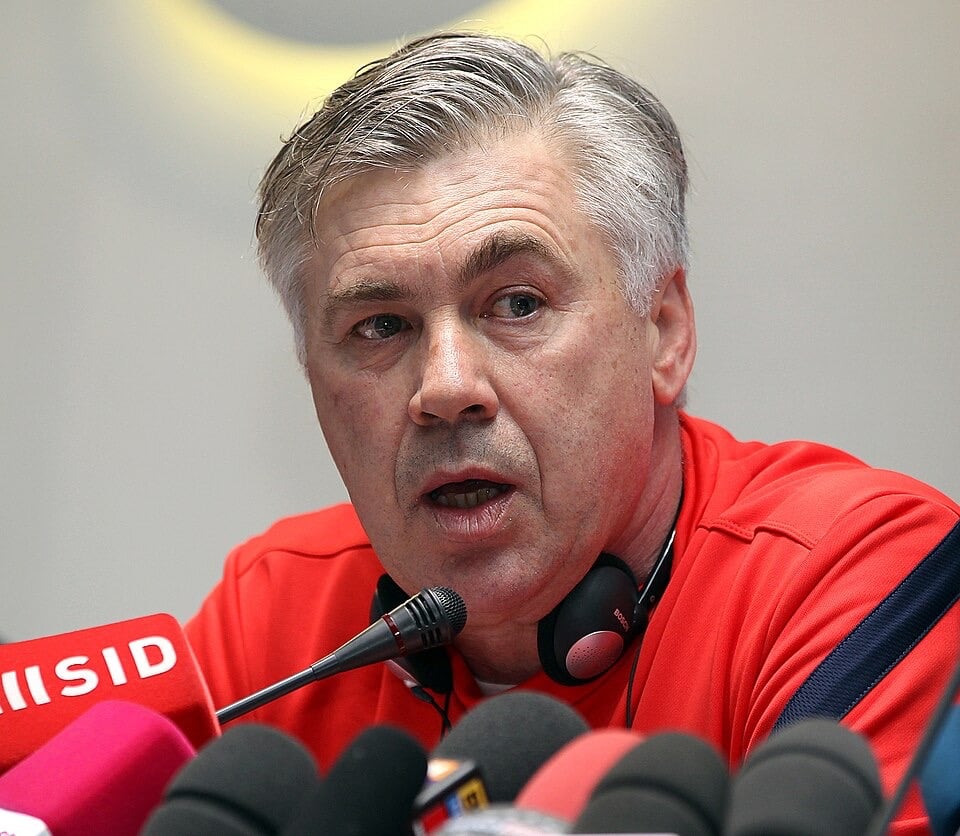
Brazil’s quest to end a 24-year wait for a sixth World Cup title begins this evening against Morocco in New Jersey, with Carlo Ancelotti facing serious questions over a squad that arrives in North America carrying significant defensive weaknesses and little recent momentum.
The Selecao remain the most successful nation in World Cup history with five titles, the last of which came in 2002 when Cafu lifted the trophy in Yokohama following a 2-0 win over Germany. Since then, Brazil have endured a run of quarter-final and earlier exits — eliminated by France in 2006, by the Netherlands in 2010, suffering a 7-1 semi-final humiliation against Germany on home soil in 2014, losing to Belgium in the last eight in 2018, and falling to Croatia on penalties in the quarter-finals in Qatar four years ago. A sixth consecutive tournament without a title would set an unwanted new record for the country.
Qualification itself was far from straightforward. Brazil suffered six defeats in 18 CONMEBOL qualifiers, finishing fifth in the group — a position that, under the previous format, would have forced them into a perilous play-off. The expanded 48-team tournament meant fifth place was enough to secure their place, but only just.
Ancelotti’s arrival last June, following a glittering club career that included five European Cup wins, was expected to steady the ship, but results have remained inconsistent. The past year has brought defeats to Bolivia — the same side Scotland beat 4-0 last weekend — and to Japan, who came back from two goals down in October to record their first ever win over Brazil. A 1-1 draw with Tunisia at the end of 2025 further underlined the scale of the challenge. There have been encouraging wins too, against Senegal, Croatia, Panama and Egypt, but nothing that suggests vintage Brazil has returned.
The defensive picture is a particular concern heading into the tournament. Injury withdrawals for Real Madrid’s Eder Militao and Roma’s Wesley have left Brazil short at right-back, with 35-year-old Danilo, now at Flamengo, and Al-Ahly’s Roger Ibanez the available options. Left-back has been similarly problematic throughout qualifying, with no fewer than seven players used in the position — Alex Sandro, 35, and Douglas Costa, 32, are now expected to compete for the starting role. The days of attacking full-backs in the mould of Cafu, Roberto Carlos, Maicon, Marcelo and Dani Alves appear a distant memory, and how Brazil’s current options cope with Morocco’s pace this evening could offer an early indication of what Scotland might face from Ben Gannon-Doak when the two sides meet later in the tournament.
Ancelotti’s recall of veteran Casemiro after an 18-month absence has brought some stability to midfield, though relying on him to shoulder the bulk of the defensive workload — particularly given Ancelotti’s preference for an unorthodox 4-2-4 formation — represents a significant gamble.
Where Brazil retain genuine strength is in attack, with Gabriel Martinelli, Raphinha, Vinicius Jr, Matheus Cunha, Endrick and Igor Thiago all available. The selection of Neymar raised eyebrows given he is already ruled out of the opening match, though few doubt his ability to change a game when fit, and he remains box-office viewing for neutrals. The challenge for Ancelotti will be accommodating so much attacking talent within a squad playing at most eight matches across the tournament — a far shorter window than the club seasons in which he has typically managed competing egos with such success.
The lack of a recognised top-class number nine remains an ongoing concern. Igor Thiago’s breakout season at Brentford, in which he scored 22 goals, along with strikes against Croatia and Panama earlier this year, has pushed him towards the front of Ancelotti’s thinking. His role for Brazil, however, is likely to be that of a focal point allowing the side’s flair players to finish — a system that may work, but raises the question of what fallback option exists if it does not.
Brazil have rarely been a nation forced to choose between style and substance, having historically possessed both in abundance. As they begin their campaign against Morocco, it is difficult to make the case that, right now, they possess either.
