



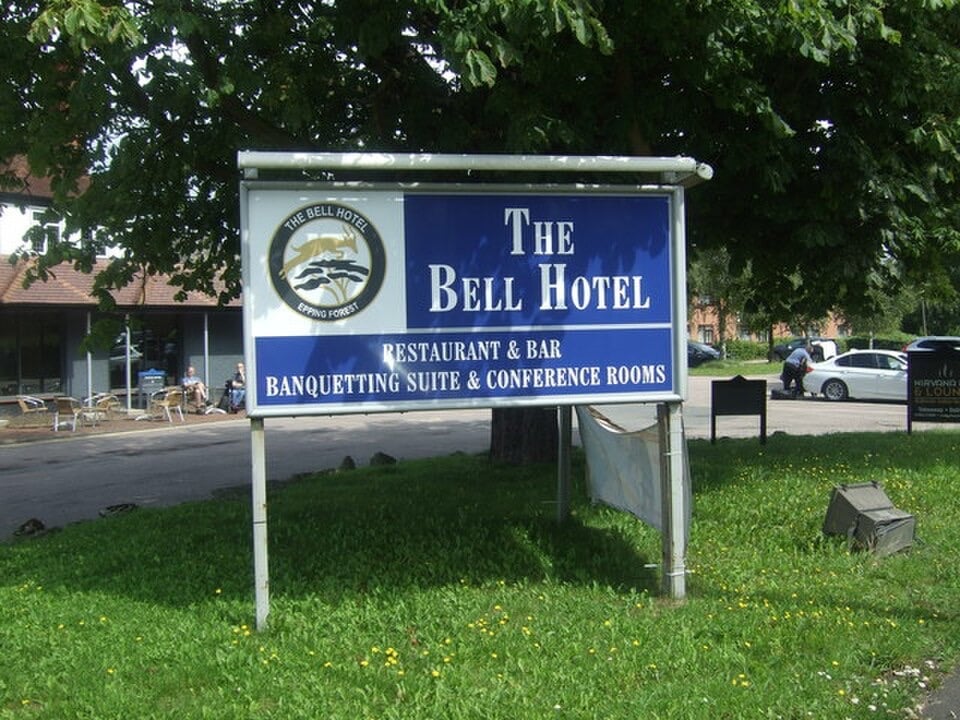
The Home Office has terminated its contract with the Bell Hotel in Epping as asylum accommodation, confirming the Essex site will cease to be used by 11 July 2026 — bringing to an end a year-long saga that became one of the most prominent flashpoints in Britain’s asylum housing system.
The Bell Hotel became the scene of furious protests last summer after a small boat migrant and resident, Hadush Kebatu, sexually assaulted a 14-year-old girl. The case triggered repeated demonstrations outside the hotel and drew national attention to the use of hotels for asylum accommodation more broadly.
Epping Forest District Council confirmed on Thursday that the Home Office had notified it of the termination that morning, following two days of repeated attempts by the council to establish what was happening at the site. According to Your Harlow, all service users have already been moved out of the hotel and relocated elsewhere within the Home Office’s asylum accommodation estate.
Council leader Councillor Chris Whitbread welcomed the closure but criticised the manner in which it had been communicated. “The news came as a complete surprise, but a welcome one, as it brings an important opportunity to concentrate on re-building our community that has been so severely impacted and divided by the damaging events of the past year,” he said. He added that the development “shows how little regard the Home Office has for our town, our community, and the people of Epping who have suffered immeasurably over the course of the last year because of the Home Office’s use of the Bell Hotel to accommodate asylum seekers.” Whitbread said he hoped residents living near the hotel could “now be afforded some peace,” and called for the Home Office to work with hotel owner Somani Hotels to restore the street scene around the site.
The closure marks the culmination of a protracted legal battle between the council and the Home Office. Epping Forest District Council secured an interim High Court injunction in August 2025 ordering the relocation of asylum seekers from the Bell Hotel by 12 September that year, after councillors voted unanimously to demand its closure following weeks of escalating community tensions. However, a subsequent Court of Appeal ruling overturned that injunction, allowing the hotel to remain in use, and the council was later refused permission to appeal further to the Supreme Court in March 2026 — a decision it described at the time as “devastating.”
During the High Court proceedings, Clearsprings Ready Homes managing director Steve Lakey warned that forcing the Bell Hotel’s closure risked a “domino effect” of similar sites refusing to house asylum seekers. Clearsprings, which has earned nearly £187 million in profit over six years providing accommodation for around 30,000 migrants across southern England and Wales, had previously served as the contracted provider for the Bell Hotel and remained involved in services there.
The closure comes within the government’s broader commitment, set out by Home Secretary Yvette Cooper, to end the use of asylum hotels nationally by the end of this Parliament in 2029, with the total number of such hotels having already fallen from a peak of over 400 to around 210. The Conservatives previously called for any asylum seekers moved out of the Bell Hotel not to be rehoused in other hotels, flats or shared houses, with shadow home secretary Chris Philp arguing for alternatives such as former military sites.
