



An ISIS-linked gang who stabbed and battered a world-renowned British botanist couple to death, threw their bodies to crocodiles and then blew £37,000 on the victims’ credit cards have been convicted of double murder in South Africa — eight years after the killing of Rod and Rachel Saunders shocked the world.
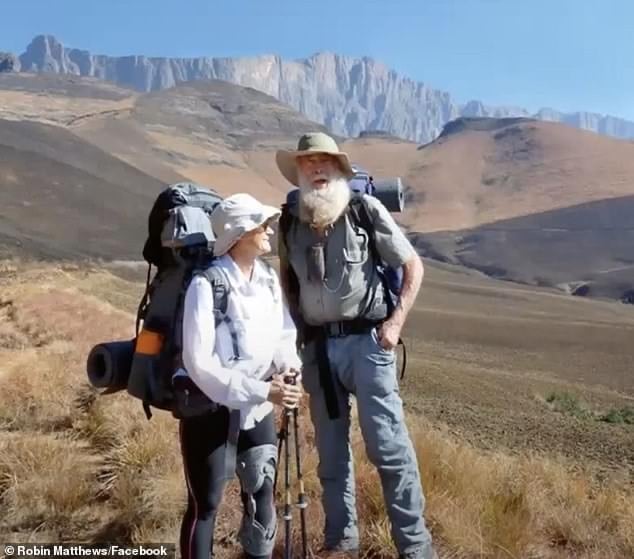
Rod Saunders, 74, and his wife Rachel, 63, were ambushed in the remote Ngoye Forest National Park in February 2018 while searching for rare gladioli seeds — a passion they had pursued together for over 50 years. Just 48 hours before their deaths, the devoted couple had been filmed by BBC Gardeners World presenter Nick Bailey for a BBC Two wildlife documentary in the Drakensberg Mountains, where he described them as having “incredible knowledge” of South African flora. After parting ways with the BBC team, the couple drove to a forest dam to make camp and were never seen alive again.
Durban High Court heard how ringleader Sayefundeen Del Vecchio, 44, an Italian-born Muslim convert, had identified them by phone to his wife Bibi Patel, 34, and lodger Mussa Jackson, 40, as a “good hunt.” He forced the elderly couple to reveal bank details before killing them, then texted the others to say the “prey are in hellfire” — instructing them to meet him in the Saunders’ stolen Toyota Land Cruiser with the bodies already inside. He also sent a WhatsApp message reading: “Kill the kuffar. When the brothers go out and do this work it is very important that the bodies of the victims are never found.”
Post-mortems revealed Rachel had been hacked repeatedly to the back of her skull with a machete-like blade and stabbed in the upper back. Rod’s skull had been caved in with a heavy blunt instrument believed to be the same weapon. Both were cocooned in their sleeping bags, driven to the Tugela River Bridge and thrown into the water below, where Nile crocodiles attacked their remains. Their bodies were found washed up in such a terrible state — ravaged by predators and decomposition — that two pathologists and a dental expert were required to identify them using DNA.
The gang’s downfall came through their own greed. They went on a R734,000 spending spree — equivalent to approximately £37,000 — using Rachel’s gold credit card over just two days, buying goods and Bitcoin and siphoning the Saunders’ savings into their own accounts. A suspicious shop assistant challenged them to prove one of them was Dr Saunders and the trio fled, triggering a police alert. Officers tracing the credit card trail found the gang were already on a terrorist watchlist. The Hawks — South Africa’s elite investigative police unit — raided their home 18 miles from the murder scene and found an ISIS flag flying in the garden alongside ISIS pamphlets and literature. The Saunders’ phones, jewellery, personal belongings, camping equipment, laptops and stolen vehicle were all recovered. Heavy bloodstains inside the Toyota were linked to Rod and Rachel by DNA.
Following one collapsed trial and 160 court days hearing 60 witnesses, Judge Esther Steyn found all three guilty of double murder, kidnap, robbery and theft. “The state has relied on circumstantial evidence but the court is satisfied that the pieces of the puzzle presented fitted together perfectly. Bit by bit the evidence formed into a mosaic and the court is satisfied all three acted together in killing the deceased,” she said. DNA, cell phone data and phone usage had linked all three “without doubt.” All three refused to leave their holding cells to hear the verdict.
Sentencing has been adjourned until 19 June. Under South African law they face a mandatory minimum of 15 years, scaling up to a full life sentence.
Rod and Rachel Saunders had built Silverhill Seeds in Cape Town into a globally respected business, travelling the world lecturing on South African flora while collecting and selling rare seeds by mail order. A book on gladioli they were working on at the time of their deaths was completed by horticultural friends and published to widespread acclaim after their murder. A family spokesman speaking by video link to the court said the incident “still after so many years causes distress to the family” and that they did not wish to dwell on events dealt with in such detail at the trial.
