



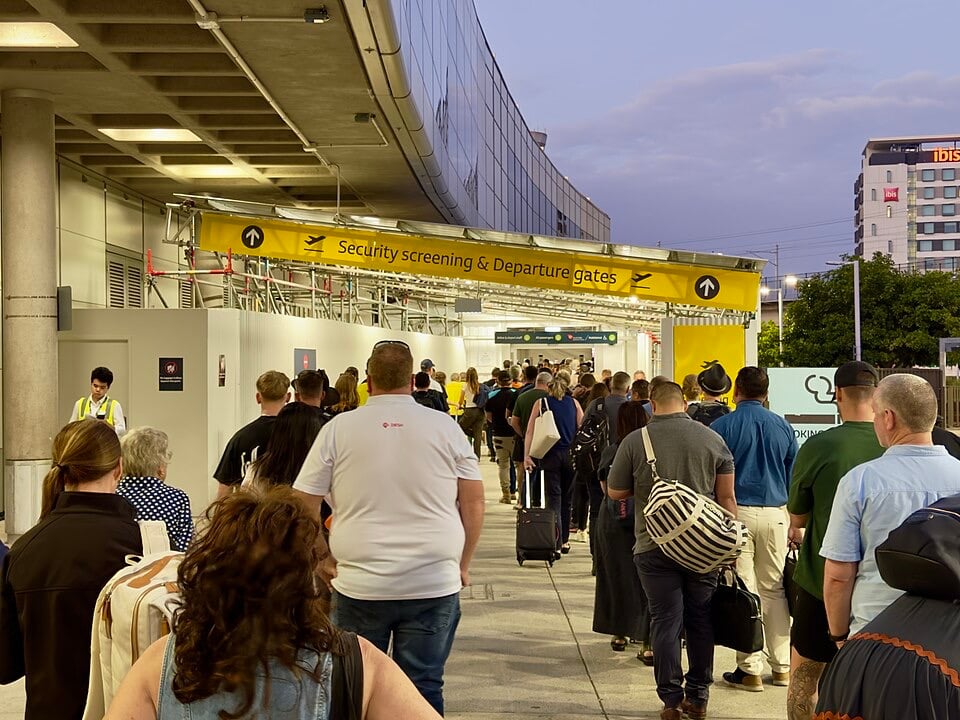
British tourists face waits of up to six hours at European airports this summer because of new EU border checks that have already caused hundreds of passengers to miss flights, an airline industry body has warned — with Spain, Portugal, France and Italy among the worst affected destinations.
Rafael Schvartzman, vice-president for Europe at the International Air Transport Association, said the new Entry Exit System represented a “very hard risk of really challenging waiting times” that was already proving unacceptable. “What we are seeing is a hard risk of really challenging times or waiting times — talking about expectations of three, four, five, six hours, which is unacceptable,” he told the IATA’s annual conference. “There are many cases where people have lost flights or their connectivity.”
The EES, which requires travellers from non-EU countries including the UK to have their fingerprints registered and photographs taken when entering and leaving the Schengen Area, came into force in April. The problem, Schvartzman explained, is that the system is being implemented inconsistently across the 29-country zone, with some nations lacking the right technology or sufficient staff at kiosks. Without EES, processing a passenger takes between 20 and 25 seconds. With it, that rises to 90 seconds — and with technology failures on top, the impact on queues is devastating.
The consequences are already being felt. At Easter, 100 easyJet passengers travelling from Milan to Manchester were unable to board after a three-hour wait at passport control. Last month, a Ryanair flight from Toulouse to Stansted departed without 150 people who could not reach the gate in time due to border control staff shortages. Ryanair has made clear its planes will not wait for passengers caught in queues. WizzAir is now advising travellers to arrive at airports three hours before their return flights.
Airports Council International has reported EES delays of up to three hours at airports across Spain, Portugal, France and Italy. A survey by Booking.com found that 59 per cent of UK holidaymakers travelling to Europe this summer expect delays linked to the system, with almost half fearing they will miss flights as a result. Some 56 per cent plan to arrive earlier than usual, and 12 per cent intend to arrive at least four hours before departure.
One destination is bucking the trend. Demand for holidays in Greece has surged since the country announced on 17 April that it will not impose EES requirements on UK travellers this summer, according to the Advantage Travel Partnership network of independent travel agents.
Schvartzman noted that some countries had been attempting to make exceptions for British travellers, which he acknowledged was “an effect of Brexit,” but argued that every passenger should be treated the same under the system.
Airlines UK called on European countries to take a “pragmatic approach and make full and effective use of the permitted flexibilities for as long as needed while EES is implemented, to avoid border delays for passengers.”
Separately, IATA chief Willie Walsh warned that soaring jet fuel prices driven by the US and Israel’s war with Iran were likely to push more airlines into bankruptcy and accelerate consolidation across the sector. Budget carriers, lacking the premium revenue streams of larger airlines, have been hardest hit. US budget carrier Spirit Airlines collapsed last month. “Unfortunately, I think there will be some carriers that will find this high fuel price very difficult to cope with,” Walsh said.
