



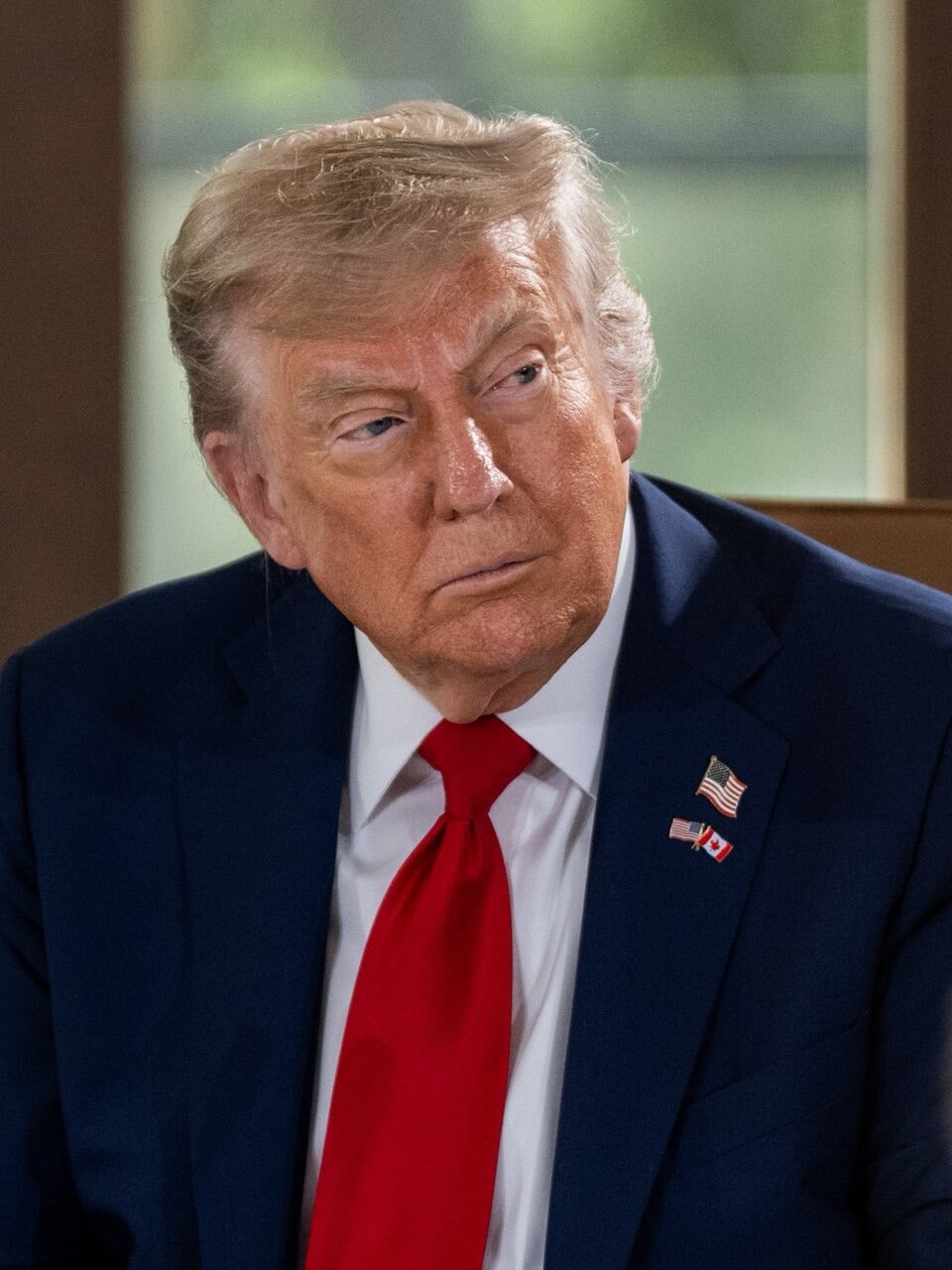
Donald Trump has publicly warned Israeli Prime Minister Benjamin Netanyahu that he must act “more responsibly” in Lebanon, declaring that Israel “would not exist right now” without American backing — his most pointed rebuke yet of an ally that has been increasingly sidelined during the US-Iran peace talks.
Speaking at the G7 summit in Évian-les-Bains, France, following a bilateral meeting with Qatar’s Emir Tamim bin Hamad Al Thani, Trump made clear that his patience with Israeli military operations in Lebanon was wearing thin. “I have a great relationship with Bibi, but he has to be more responsible with respect to Lebanon,” he told reporters, saying Israeli operations there had gone on “too long” and were causing too many casualties in civilian areas.
Trump cited the scale of US financial and military support for Israel to underline his standing to make such demands — referencing more than $130 billion in American aid to Israel since 1948 and around $3.8 billion in annual military assistance, including funding for the Iron Dome missile defence system. He credited his own administration’s decision to withdraw from the 2015 Iran nuclear deal during his first term, and his support for Israel throughout recent hostilities, as central to the country’s survival and security.
Unusually, he also suggested Israel should step back and allow Syria to deal with Hezbollah, claiming the current Syrian leadership would be capable of handling the militant group more effectively. “Syria will do the job” with Hezbollah if Israel is unable to, he said.
The comments are the sharpest public pressure Trump has applied to Netanyahu since the US-Iran peace deal was announced at the weekend, a deal from which Israel was conspicuously excluded from direct negotiations. Netanyahu, who has pledged that Israeli forces will remain in Gaza, Lebanon and Syria “for as long as necessary,” has made clear the agreement does not bind his government. That posture has grown increasingly uncomfortable for Washington as it seeks to enforce a broader regional de-escalation.
Reaction to Trump’s remarks was divided. Some analysts described them as a frank exercise of US leverage — a form of “tough love” from a powerful ally making clear the limits of its support. Others criticised the language as undiplomatic, overly personal and potentially destabilising to the alliance at a sensitive moment. In Israel, the comments are expected to deepen existing tensions with the Netanyahu government, which has already been critical of its exclusion from the Iran negotiations and resistant to pressure to withdraw from southern Lebanon.
The remarks came a day after German Chancellor Friedrich Merz presented Trump with a personalised German football shirt at the same summit — a moment of levity that contrasted sharply with the blunter diplomatic realities on display in France as world leaders grapple with the aftermath of the most significant Middle East conflict in years.
